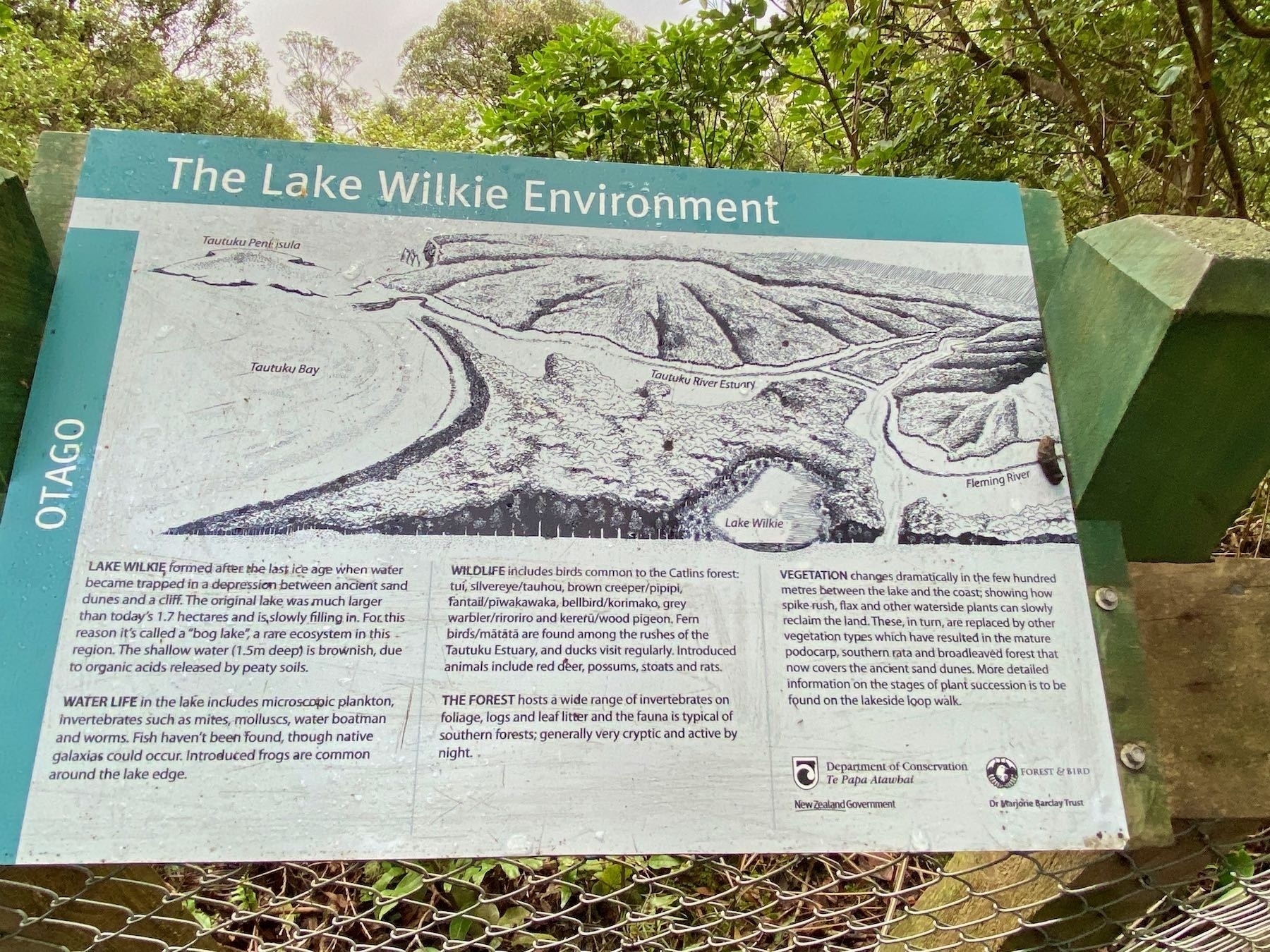
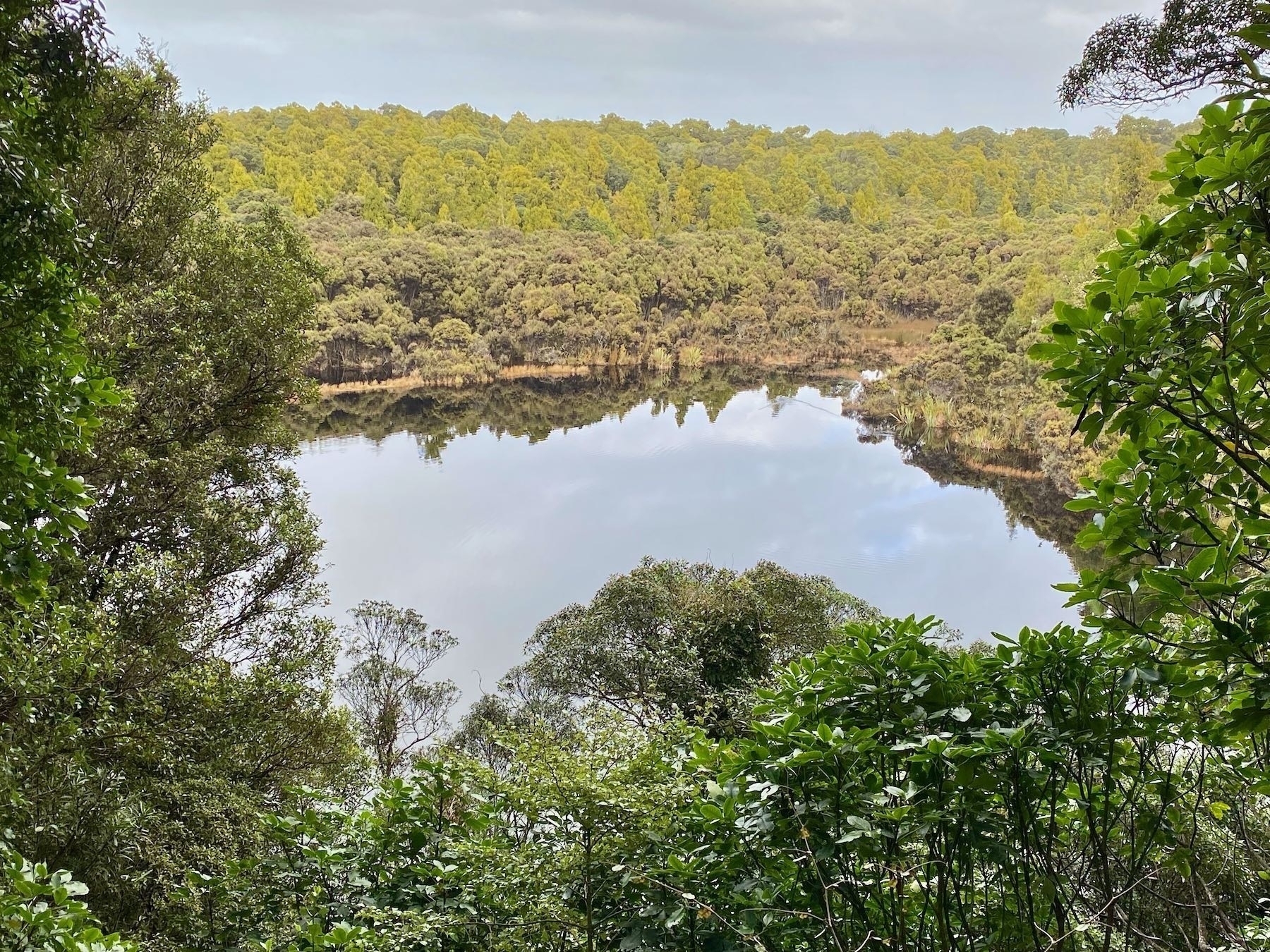
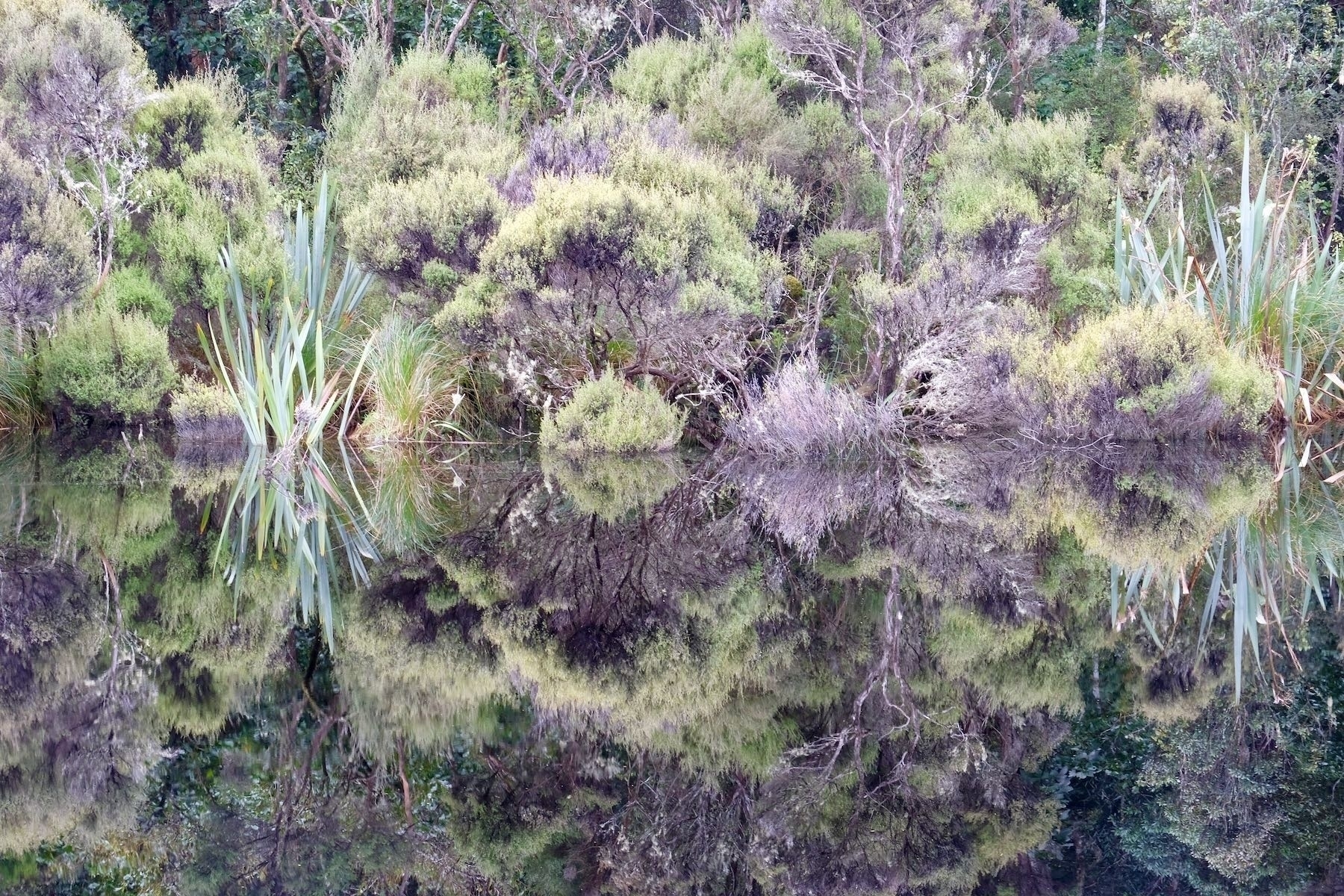
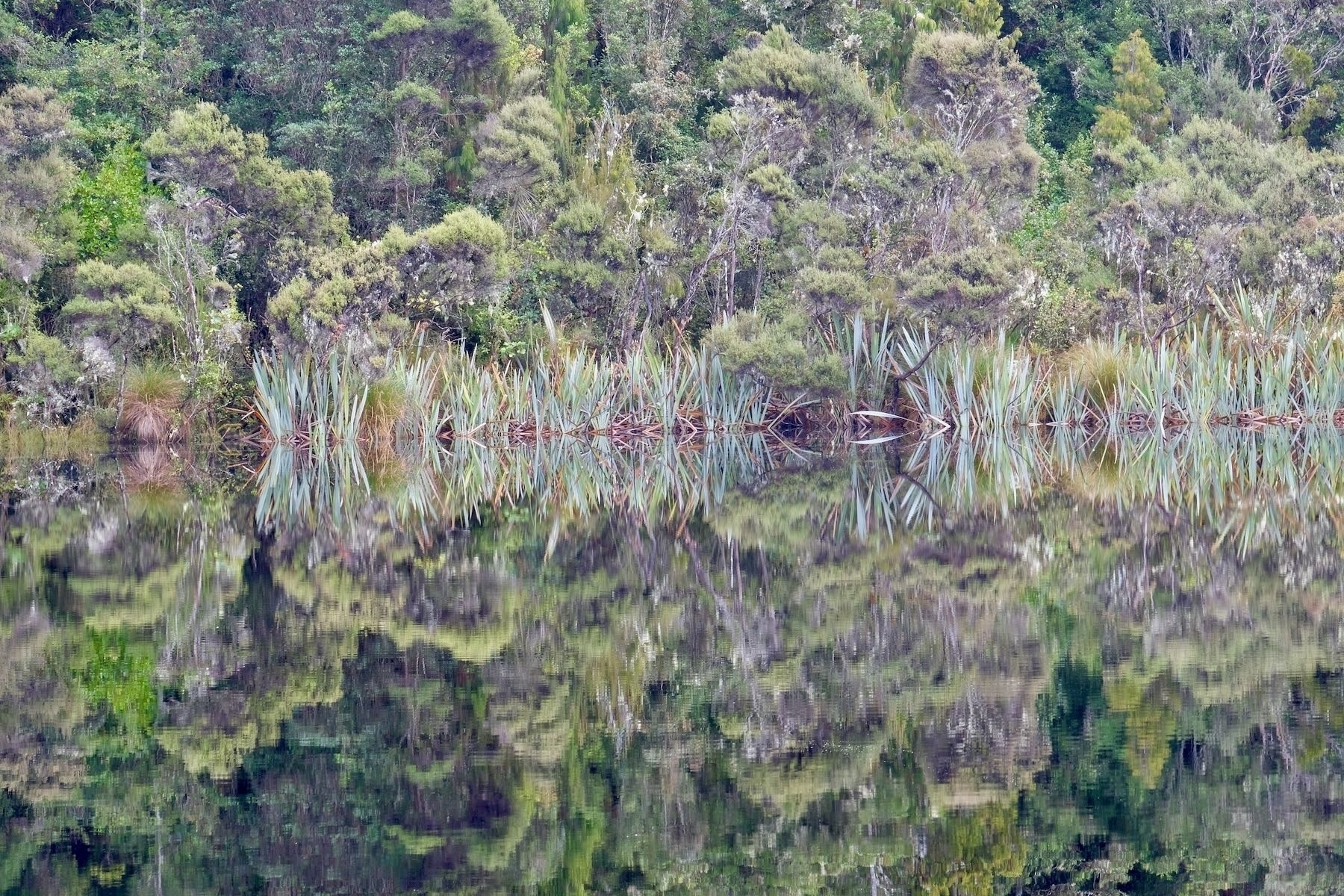
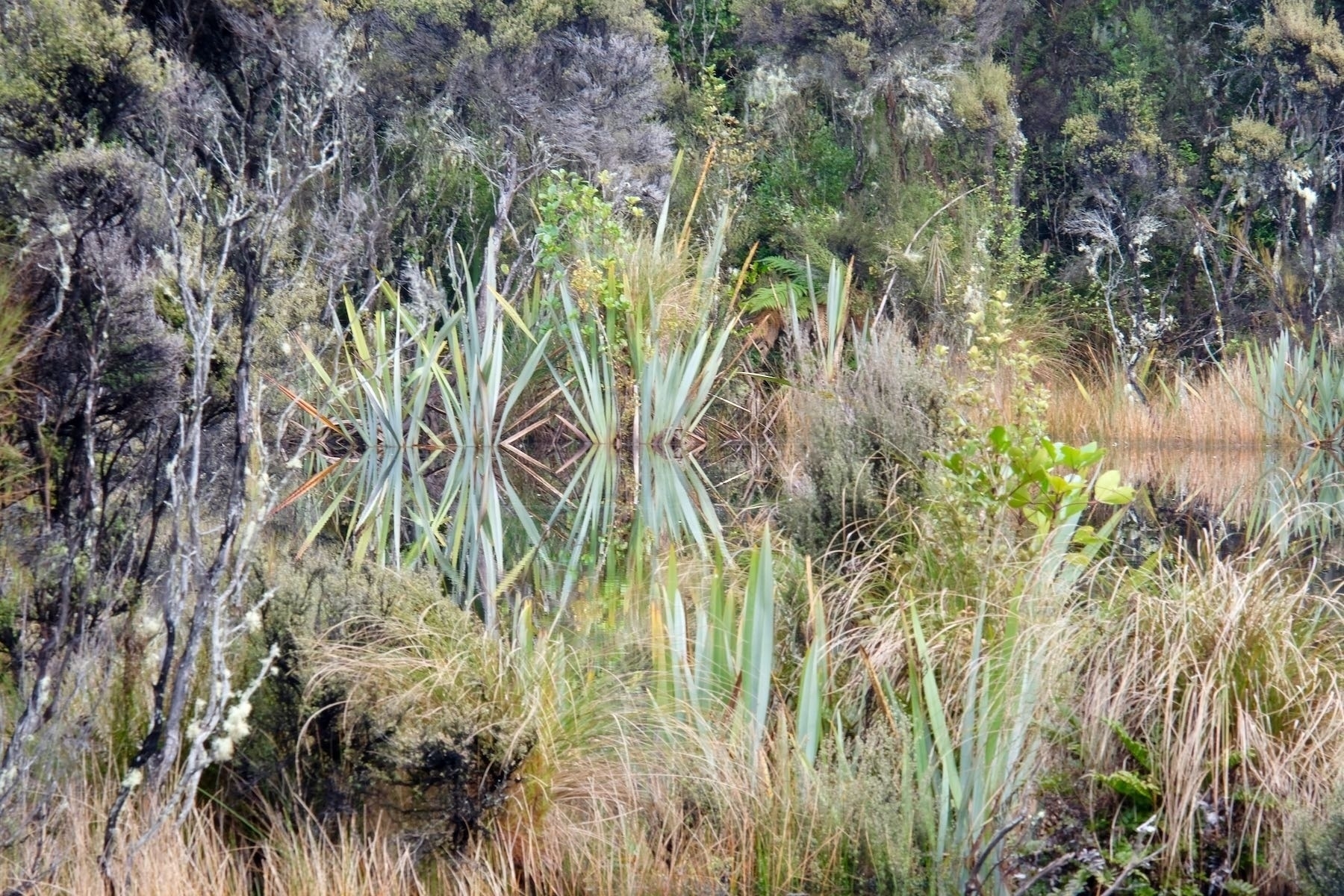
Yesterday we visited Lake Wilkie — Mirror Lake. The view from above was good, but down on the boardwalk there were stunning reflections.
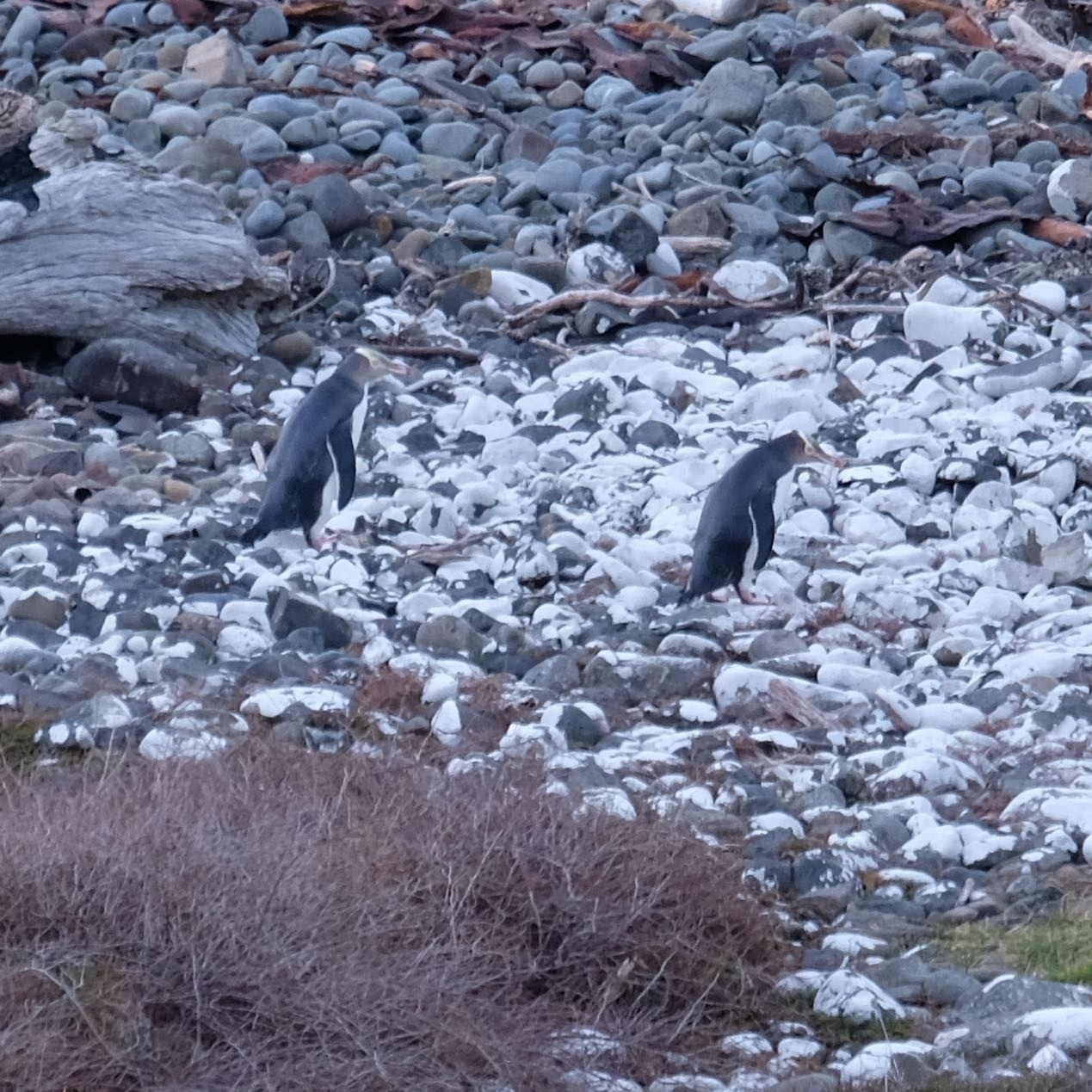
Today at dusk at Roaring Bay we were thrilled to spot two yellow-eyed penguins on the beach. Heavily cropped photo. 🐦
Yellow-eyed penguins / hoiho are one of the rarest penguins in the world and are only found in New Zealand (endemic).
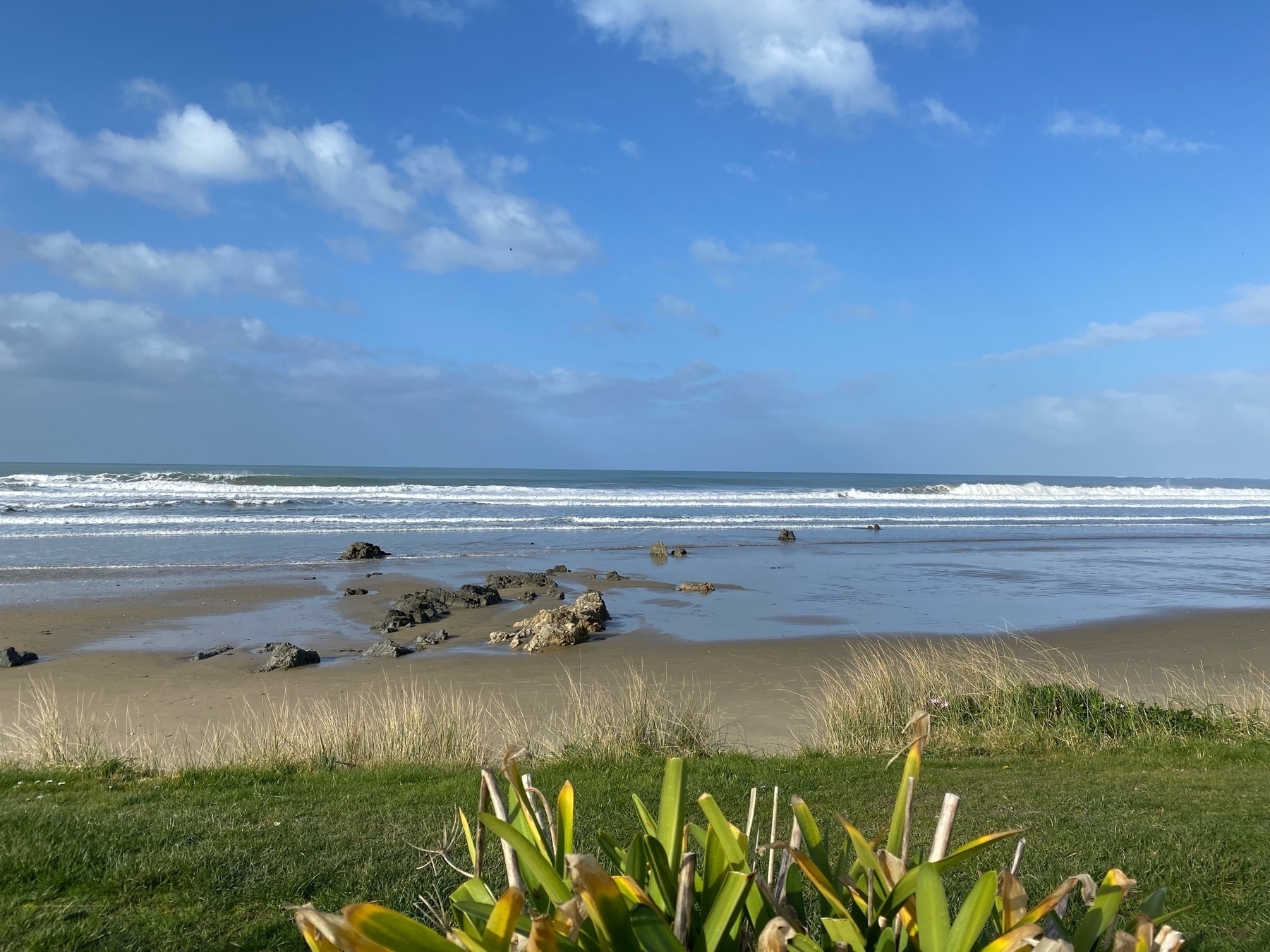
The view from our front door for a couple of days. Guess we’ll cope…
Catlins Day One: lighthouse, Jurassic fossil forest
This morning we picked up a rental car, squeezed in ourselves and our luggage, picked up groceries and squeezed them in too and headed from Invercargill, Waihōpai, for The Catlins.
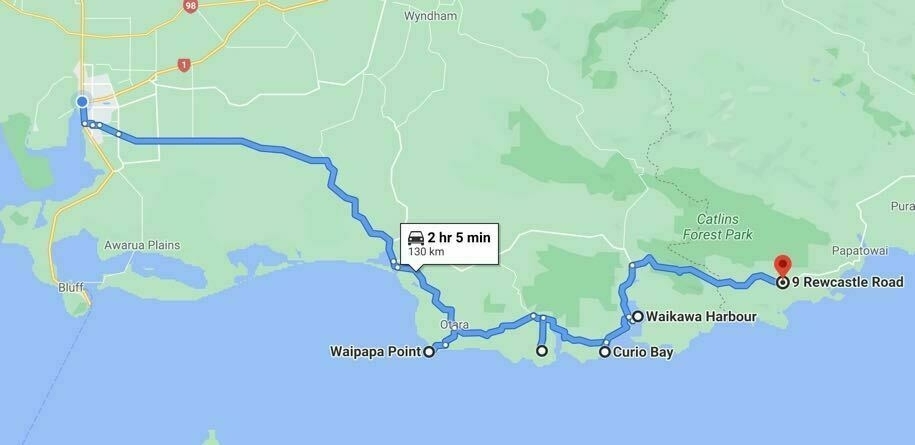
There was no hurry — this part of our holiday is a tour of an area none of us has visited before.
Our first stop came quickly: Fortrose, where there are 400 hectares of tidal flats.
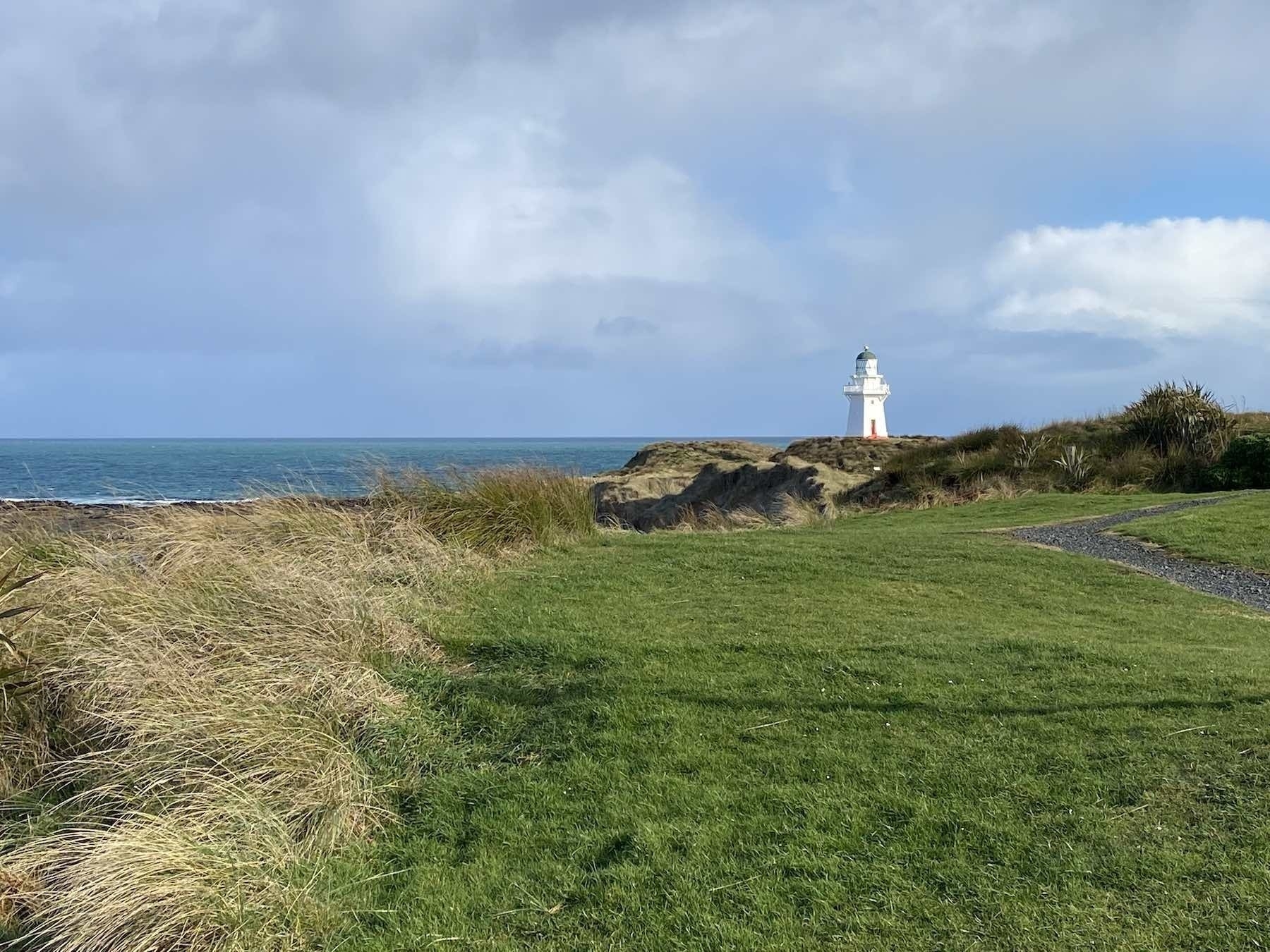
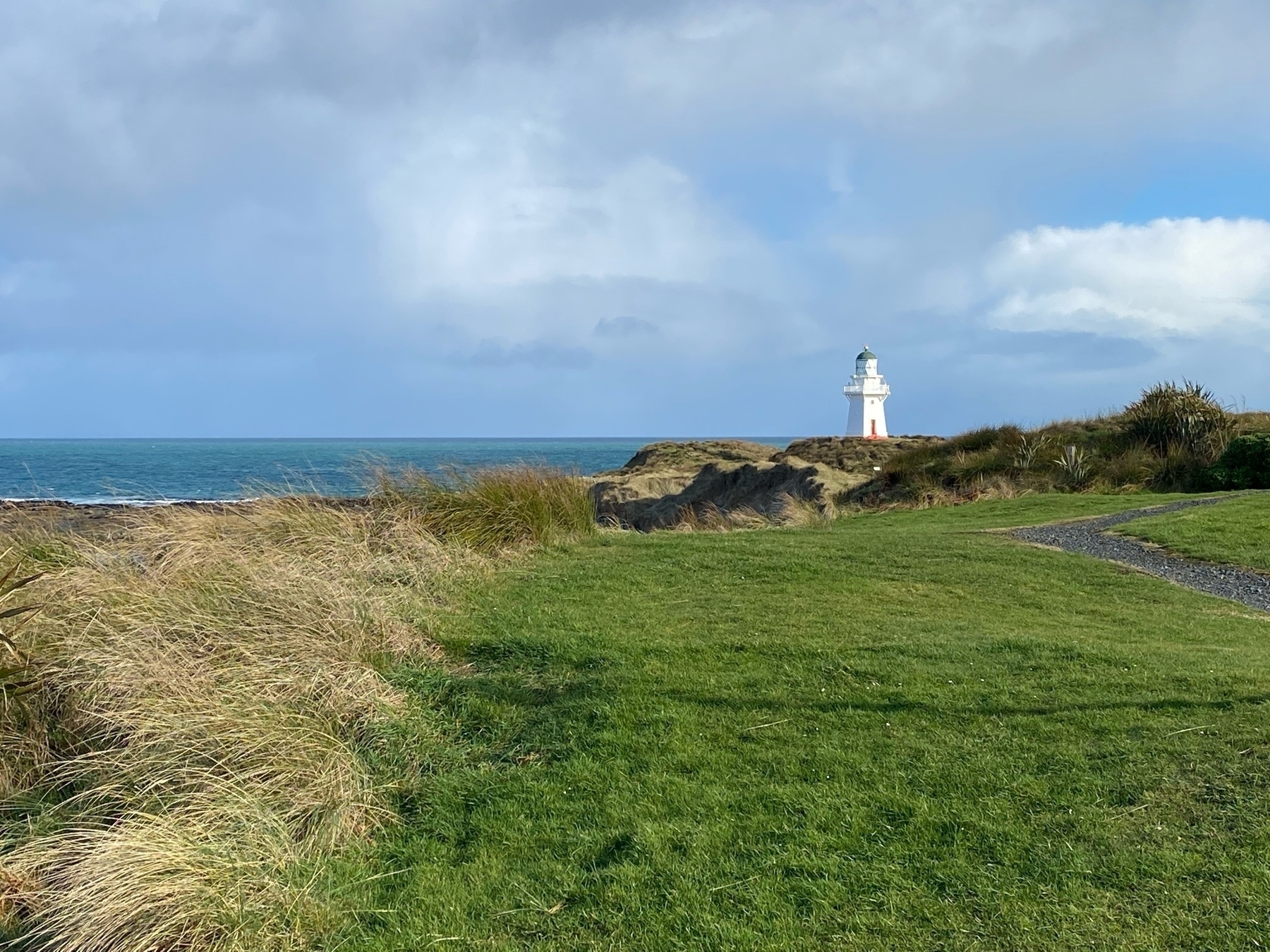
Next up was Waipapā Point with its lighthouse, built subsequent to New Zealand’s worst civilian shipwreck. The Tararua wrecked in 1881; 131 lives were lost.
There was a bitterly cold wind when we visited — probably very usual for this area.
We soon moved on to Slope Point, the southernmost point on the South Island. There’s a marker down on the coast but with the bitter wind and a slew of mud I opted just to view it all from the carpark.
That led us to Curio Bay, Tumu Toka, site of a 180 million year old Jurassic fossil forest, best seen within 2 hours of low tide. Our timing was lucky, and we went down the many steps to the shore.
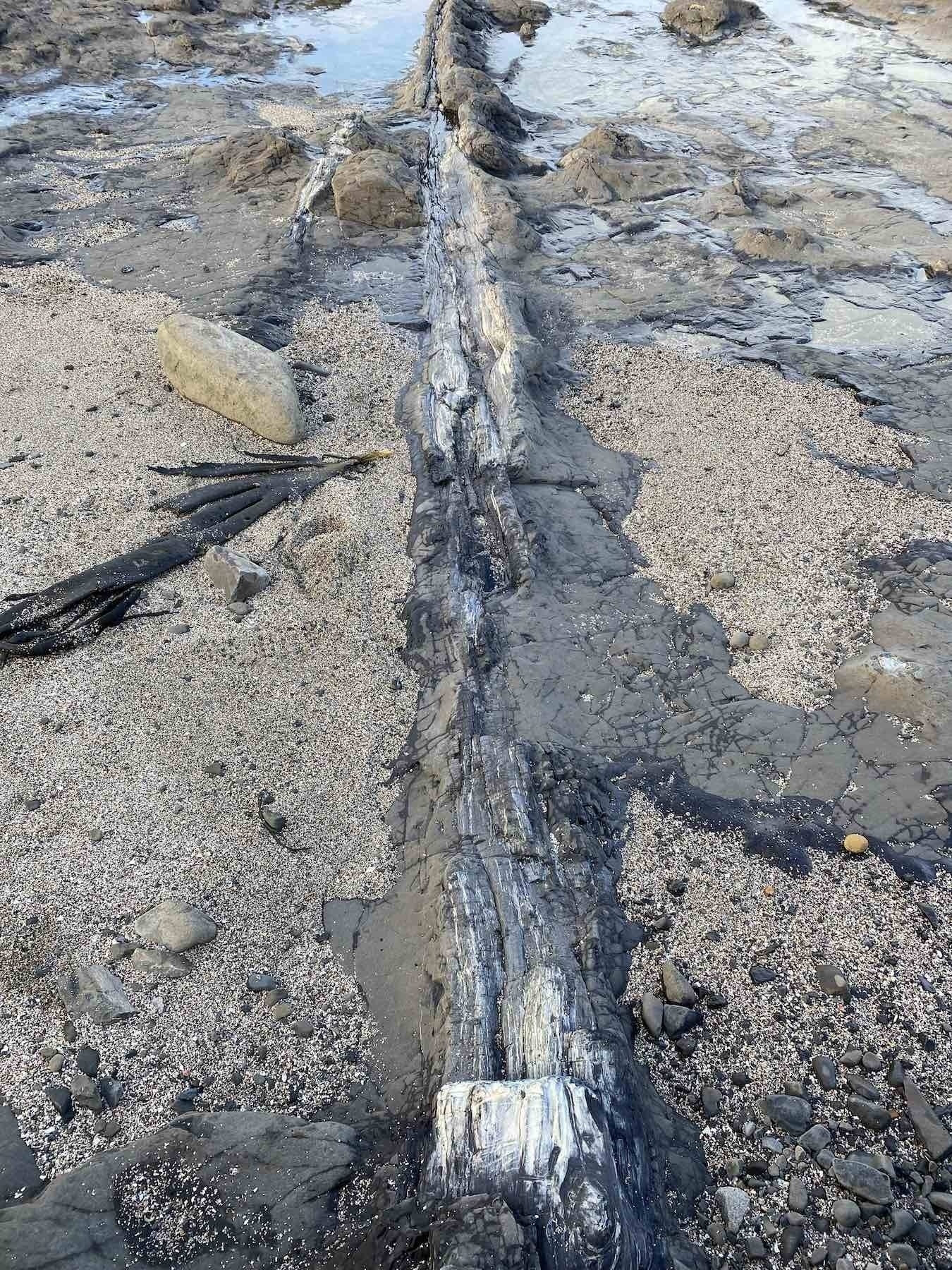
The petrified trees were amazing: they looked just like logs of wood, but felt like stone.
Apparently they were the result of rain and volcanic ash flooding forests back when Aotearoa New Zealand was part of Gondwanaland:
Millions of years ago the Curio Bay area was part of the eastern margin of the ancient super continent Gondwanaland. The forest was destroyed multiple times by massive sheet floods of volcanic debris; growing back only to be covered again. These events are clearly recorded by distinct bands of fossils in the now exposed cliff face. The erosion of the sea has exposed tree stumps, logs and other fascinating fossils.
We had lunch at the humorously named tiny waterfall known as Niagara Falls and ended up at The Whistling Frog for the night.
Tuesday 27 July 2021
The Waipapā lighthouse was built of rimu and totara. It was automated in the 1970s.
Rakiura Cruise, Day Four
The morning of the fourth day featured a 6 hour cruise to Paterson Inlet. The previous night I took Sealegs pills and was somewhat anticipating a repeat of the rough seas of the other day. However, this time we had the tide behind us and although there was a slight roll the journey was pretty smooth. Certainly this time we could sit in the saloon and read or chat or enjoy a cup of tea.
After a delicious lunch a local guide called Bevan arrived on the Wanderer to give us a bit of a talk about the afternoon’s walk on a very special area called The Neck.
The Neck is just an anglicised version of the Māori name, O Neke. It’s a very narrow strip of land across which original Māori inhabitants would lay down vegetation (neke) so that they could more easily drag their waka (canoes) between the two bodies of water.
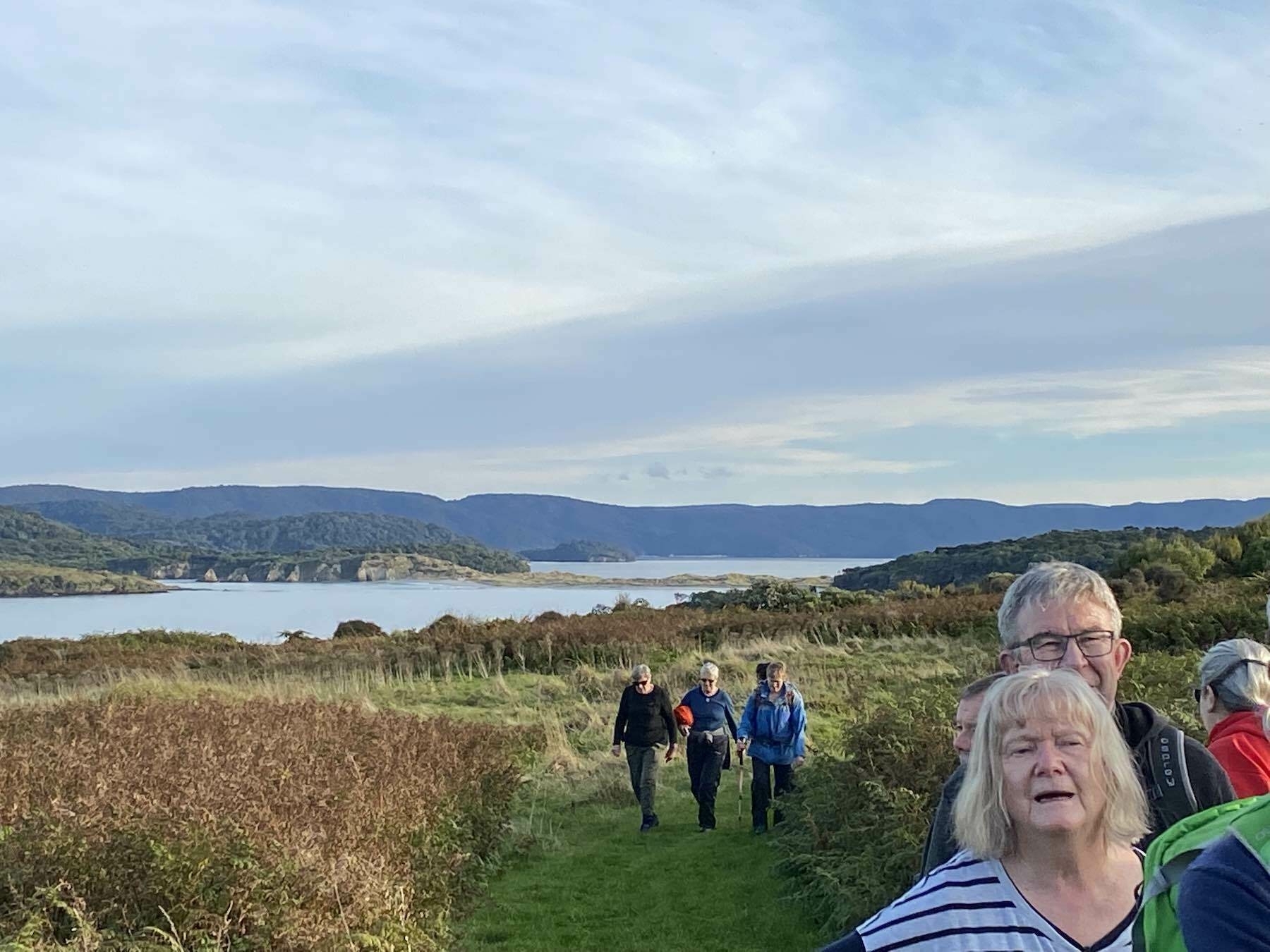
After the talk we did the walk — an easy stroll one hour each way along undulating mowed grass to a hut where we had a cup of tea and a biscuit.
This part of Rakiura was set aside back in the day (out of what became a National Reserve) for those who were of mixed heritage: to be a Māori here requires that you can trace your ancestry back to both Māori and non-Maori ancestors. Non-Maori included whalers and sealers from various countries, escaped slaves from America and various others.
The intention was to foster multi-cultural relationships and ways of living together.
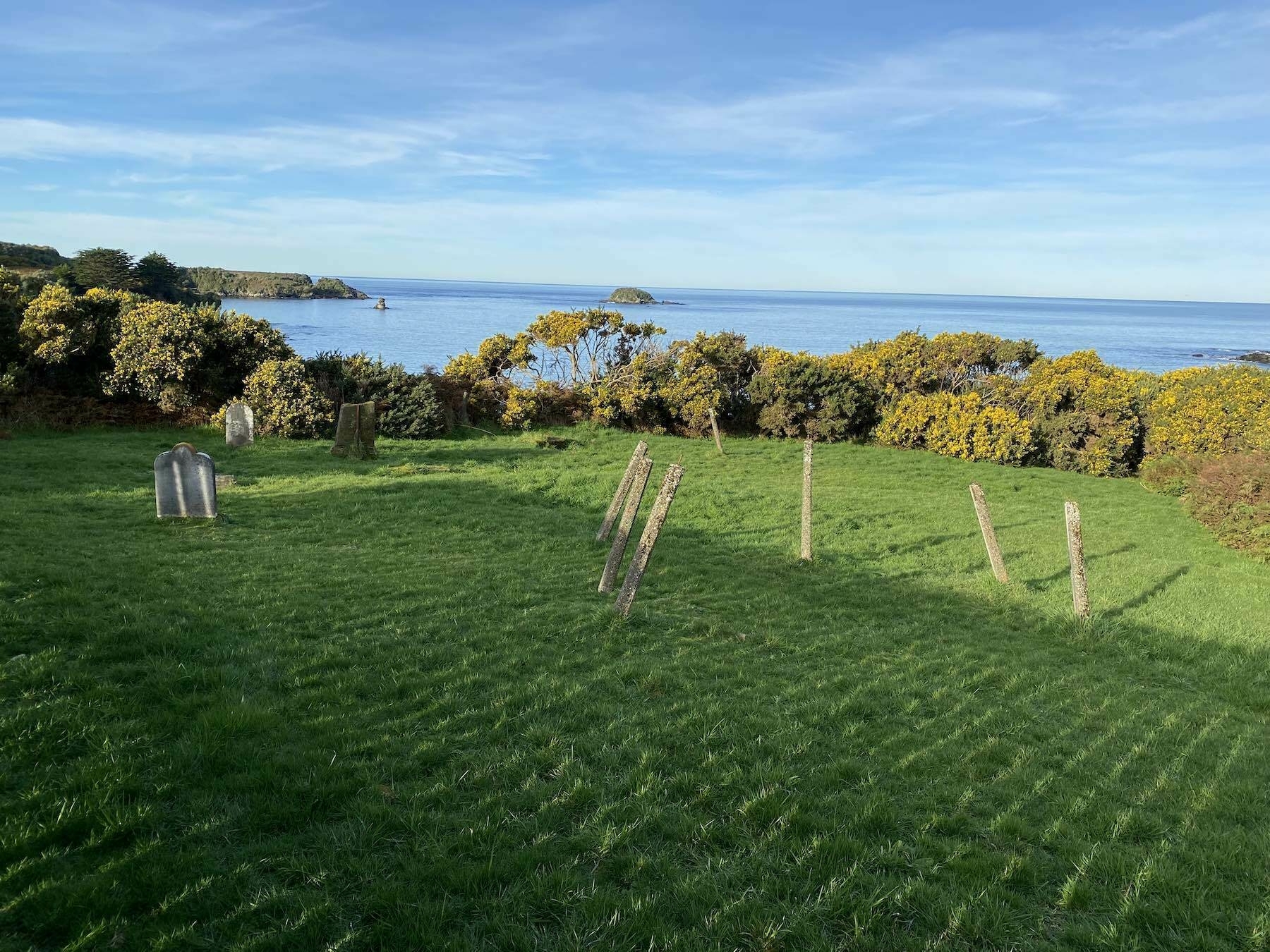
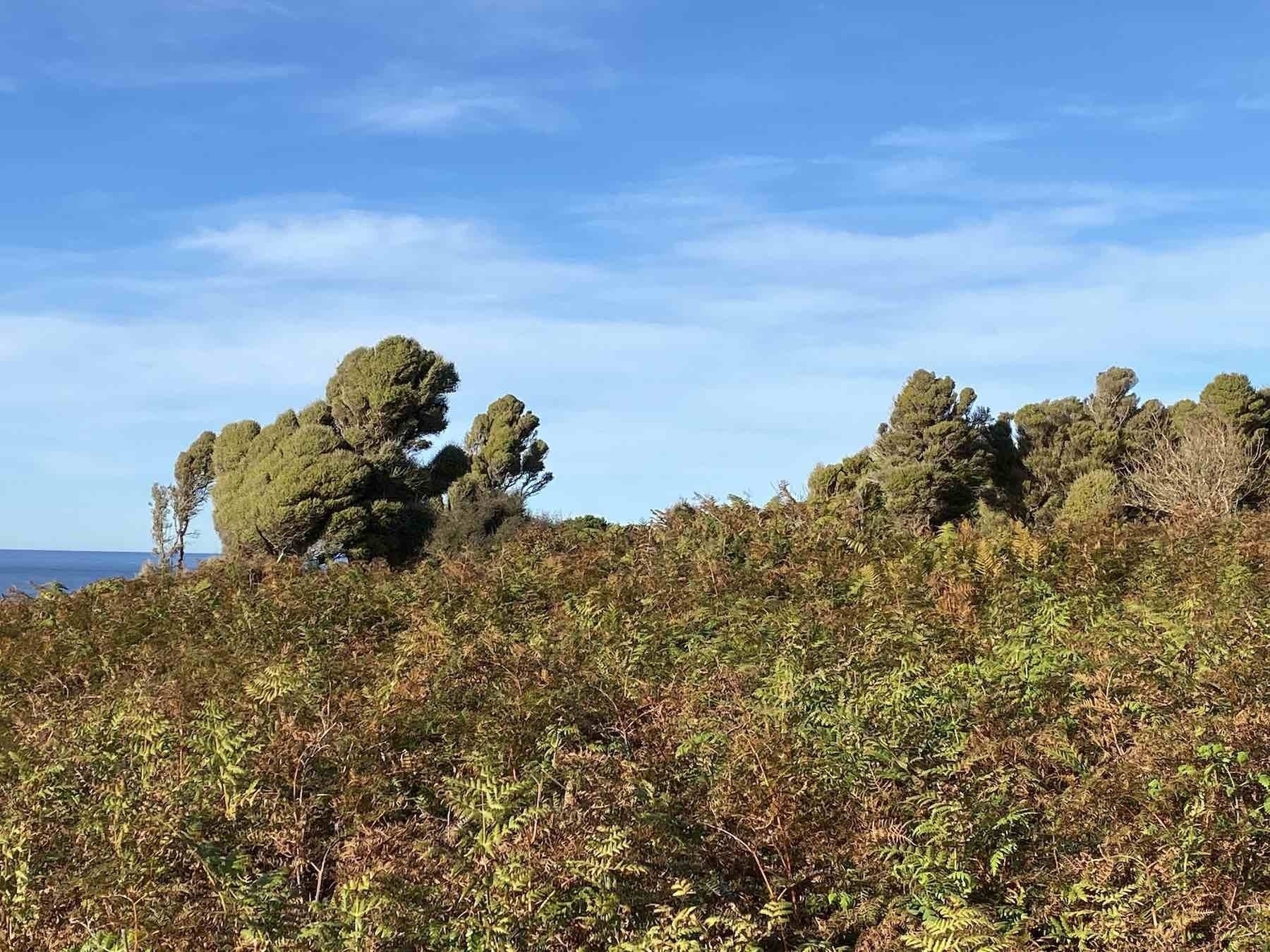
That means that people have lived and farmed here — growing wheat or potatoes to trade with whaling ships, or even running animals. It also means there’s plenty of gorse and other exotic species.
Saturday 24 July 2021
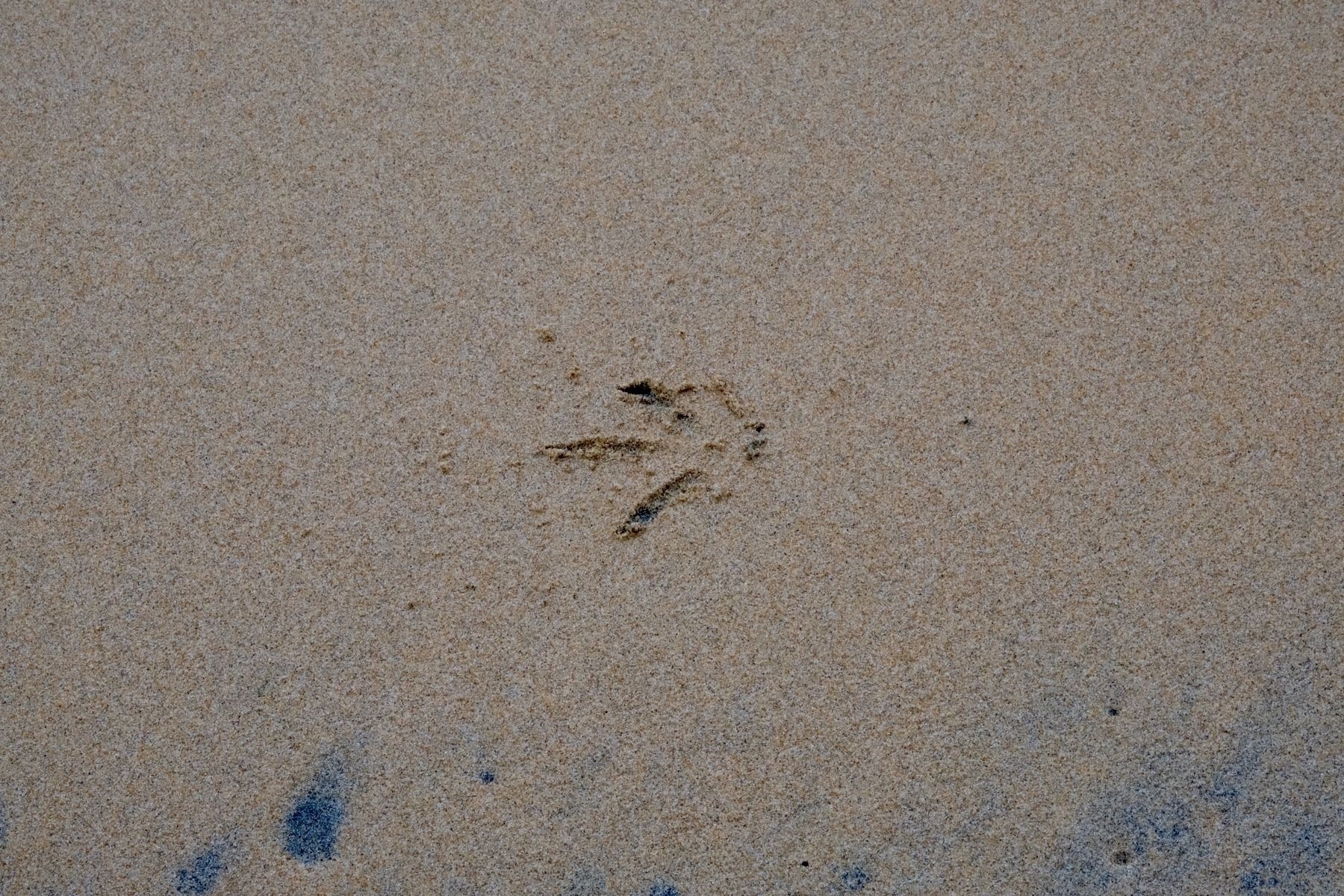
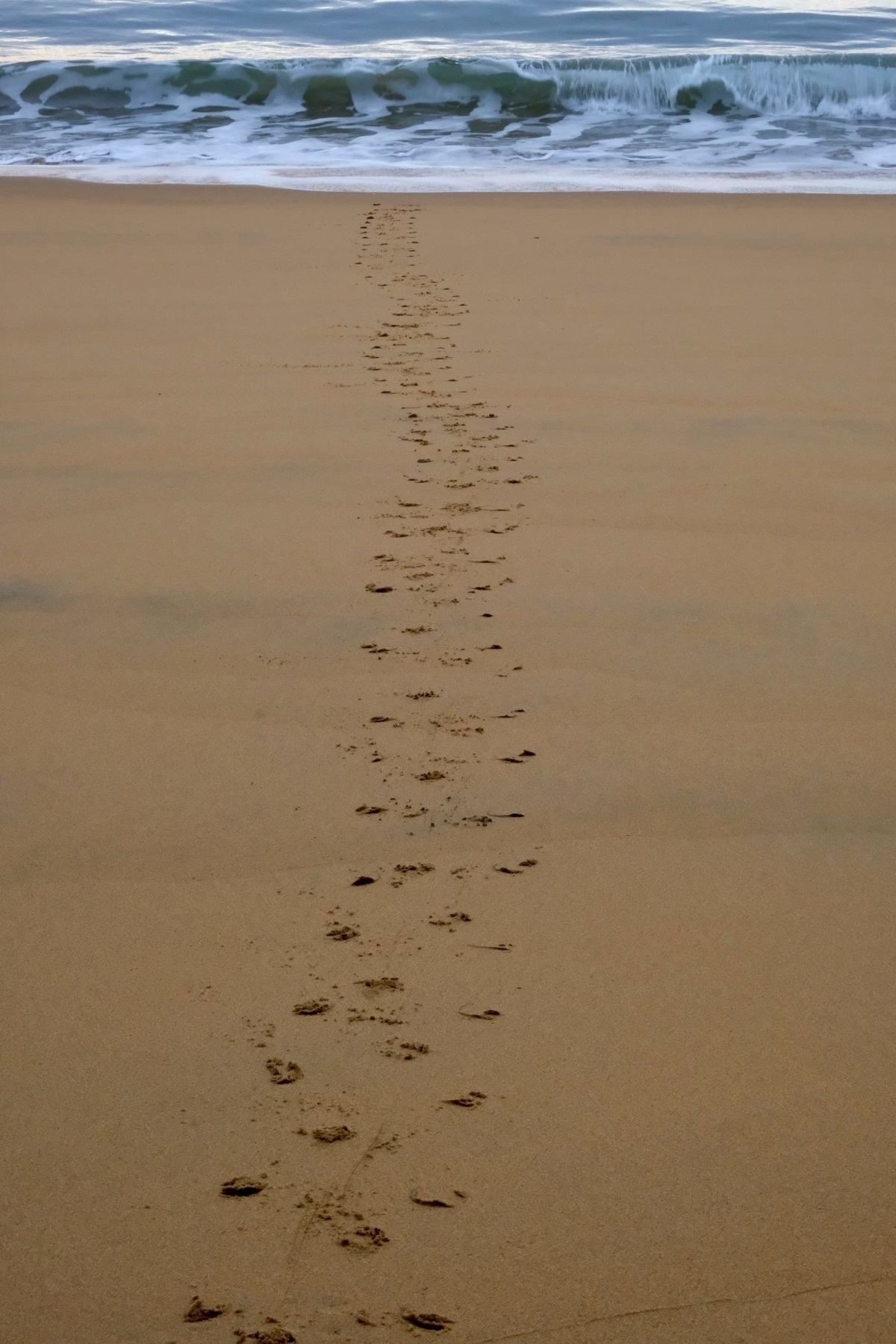
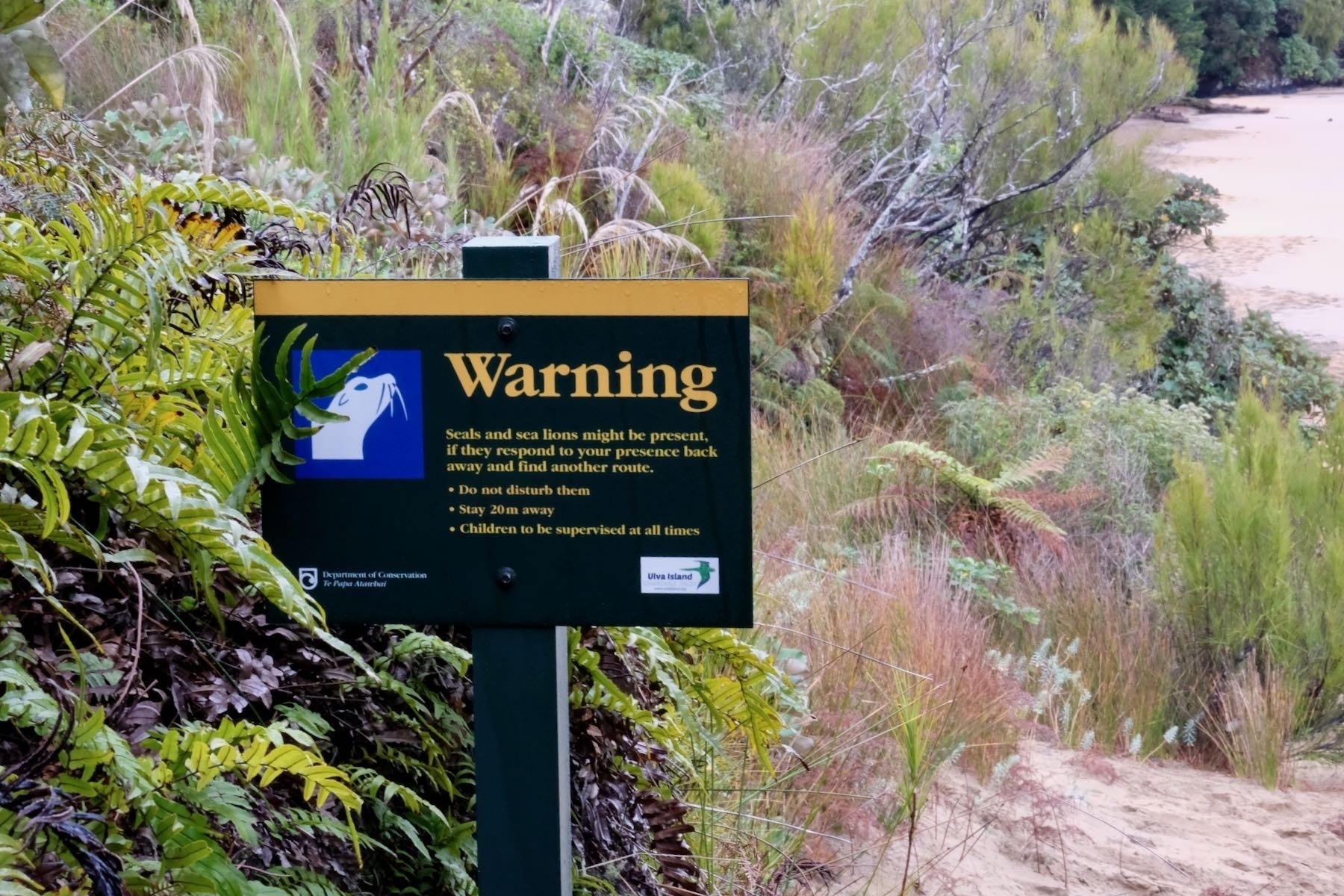
On Ulva Island, Rakiura, Aotearoa New Zealand, with its pristine golden beaches: kiwi tracks and penguin tracks. And always watch out for seals and sealions.
Rakiura Cruise, Day Three, afternoon
After lunch the tender went out twice for about 30 or 40 minutes at a time. With 28 passengers, the tender can hold half at any time.
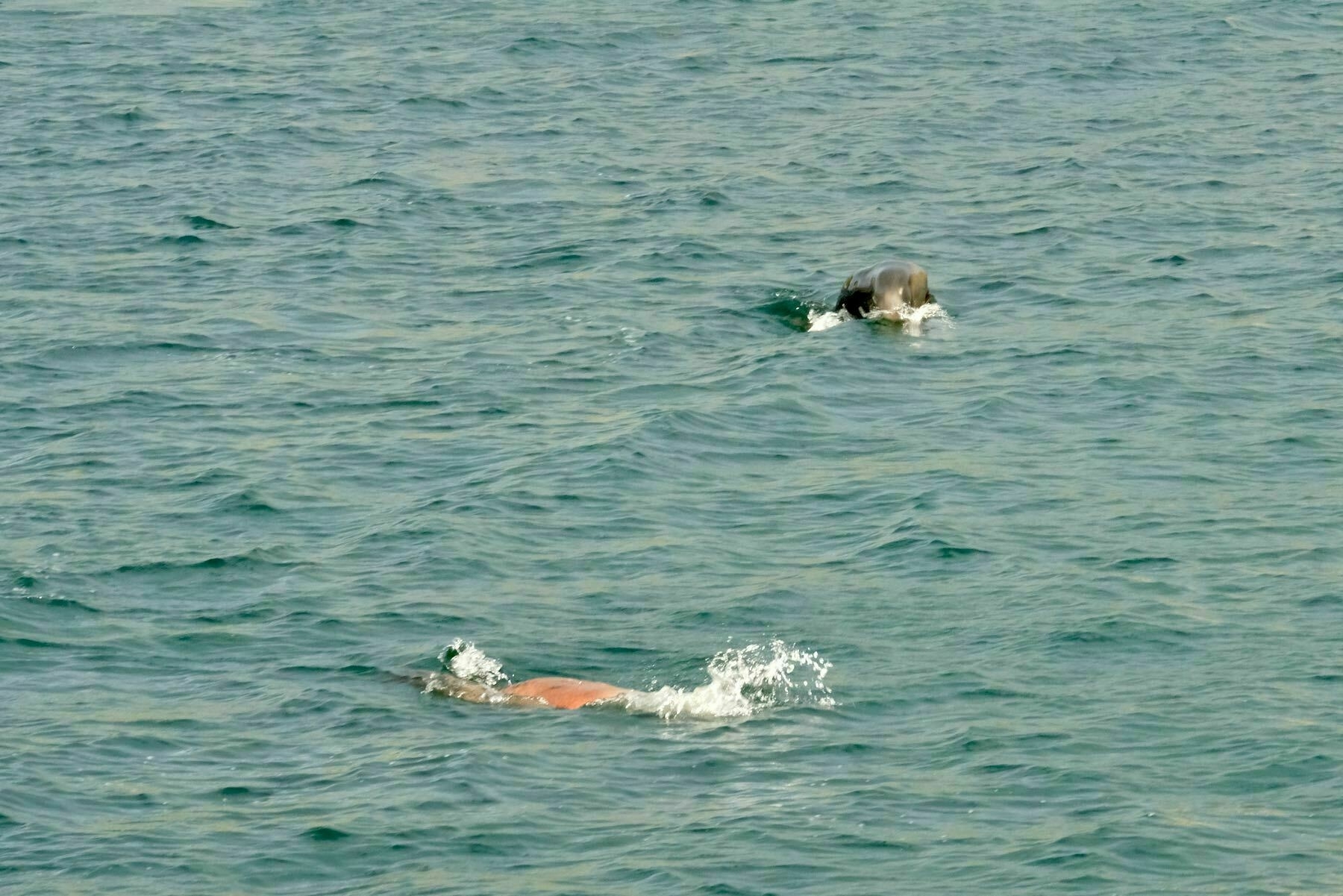
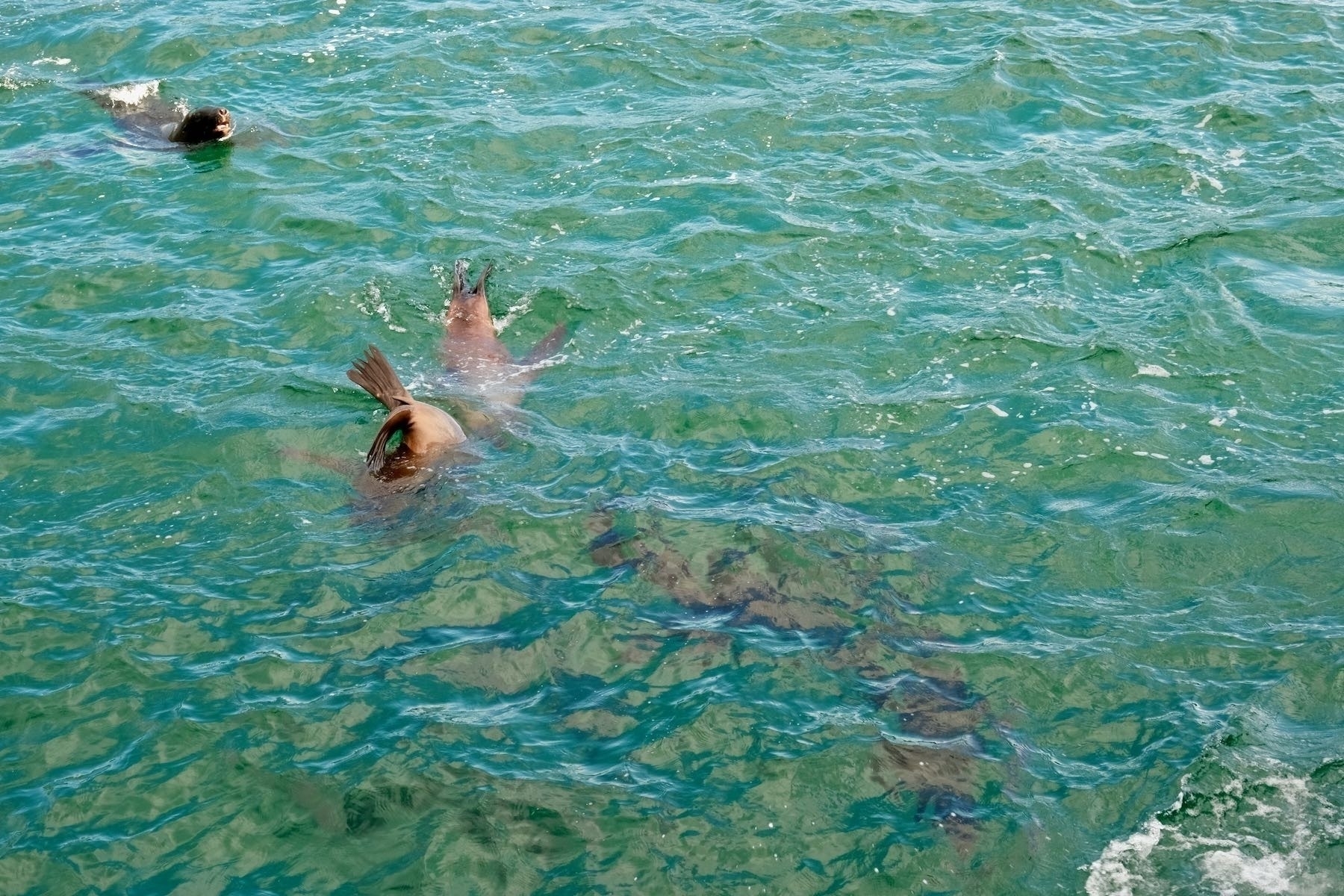
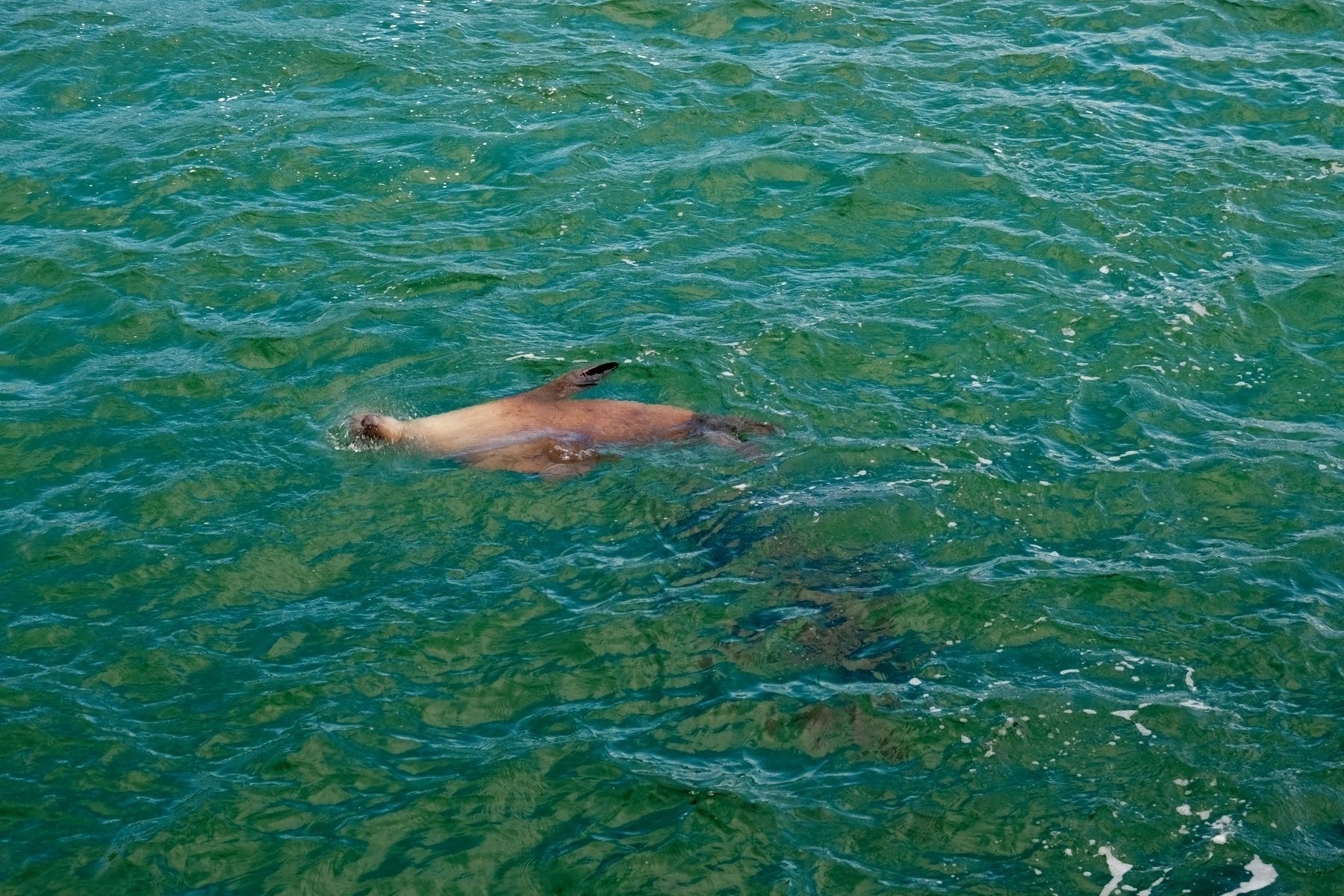
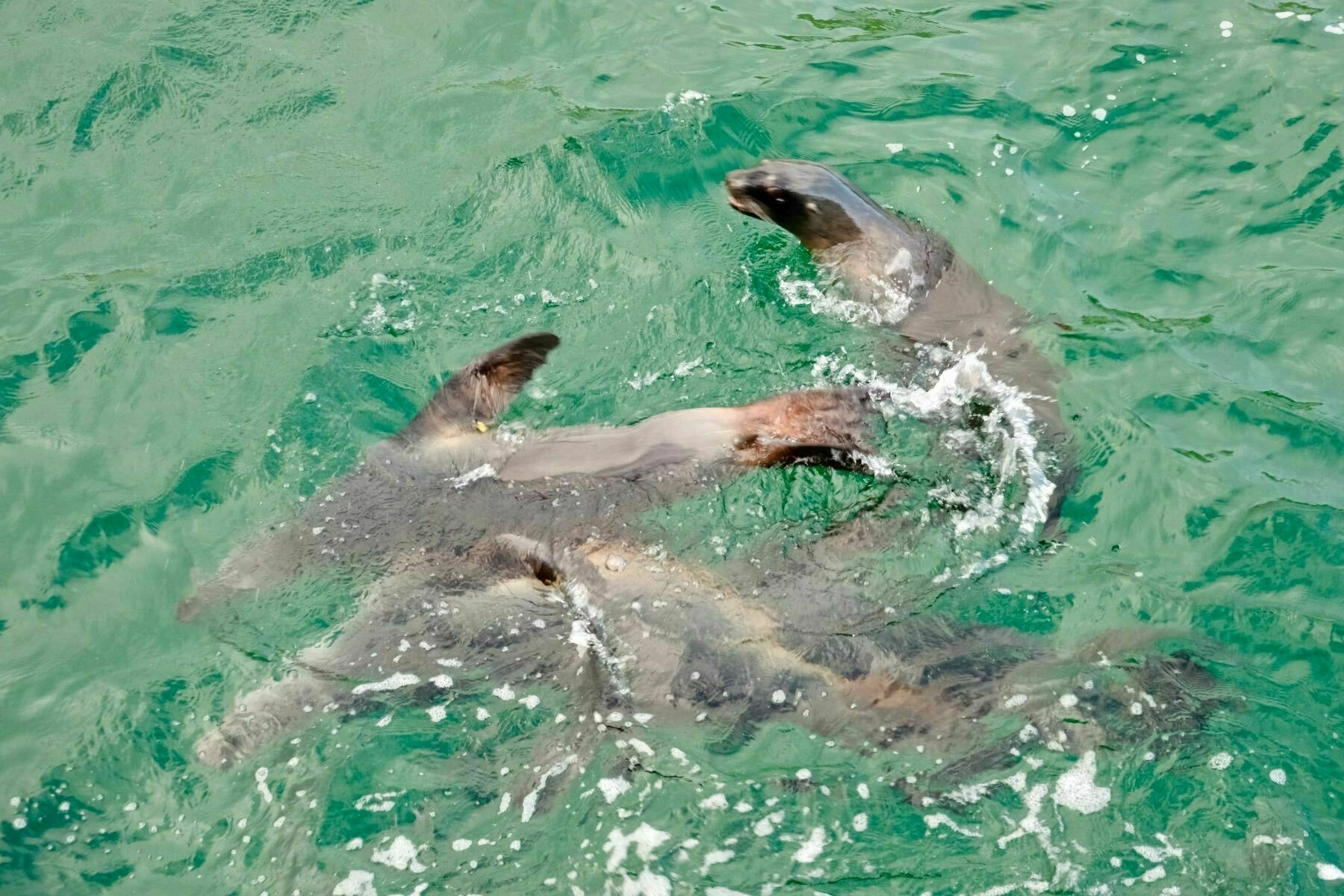
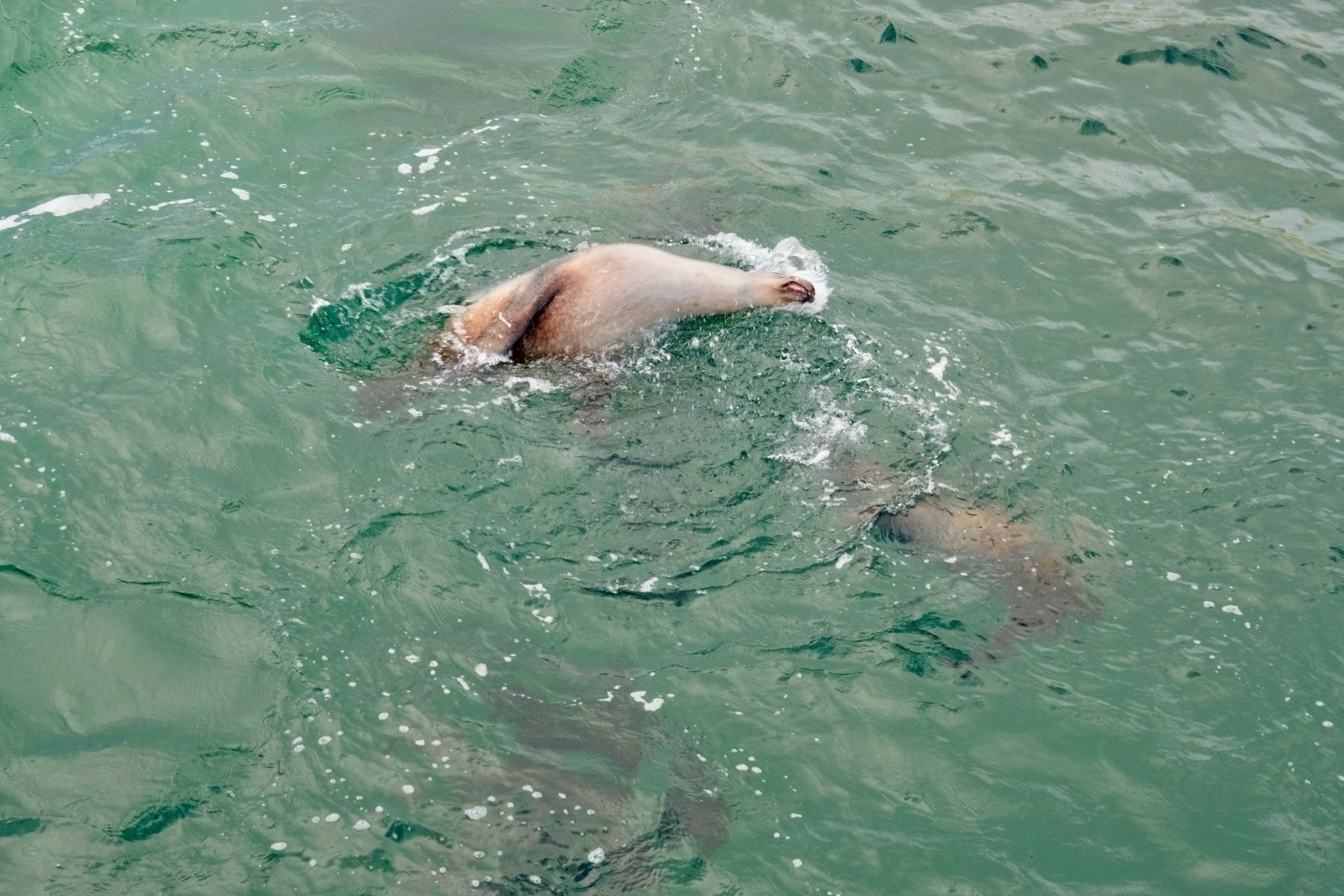
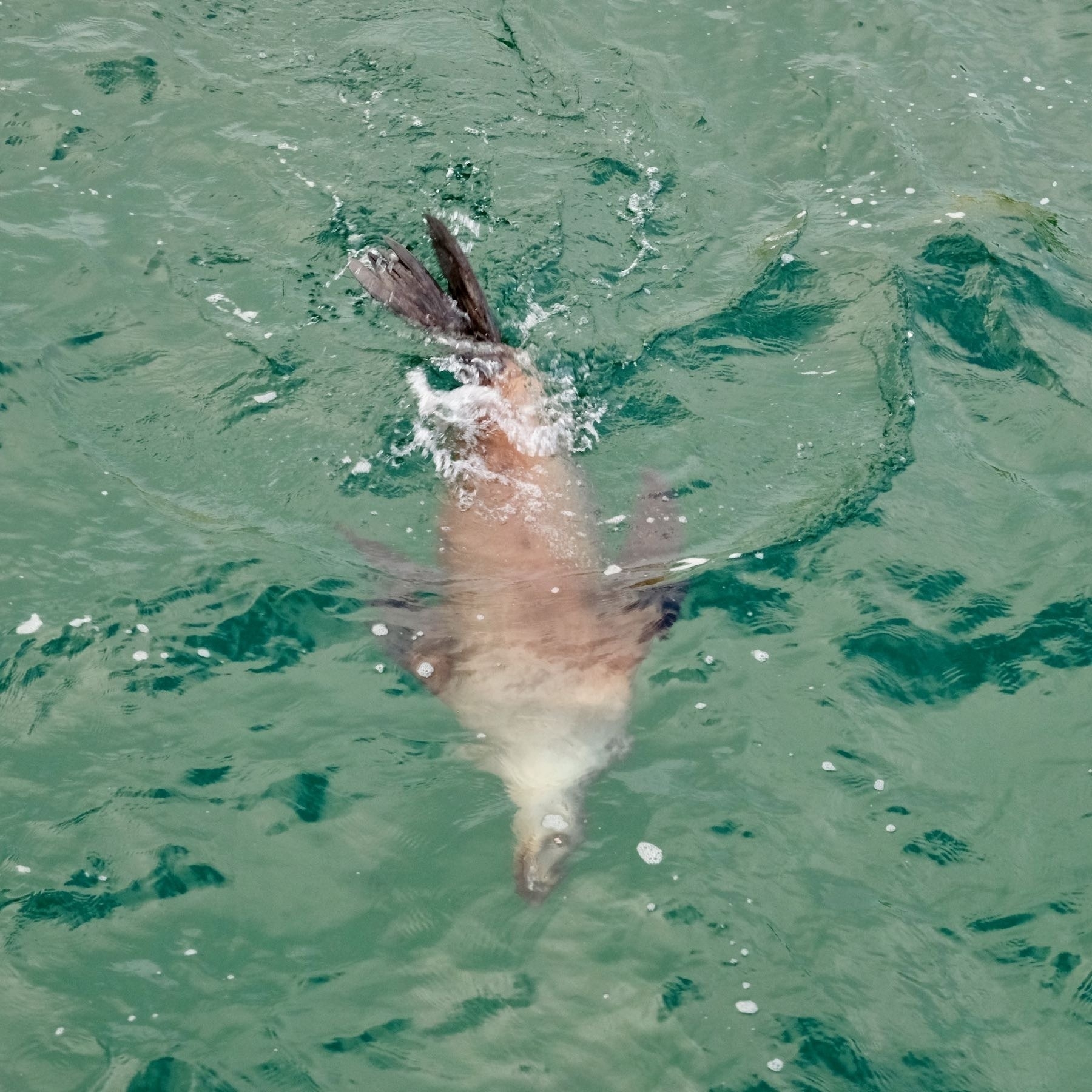
This was an amazing trip to Smallcraft Retreat, a nearby cove. From the time we left the Milford Wanderer until well after we returned, we were accompanied by sealions, so there was much oohing and aahing.
The surrounding bush was interesting and lush, but the sealions were absolutely the highlight as they popped up to see who this was in the waters, ‘porpoised’ out of the water, spun and flipped alone or in groups near the boat.
At the end of our little tour we briefly neared a small beach that could be seen from the Wanderer too. There was a very large male on the beach, but over the next hour or so he was joined by half a dozen others and there was much posturing and assertion of seniority.
Meanwhile the females tumbled and turned around the Wanderer, delighting all aboard.
Friday 23 July 2021
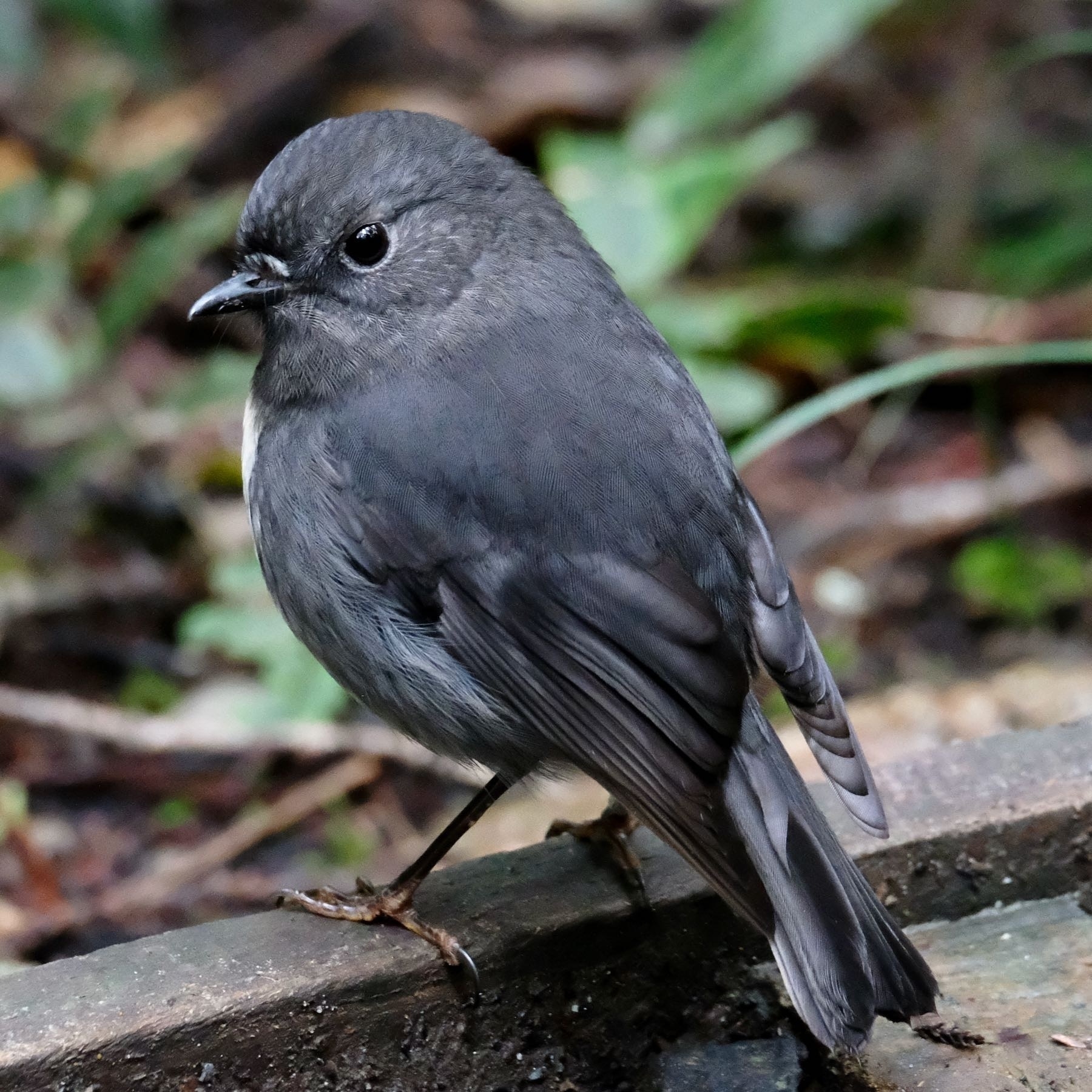
Here’s my new profile pic: a cheeky little South Island robin on Ulva Island. It was so dark in the bush I had to crank the camera to ISO 12800.
A delight of the day was to see two yellow-eyed penguins swimming by the boat (no photo). They look like floating sticks until they lift their heads then they look like a kind of squashed duck. From behind they look like tiny seals. Nationally Endangered and very rare. 🐦
Well, I can thoroughly recommend Thai Thai on Spey Street in Invercargill for a delicious meal. I ate a delicious cashew, chicken and vegetable stirfry. I’m temporarily online, but I suspect the next few days will be offline again.
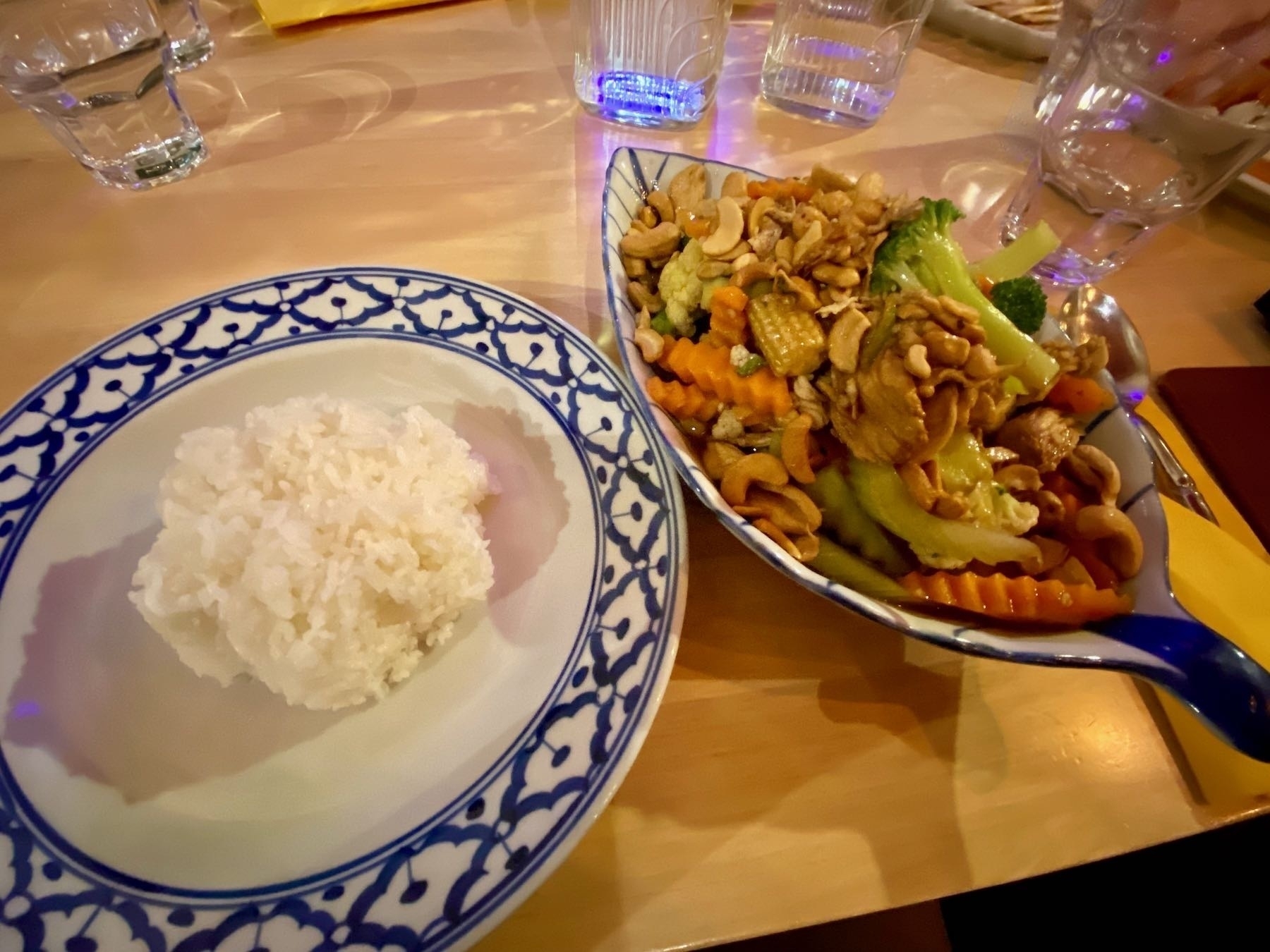
Back on dry land but may well be offline the next few days too.
Yesterday’s late afternoon view.
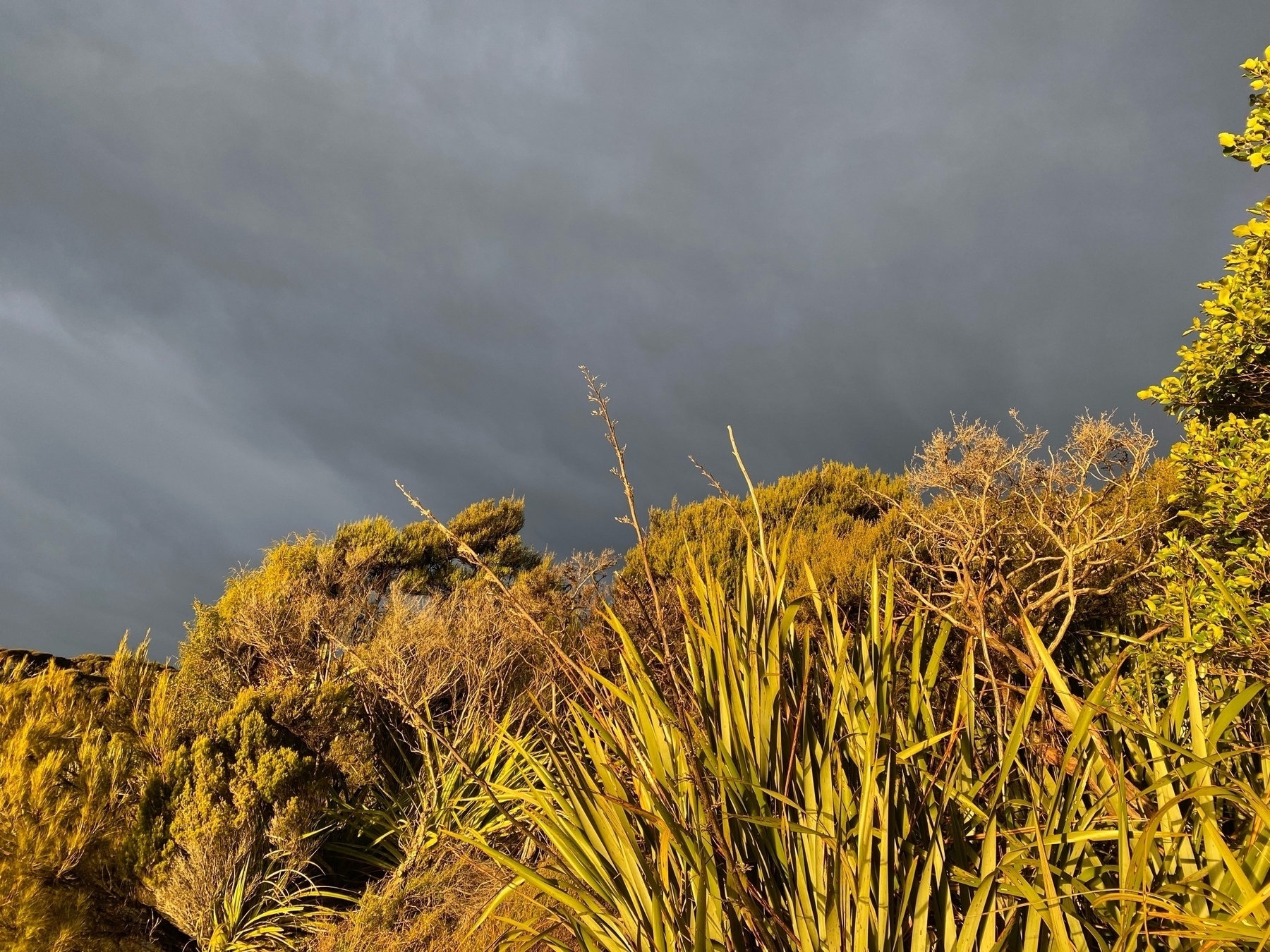
This sunrise at Ulva Island is a lie, sadly. The long exposure has really saturated the colours.
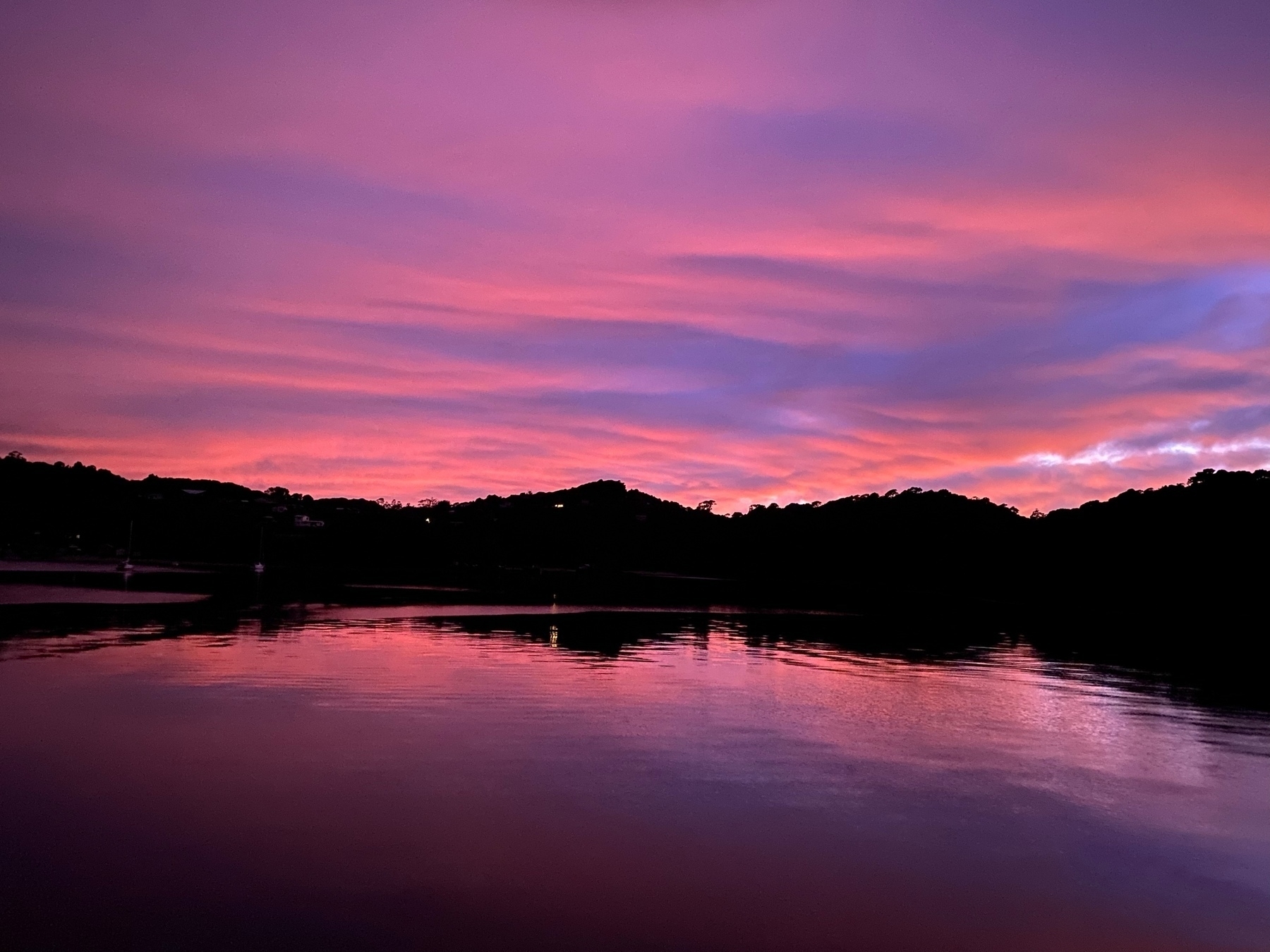
Typical bush clad hillside
The day we were anchored near Disappointment Cove I took these shots from the boat. These were my second attempt — I learned from the first attempt to increase shutter speed, because the boat is always moving, making shots a bit soft.
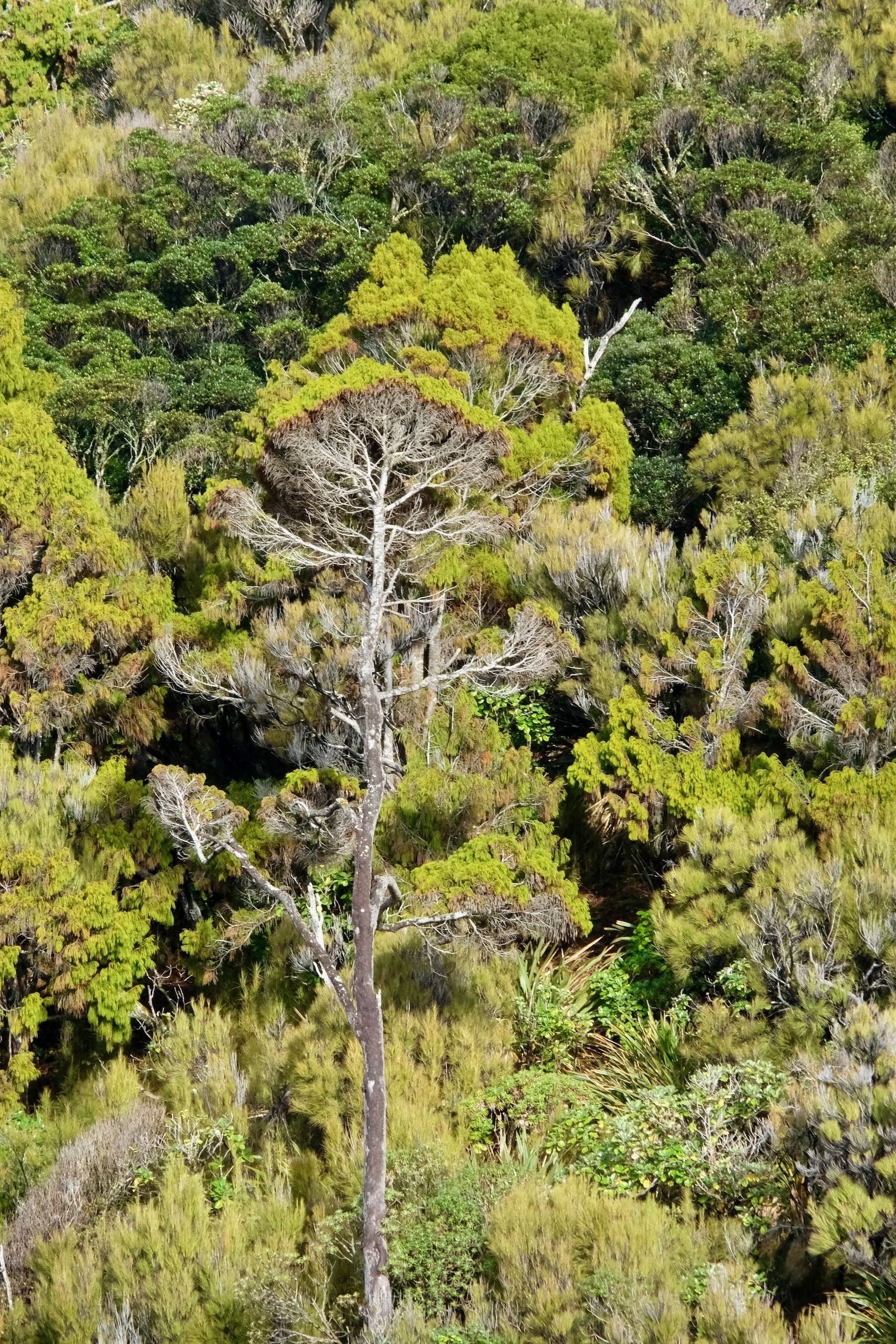
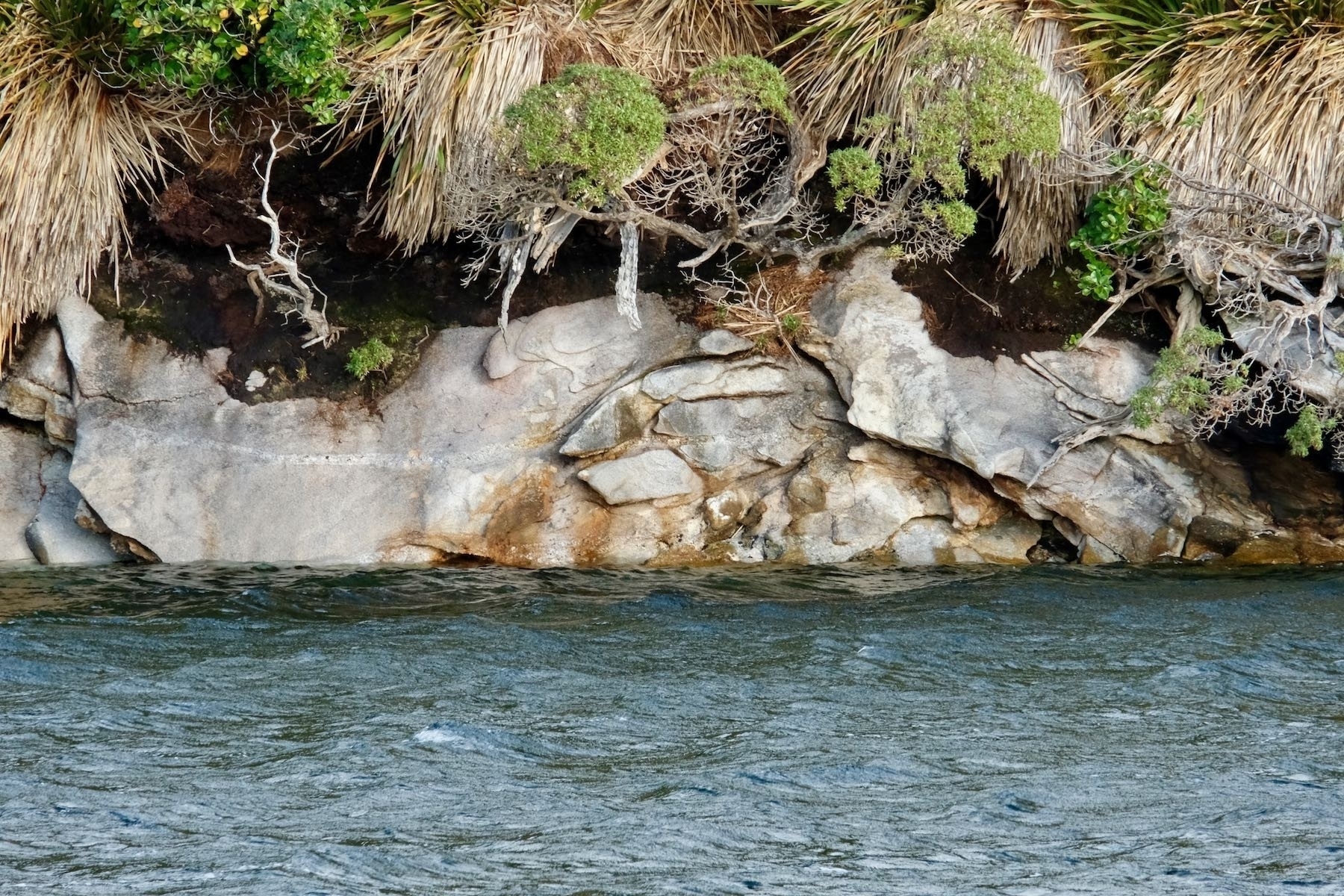
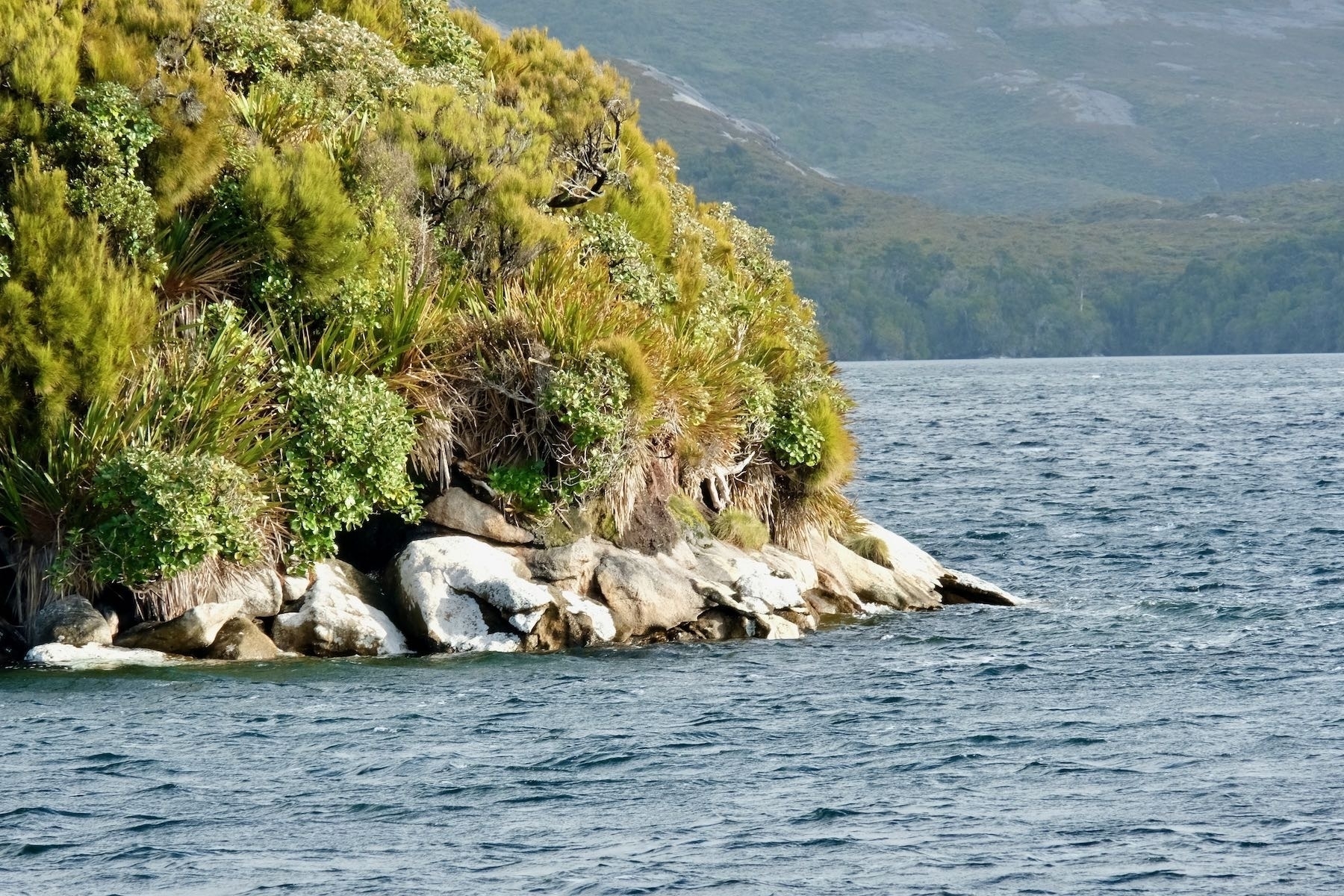
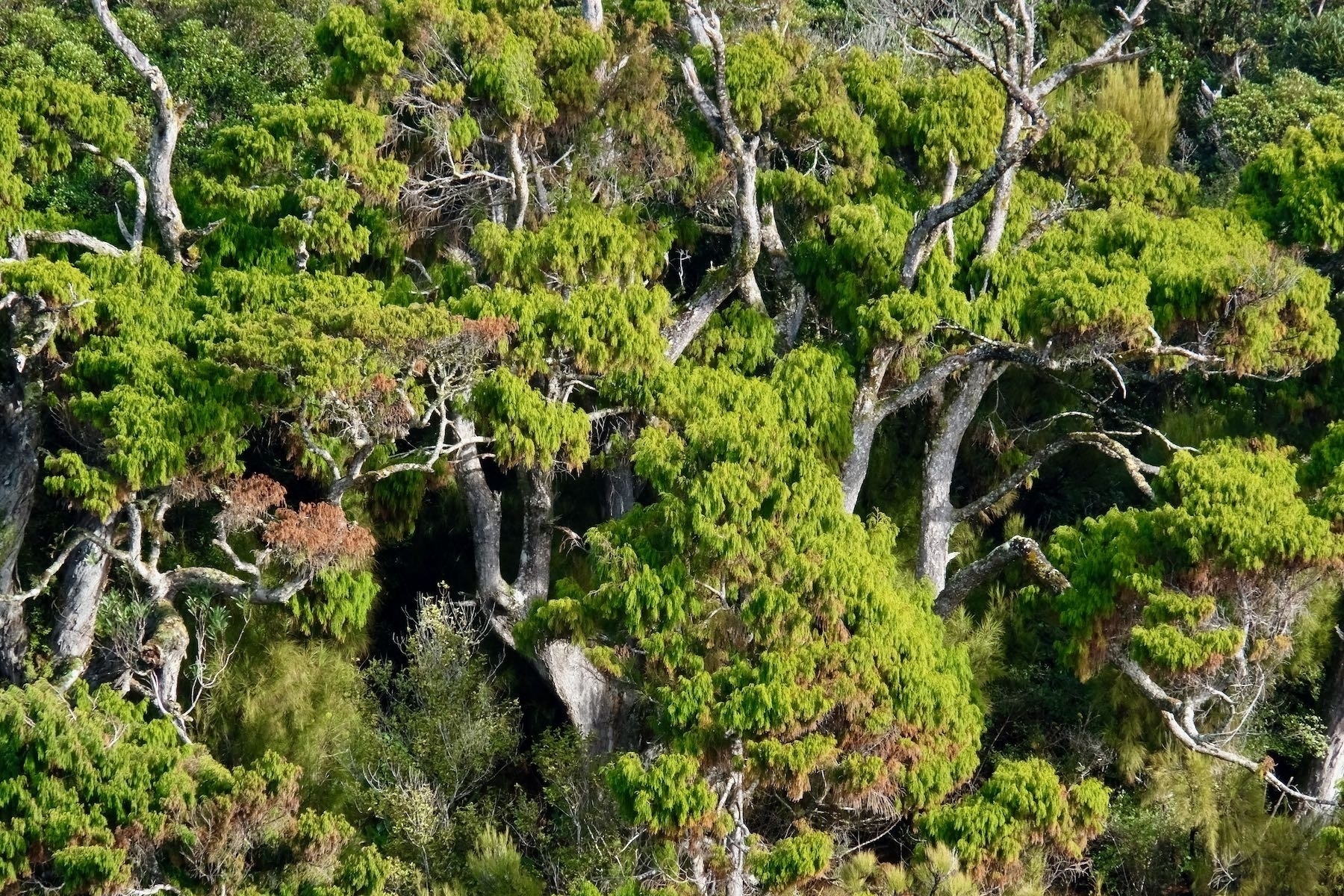
Sea lions, get yer sea lions here!
Rakiura Cruise, Day Three, morning
Wow, I slept well! I woke feeling quite stiff and achey though and decided to spend the morning on the Milford Wanderer. Quite a few opted to go on the morning’s walk: a less difficult walk than yesterday’s but still demanding, apparently, to see a sealion colony. The rest chose to spend the morning on the tender, touring nearby scenic spots.
There is blue sky and sunshine, with clouds about and the outside temperature, the captain tells me, is 10C. There’s a bite to the wind though.
We’re anchored in an unnamed spot near Disappointment Cove.
Later, after lunch, is a ride on the tender to a simple and undemanding afternoon walk.
Friday 23 July 2021
Rakiura Cruise Day Two
Whew, what a day! After breakfast of boiled egg, hash brown, tomato, sausage, plus as much toast, cereal and fruit as we wanted, the anchor came up and we motored off to Pegasus Bay — a 3 hour trip through open sea. It was rough!
I had taken Sealegs pills about 0815 but not long after we hit the open water I was outside, briefly throwing up over the rail — the officially sanctioned place for it. My neighbour Chris rubbed my back and told me to look at a distant point, not the water.
Chelsea, a crew member soon appeared with a stool for me to sit on, a drink of water and the advice to keep my eyes on the horizon, so that’s exactly what I did until about 1130 when we entered the calm waters of Pegasus Bay.
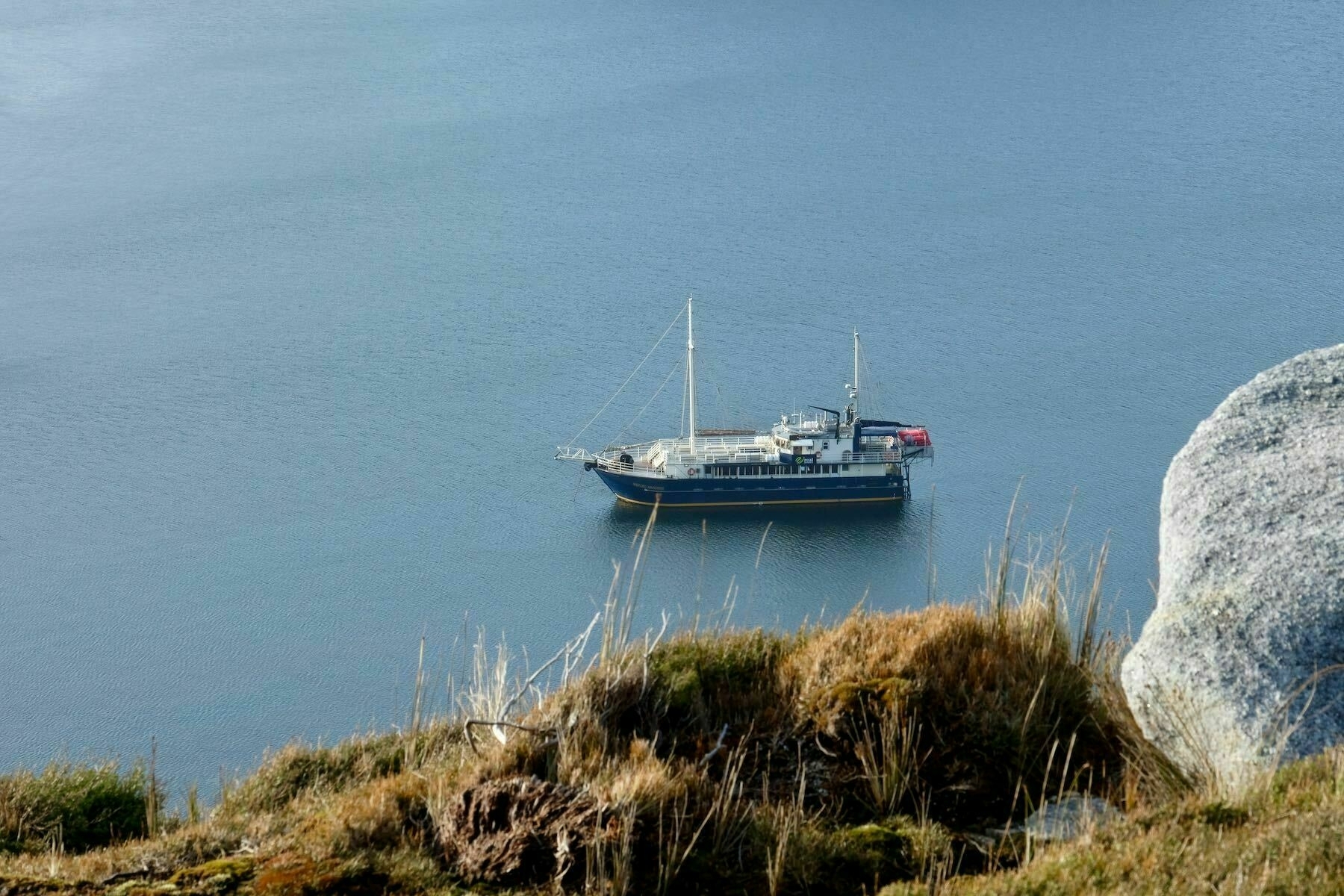
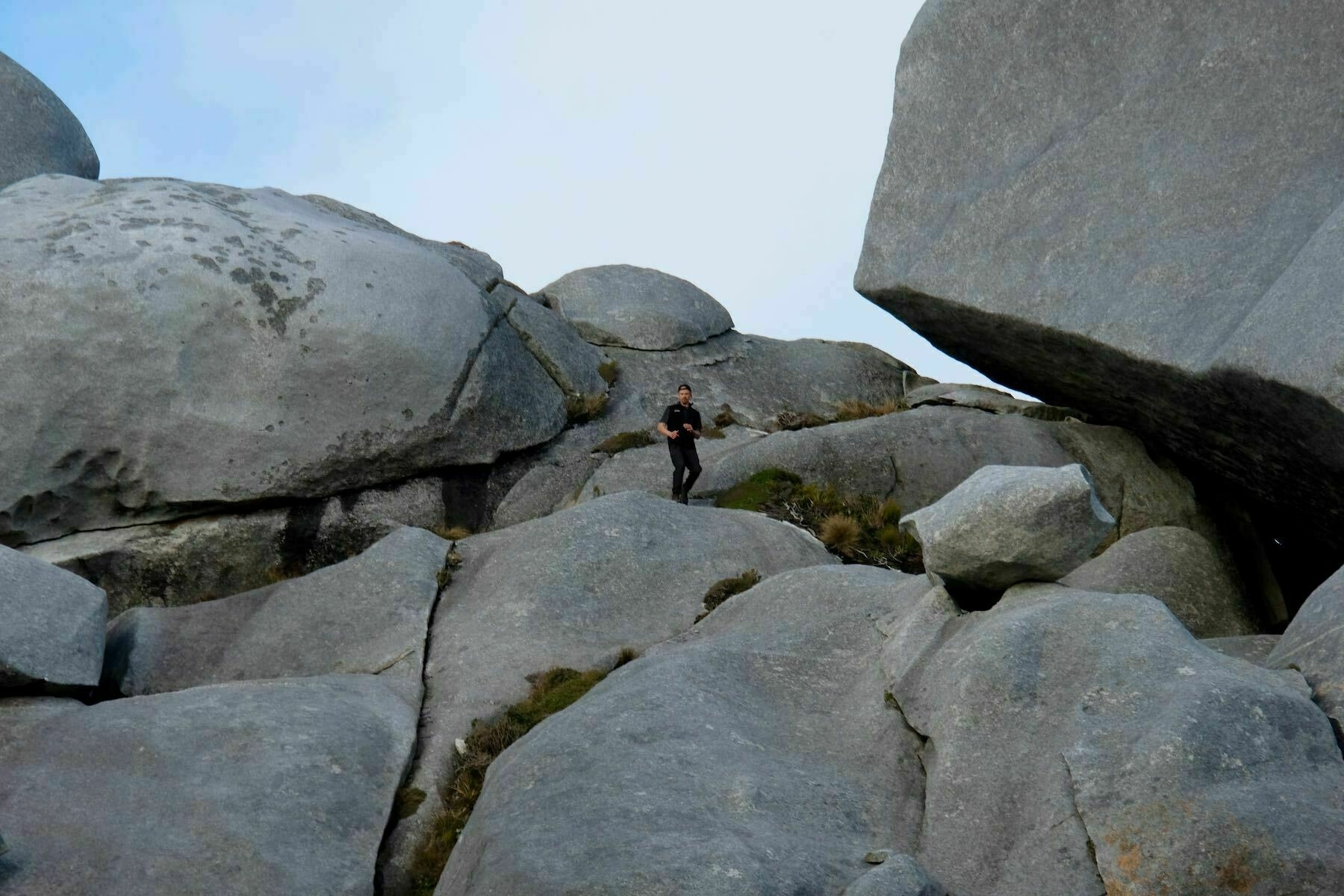
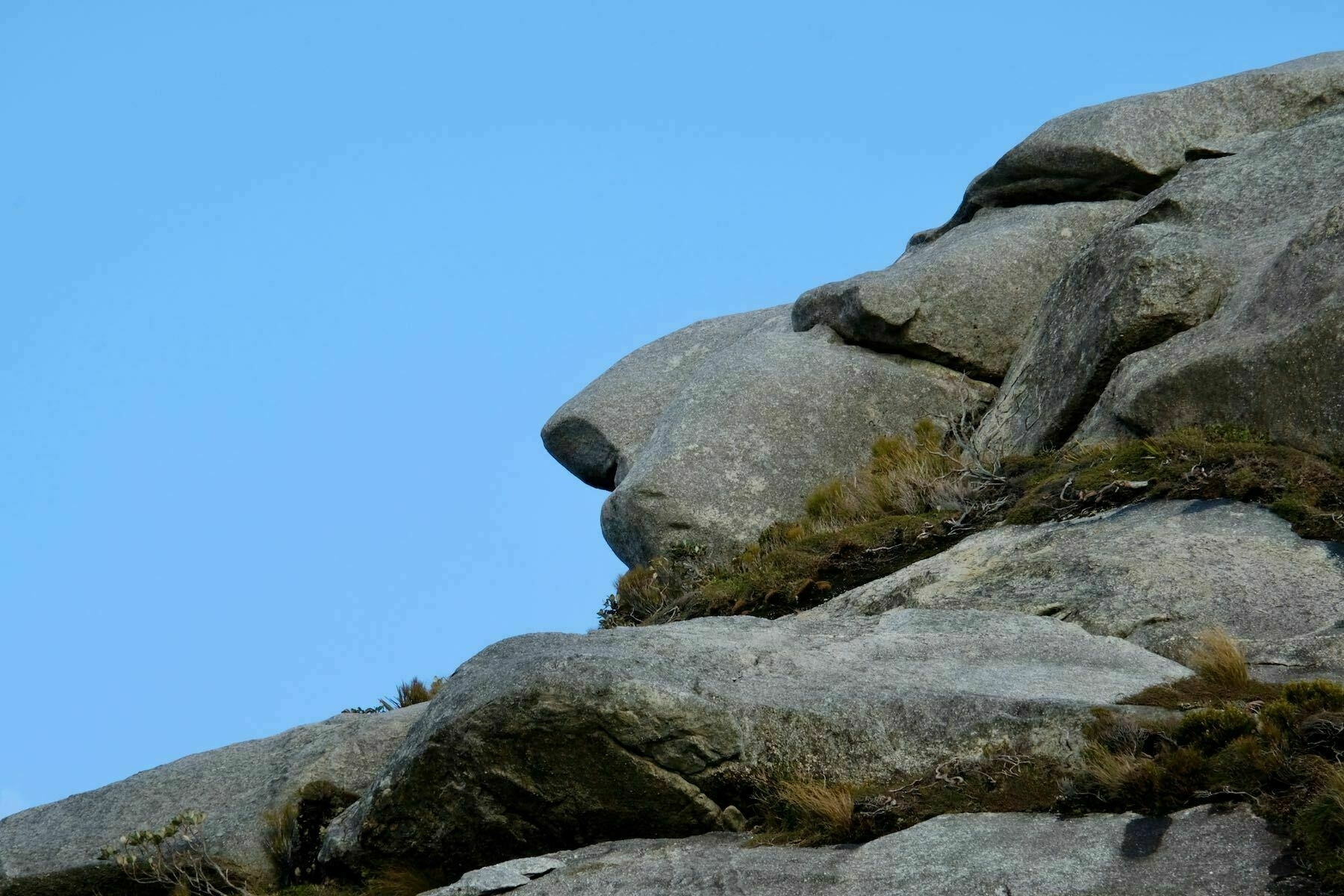
After lunch, where I elected to eat a single chicken nibble and a couple of slices of very delicious bread and butter, we were offered a chance to walk up to Bald Cone.
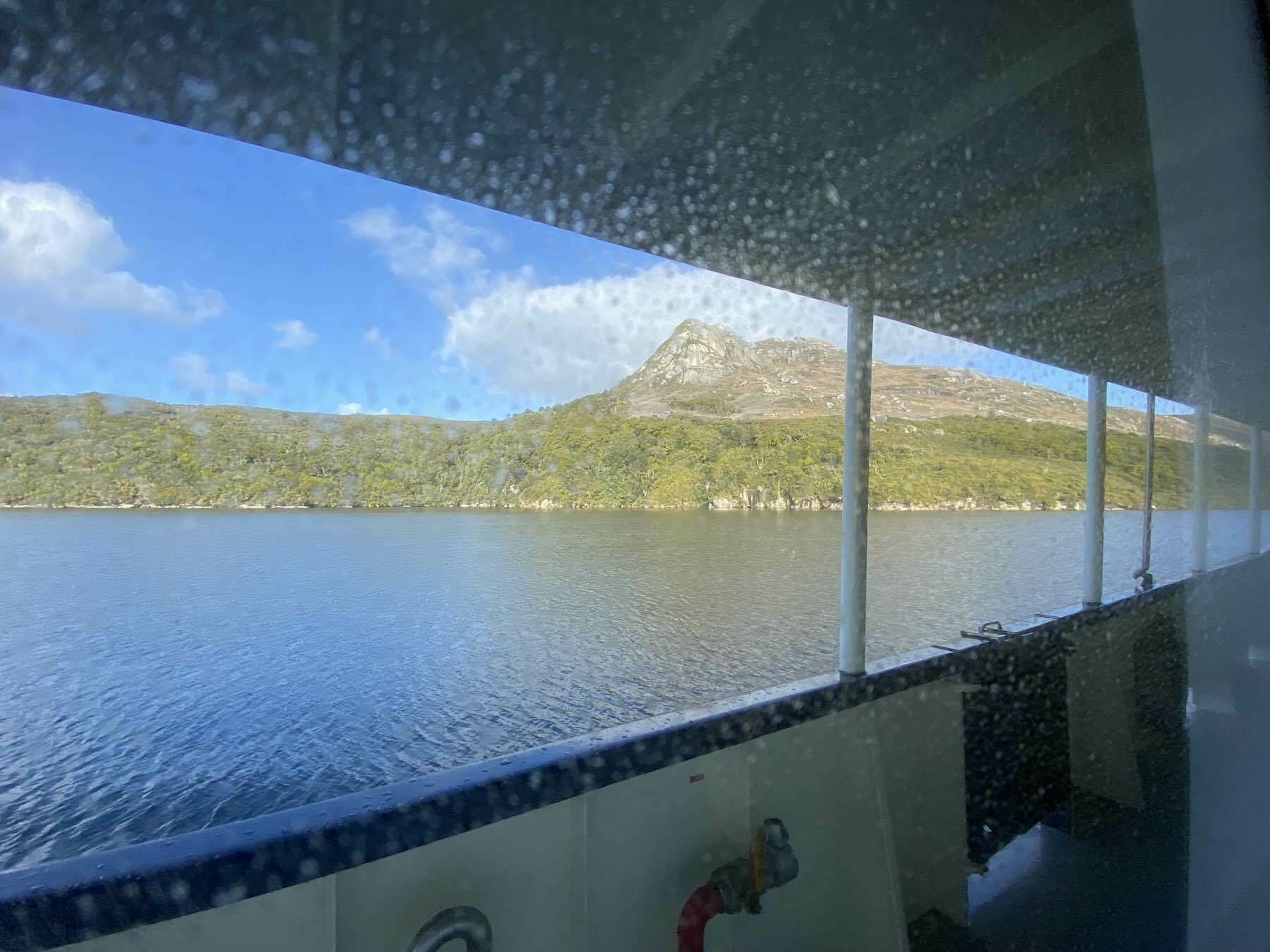
I thought I’d give it a go, along with about 20 others from the cruise. We were warned to wear gumboots with waterproof overtrousers outside the boots — we were to be hosed off when we returned!
Well, I’ve never been tramping. My milieu is walks that take up to a couple of hours, on formed tracks. I regard myself as somewhat fit — probably a 4 or 5 on a ten point scale.
I really struggled on this walk which was, of course, uphill, largely through deep watery sucky mud. (No photos of the mud because the going was too difficult to stop for such frivolities.) This part of Rakiura gets about 5 metres of rain per year and never dries out.
We had to climb for about 10 minutes before we could even stop on a flat open area to take off our life jackets and leave them on bushes.
Apart from the mud, and later the views, the most notable thing was the absolute excellence of the 3 crew members who came with the group and the helpfulness of all members of the party. We could go at our own pace and someone was always ready to help with a hand up or advise about where and how to place one’s feet.
The going was mud: deep mud, slippery mud, almost knee deep mud, puddles of mud, bogs, steep steps of mud, grooves of mud, mud that threatened to hold the gumboot fast while the foot moved on.
It was a matter of using the walking pole for balance, and holding on to any available vegetation for support.
After our first major stop, about a third of the way up, I was feeling very tired and suggested I wait there for everyone else to complete the climb. While the crew made clear it was my choice they also expressed concern that I’d have a long wait and it would be very cold. They offered me a cup of tea, and I accepted a hot water.
Since they’re the experts on the environment and safety and such things I agreed to continue, but after even more slogging through mud and bogs I decided to stop at the next rest point, about 2/3 of the way up. I would have a roughly one hour wait. Again the crew supplied me with hot water, this time with a chocolate biscuit, and they made sure I had a sheltered spot to wait.
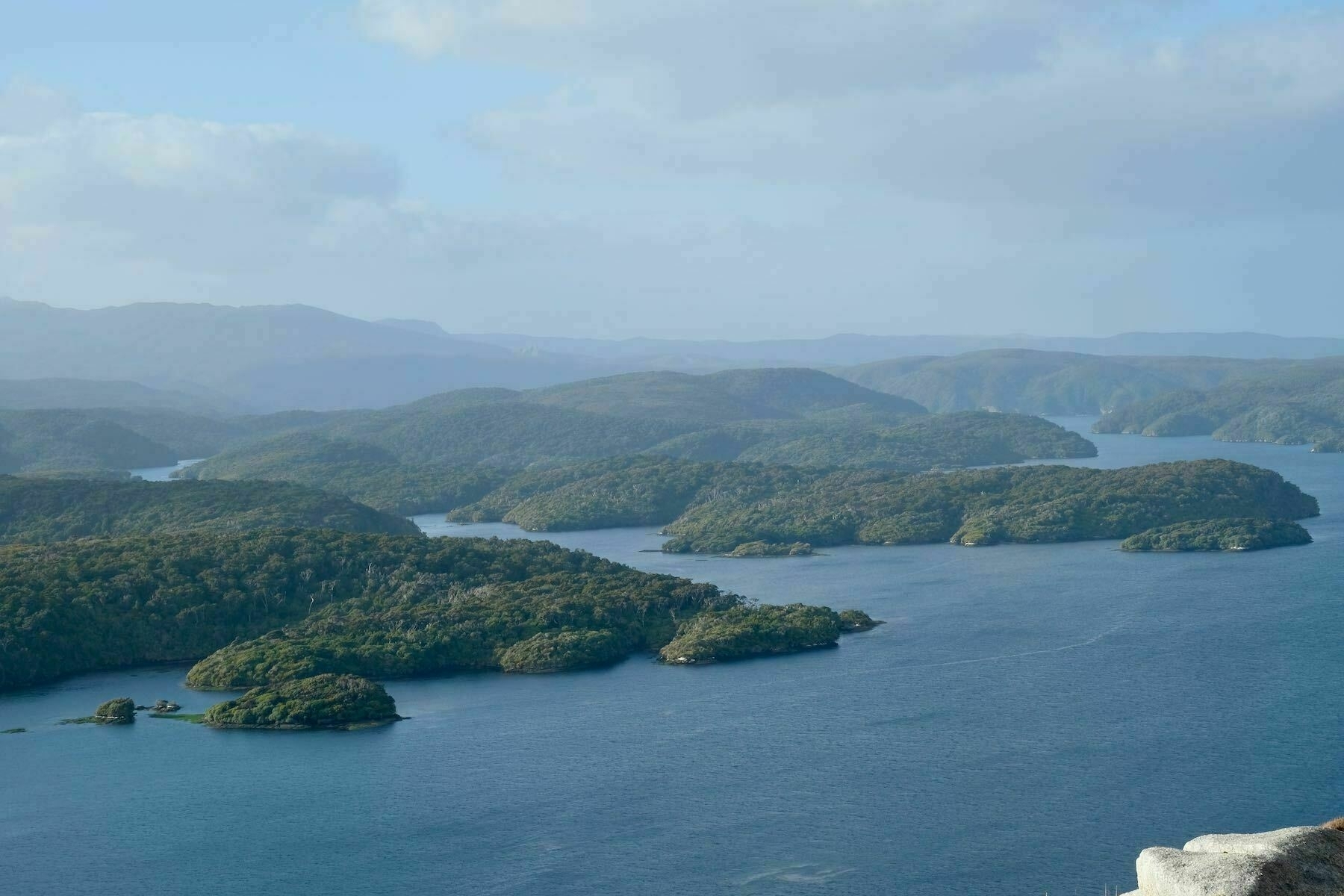
So, I had an hour to rest, enjoy the scenery and take a load of photos.
Once back on the Milford Wanderer I gratefully grabbed a brief shower, enjoyed pork loin and vegetables for dinner then fell into bed at around 6.30 pm.
Thursday 22 July 2021
Rakiura Cruise, Day Zero
To start with we needed to travel from home to Invercargill. That meant setting off with our neighbours in the car at about 0915. We drove ~100 Km to Wellington Airport, parked in the long-term carpark, caught the free shuttle to the terminal and hung around until the flight left around 1230. Because it was a local flight on a small plane we didn’t have to go through security.
After a 1 hour flight to Christchurch, enjoying views of the snow-capped Kaikouras, we had a quick lunch and boarded the local flight to Invercargill, so again, no security rigmarole to worry about.
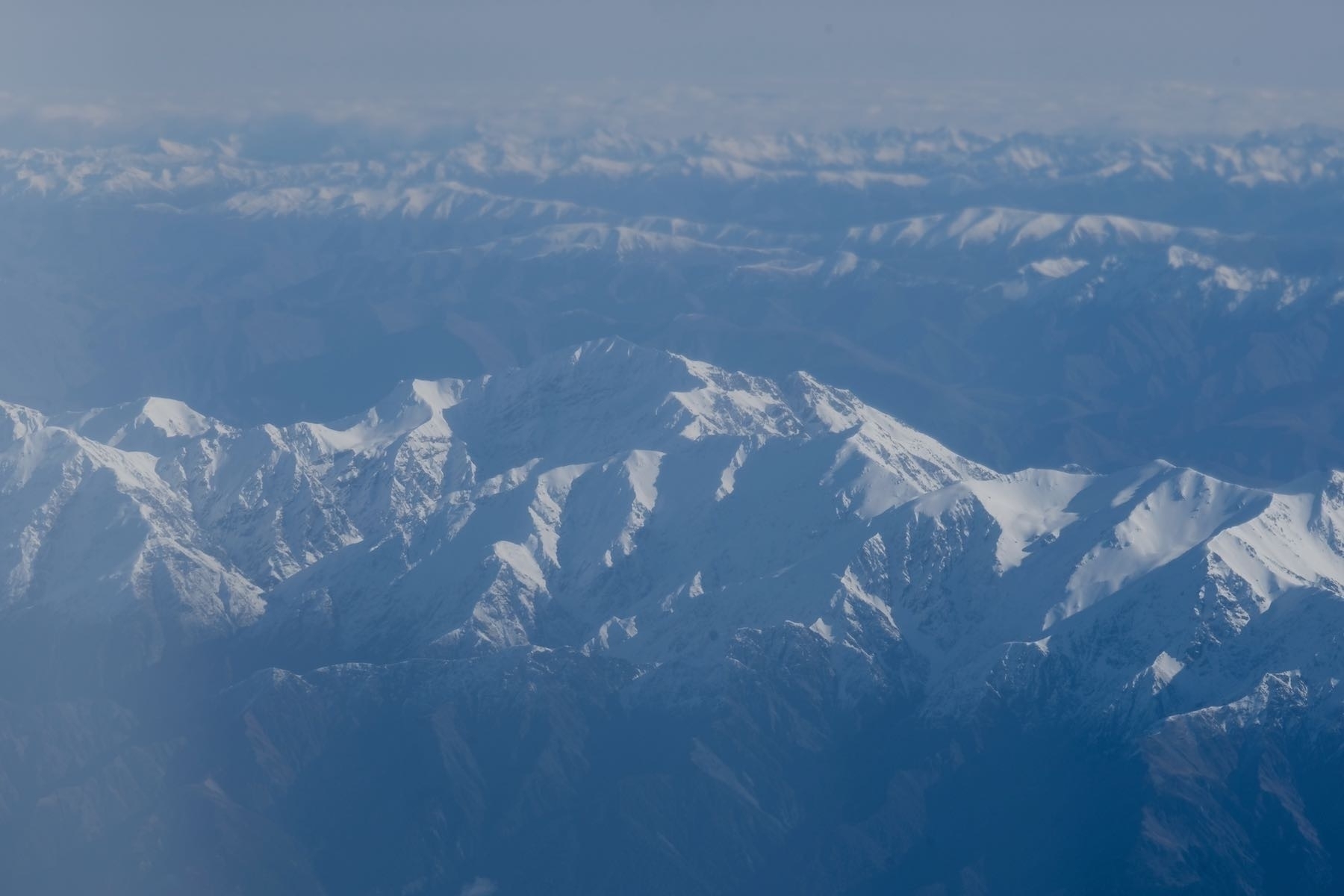
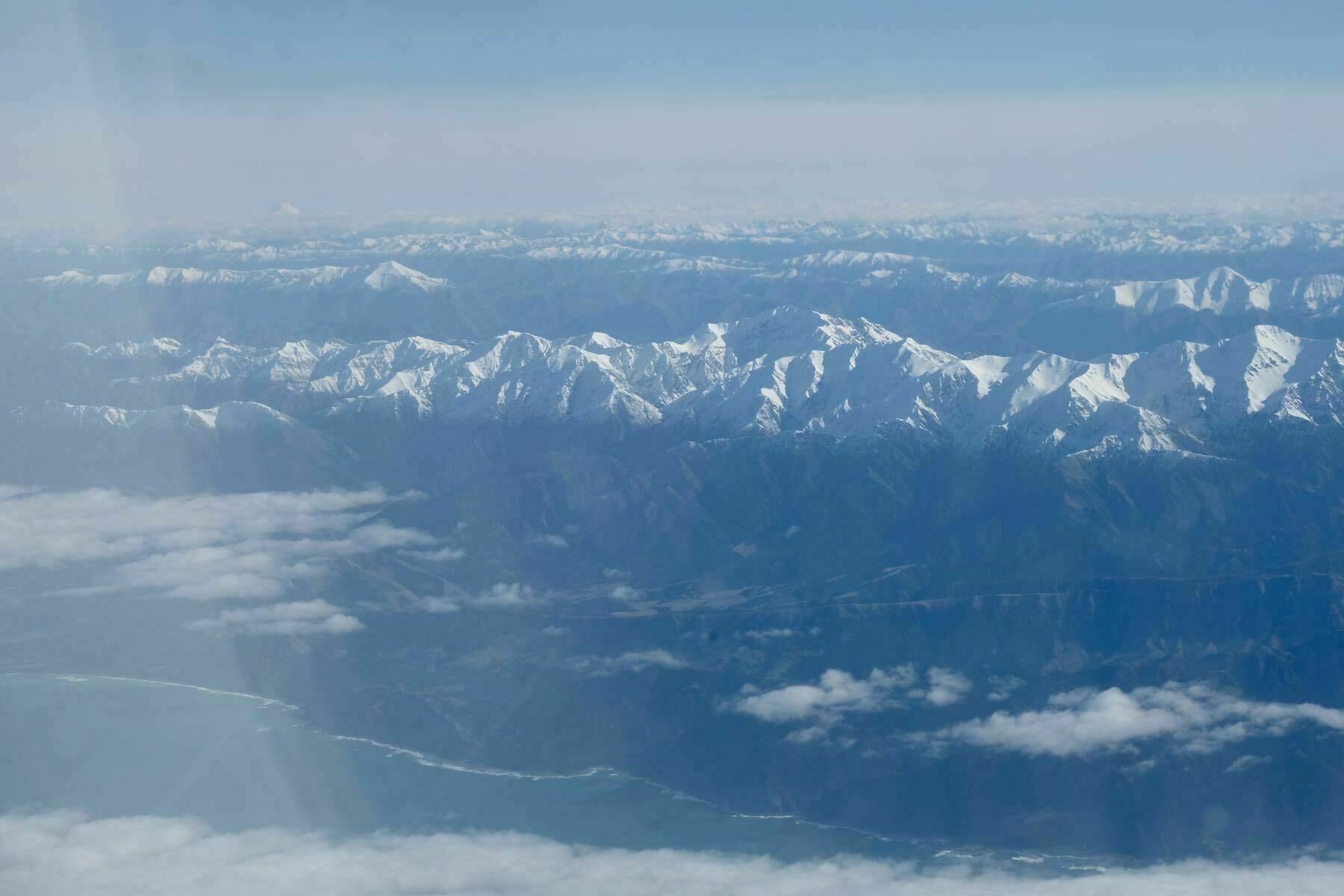
This time it was about an hour and a half, with views of snow capped Alps, but not on my side of the plane.
Finally we saw the Tiwai Point aluminium smelter and a small nearby wind farm, banked to the east and landed at Invercargill, Waihōpai.
Our tour leader, Alison, met us and kindly drove us to the Quest Hotel in the middle of Waihōpai, where we shared a comfortable 2 room apartment with our neighbours Chris & Jan from Waikawa Beach.
Alison had organised a meal for most of the tour group at The Rocks, a few minutes walk away.
With a group of 20 to feed, along with other customers, our meal was a long time coming, but it was worth the wait.
The restaurant was pretty noisy so conversation was a bit tricky, but it was a good chance to introduce ourselves to a couple of our fellow travellers. My neighbour had travelled from Palmerston North, while the person across the table from me came from north of Whangārei.
It was early to bed for me, though Deb joined the end of a Zoom call for the training she’s completing this year.
Tuesday 20 July 2021.
Rakiura Cruise, Day One highlight
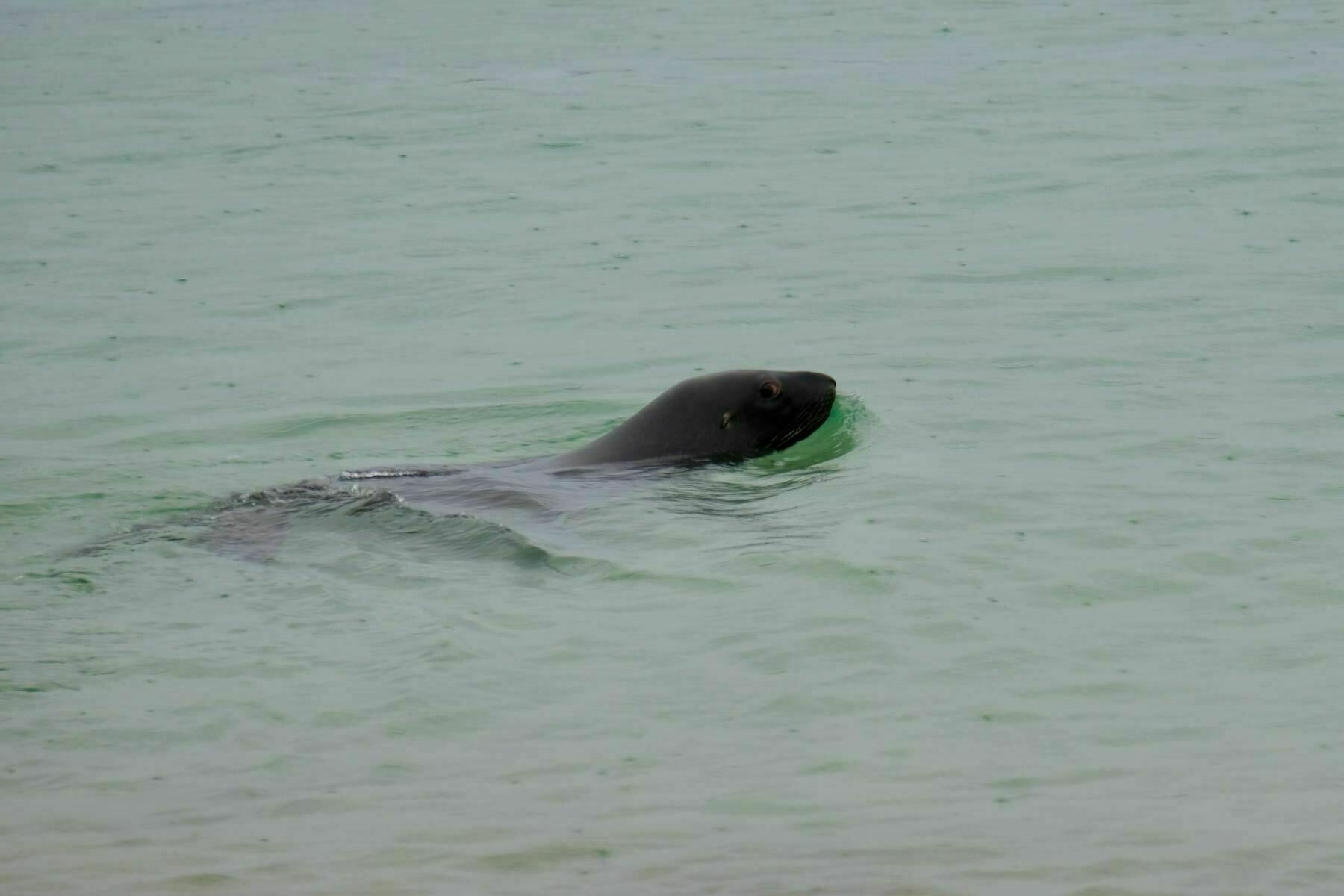
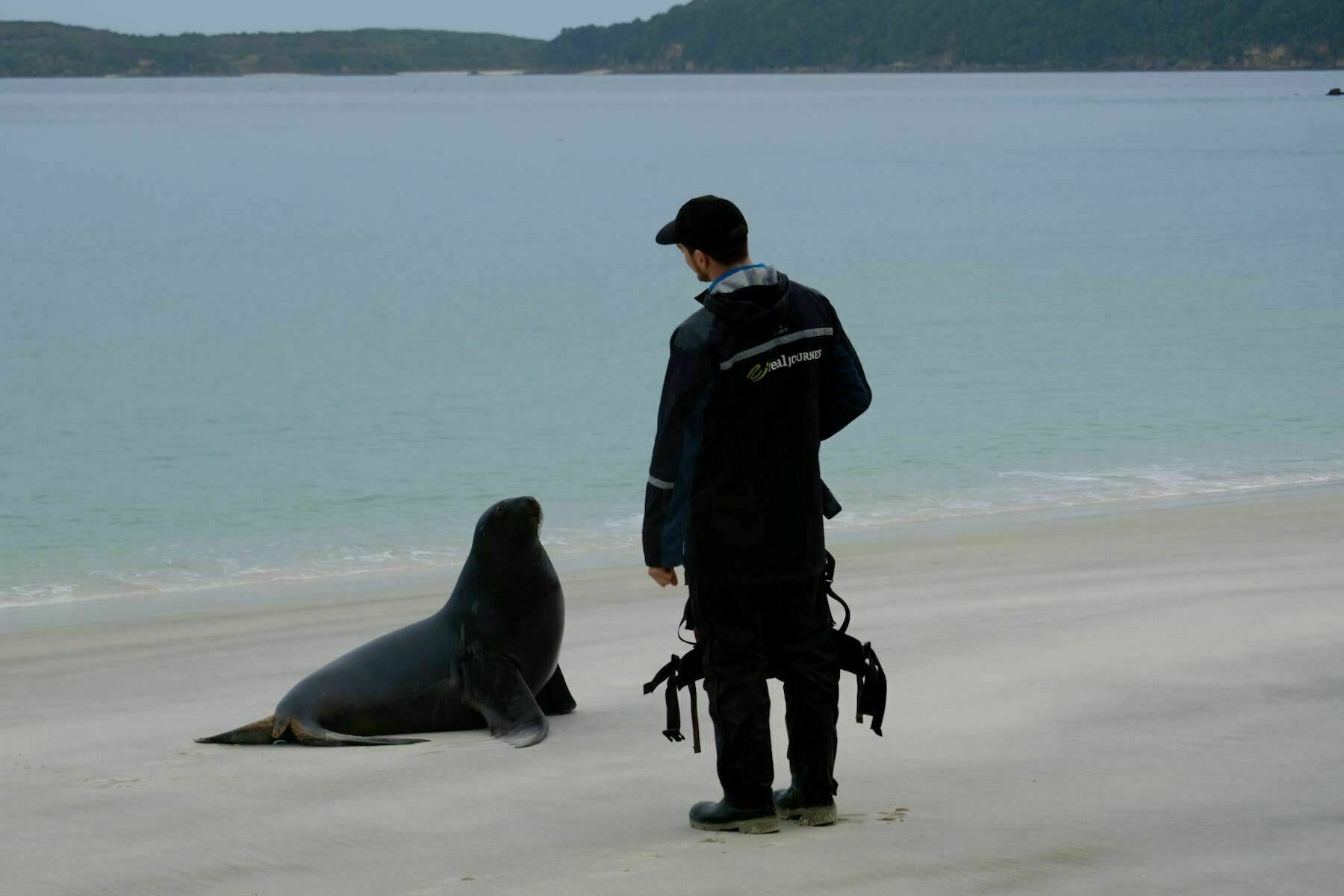
Rakiura Cruise, Day One: one highlight was the teenage male sealion that came up on the beach at Port Adventure, where oysters were first harvested commercially in the 1800s.
Wednesday 21 July 2021