
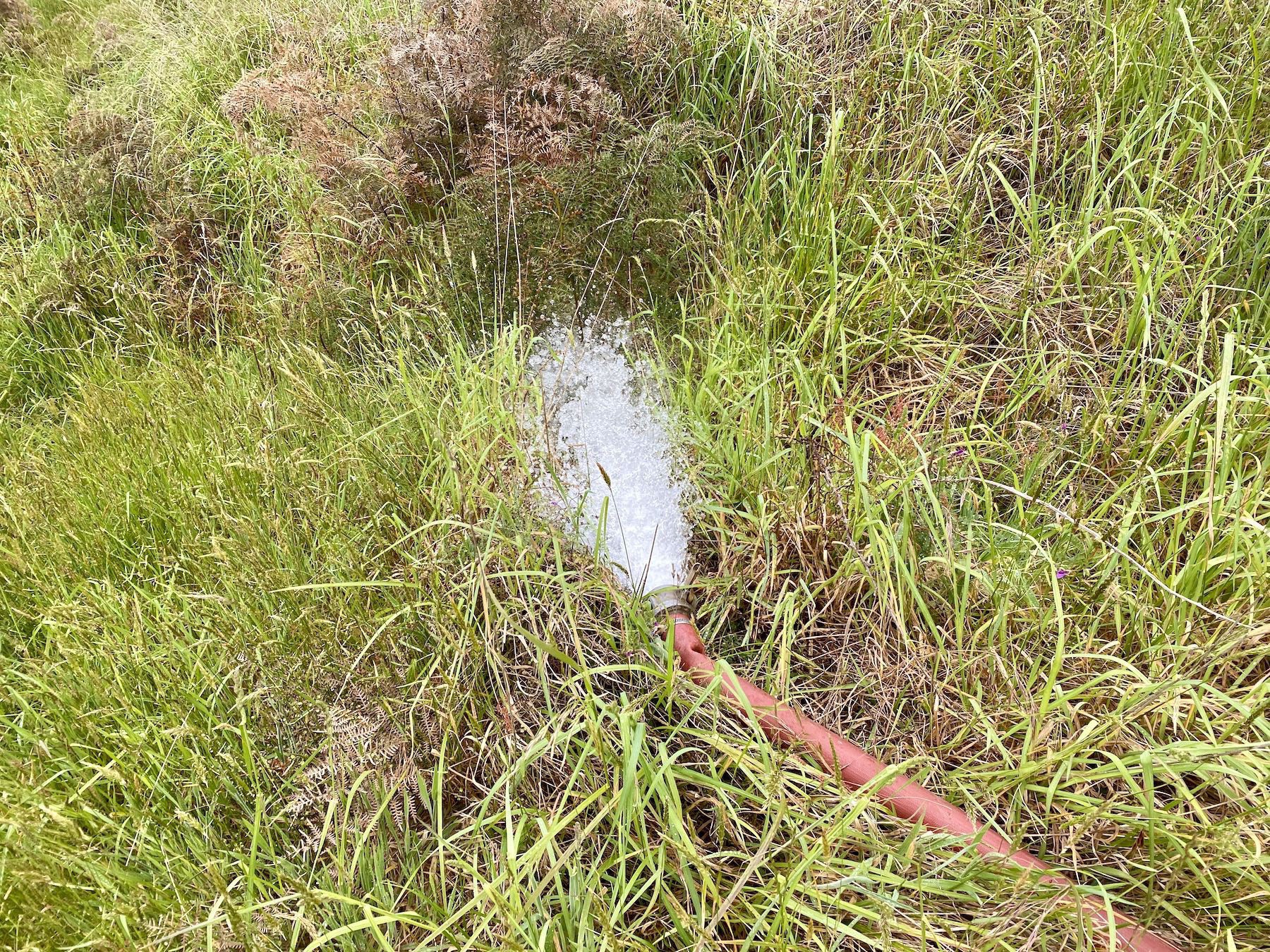
A hollow tube came in so handy for extracting 20,000 litres of rotten water from the tank.
mbnov 21-Nov-19: hollow
Why 20,000 litres of water had to go
Our house has beside it a concrete tank with around 20,000 litres capacity. Rainwater comes off the roof, through a first flush diverter that helps keep it clean of debris, and then into the tank. When we turn on a tap in the house the pump on top of the tank runs, pulls water from near the bottom of the tank and feeds it to the tap.
It's a great system that certainly makes us aware of whether or not it's rained recently and how much water we're using.
Until things go wrong.
A few weeks ago while I was showering I thought something smelled odd. Thanks to being unwell and some stuff going on, I hadn't cleaned the drain for a bit so figured that must be the problem. A good clean didn't fix things and over the next week the smell grew into a stench.
After some Internet searches which suggested various possible causes I went and stuck my head in the water tank: phew! That smelled bad and was definitely the source of the problem.
I bought water treatment (hydrogen peroxide with a little silver) and added that. Maybe the smell abated a little. I added more, for a shock treatment. We still had a problem and started buying expensive bottled water (~1 litre per dollar) for drinking.
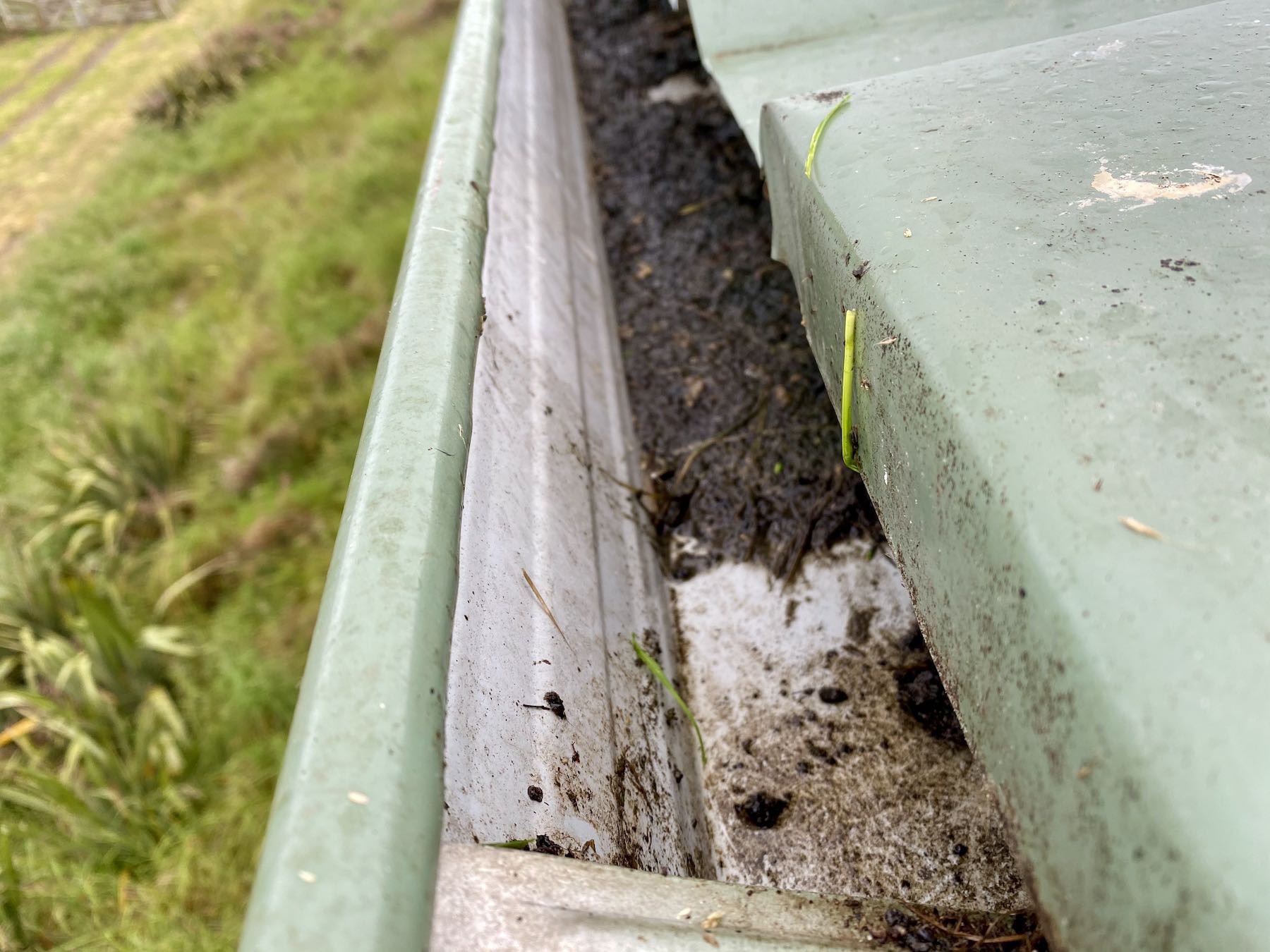
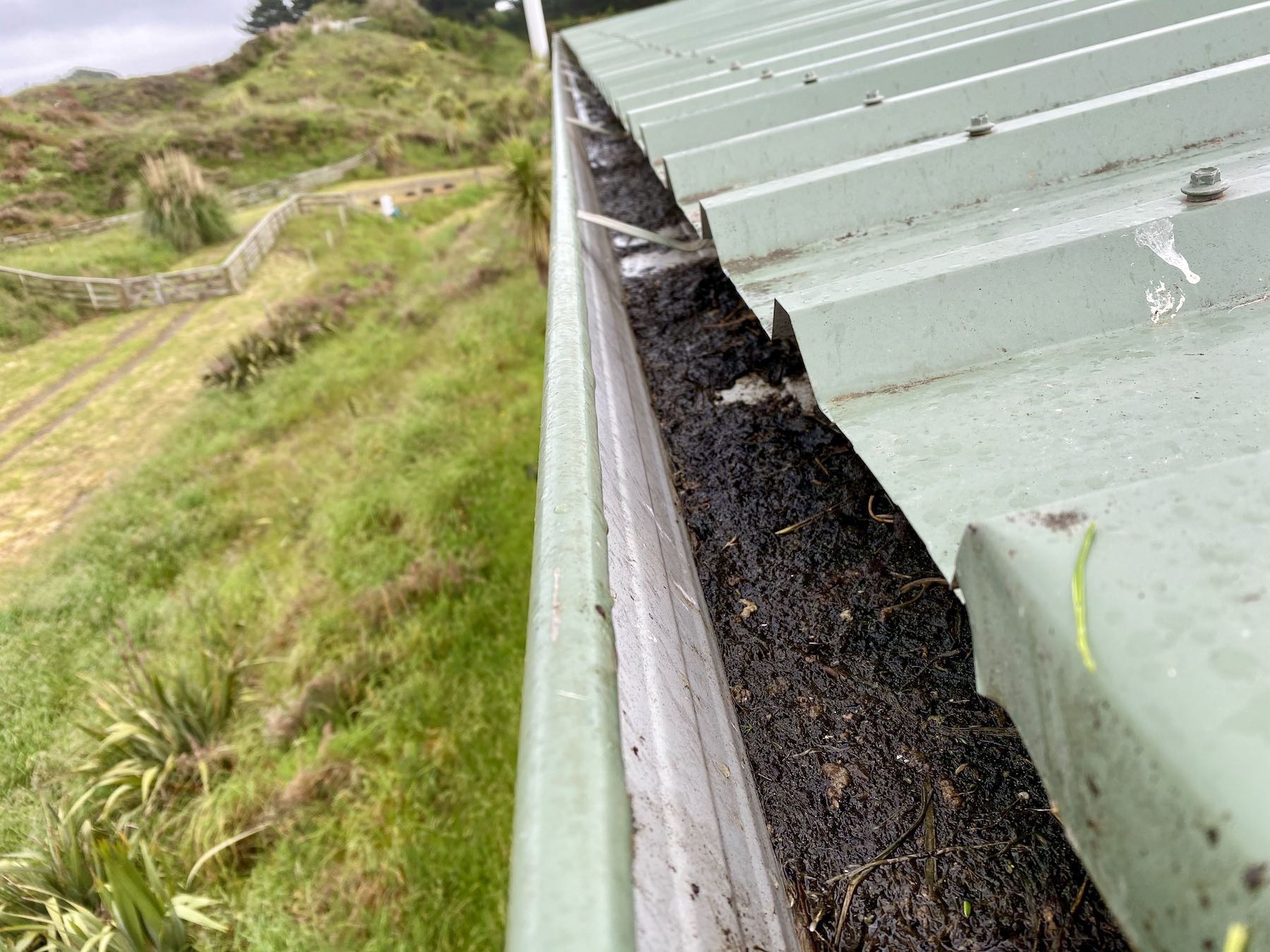
Next up: clean the gutter. I tried asking around for someone to get on the roof and clean the gutter for pay, but that brought zero results. Finally, last weekend, I did it myself. I climbed the ladder to the one spot I could reach, pulled out a big clump of grass, and by stretching out one arm with my iPhone in it was awkwardly able to take a photo. The gutter was an inch thick in gunge. Yuck!
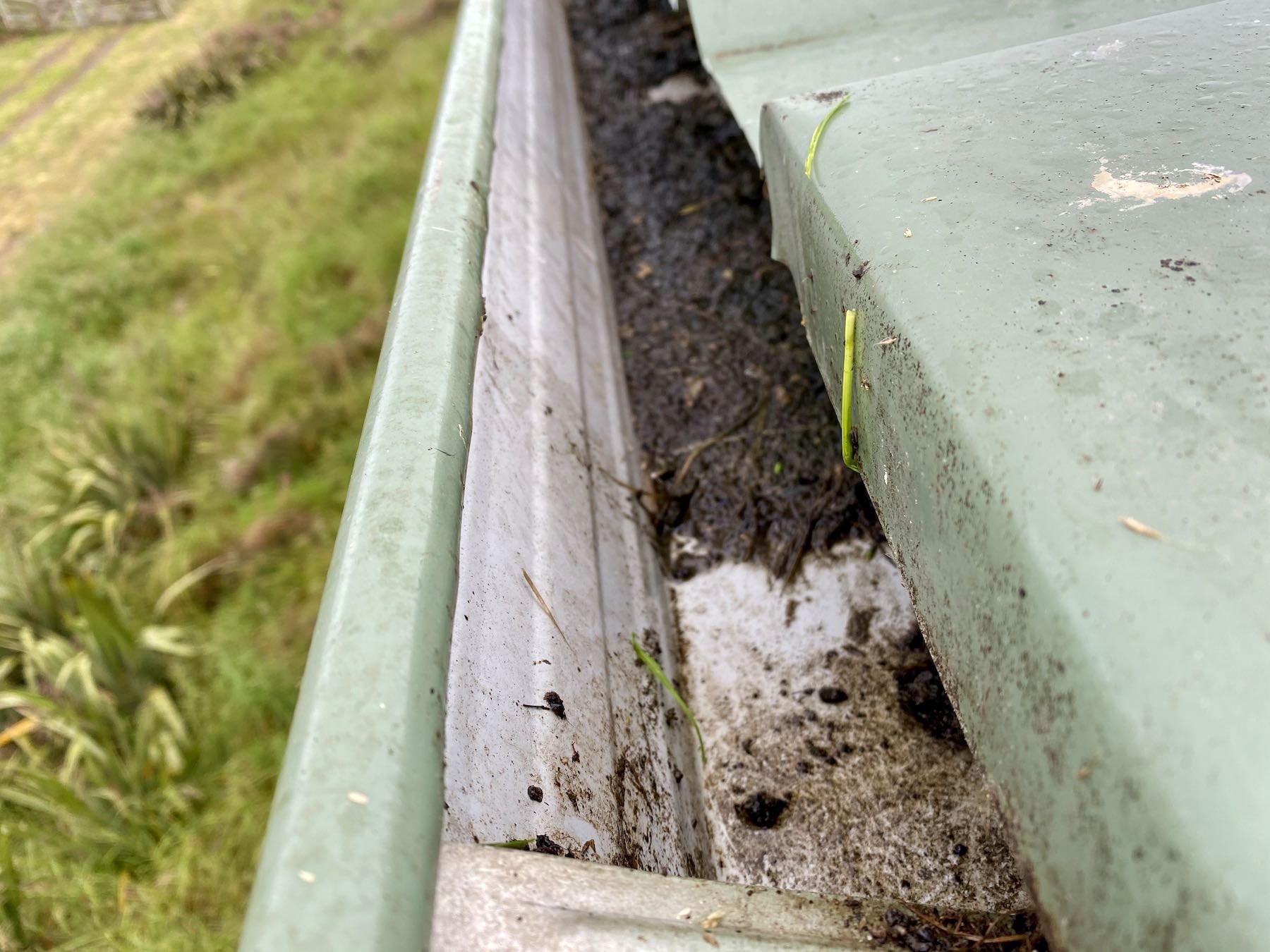
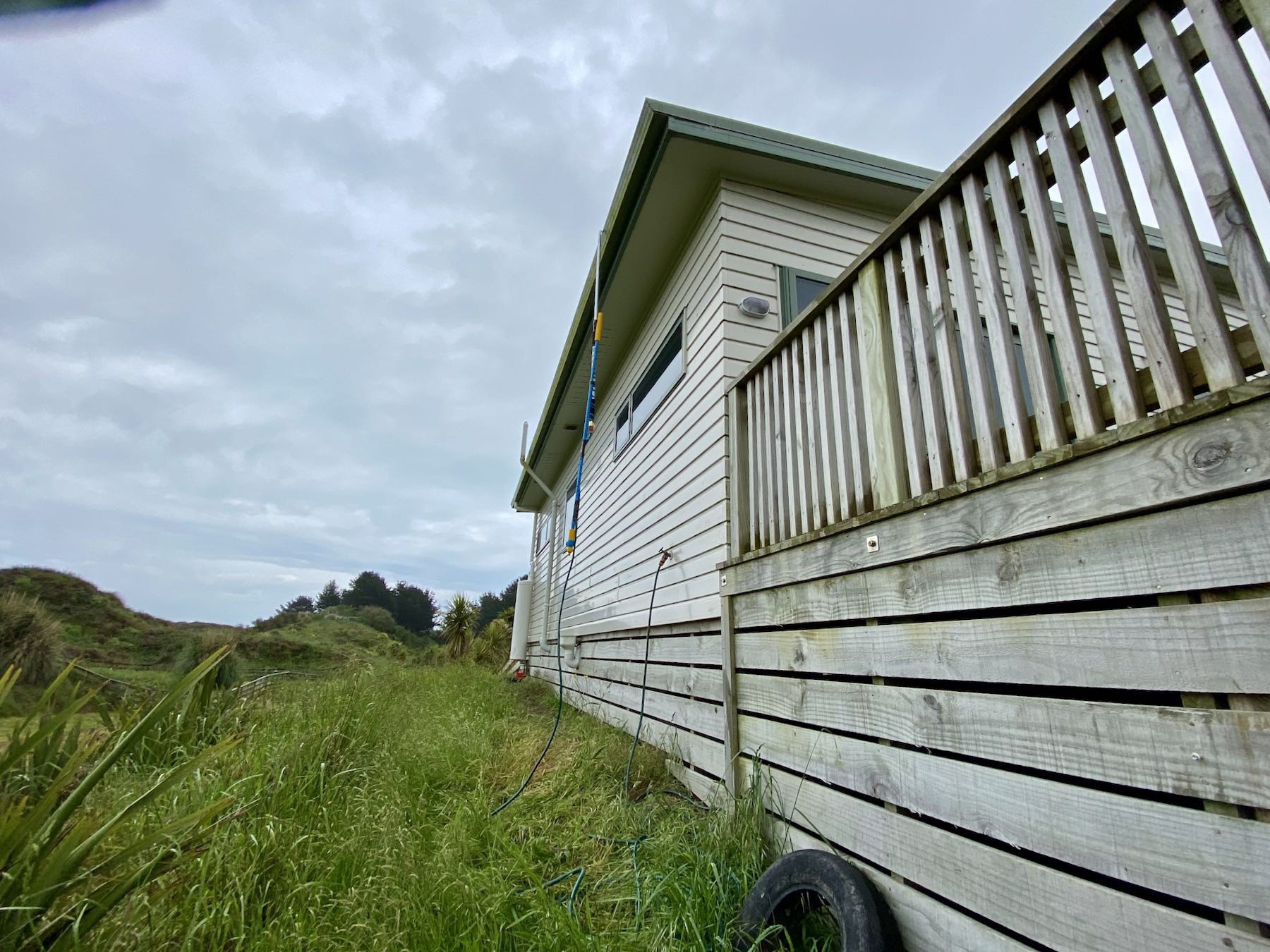
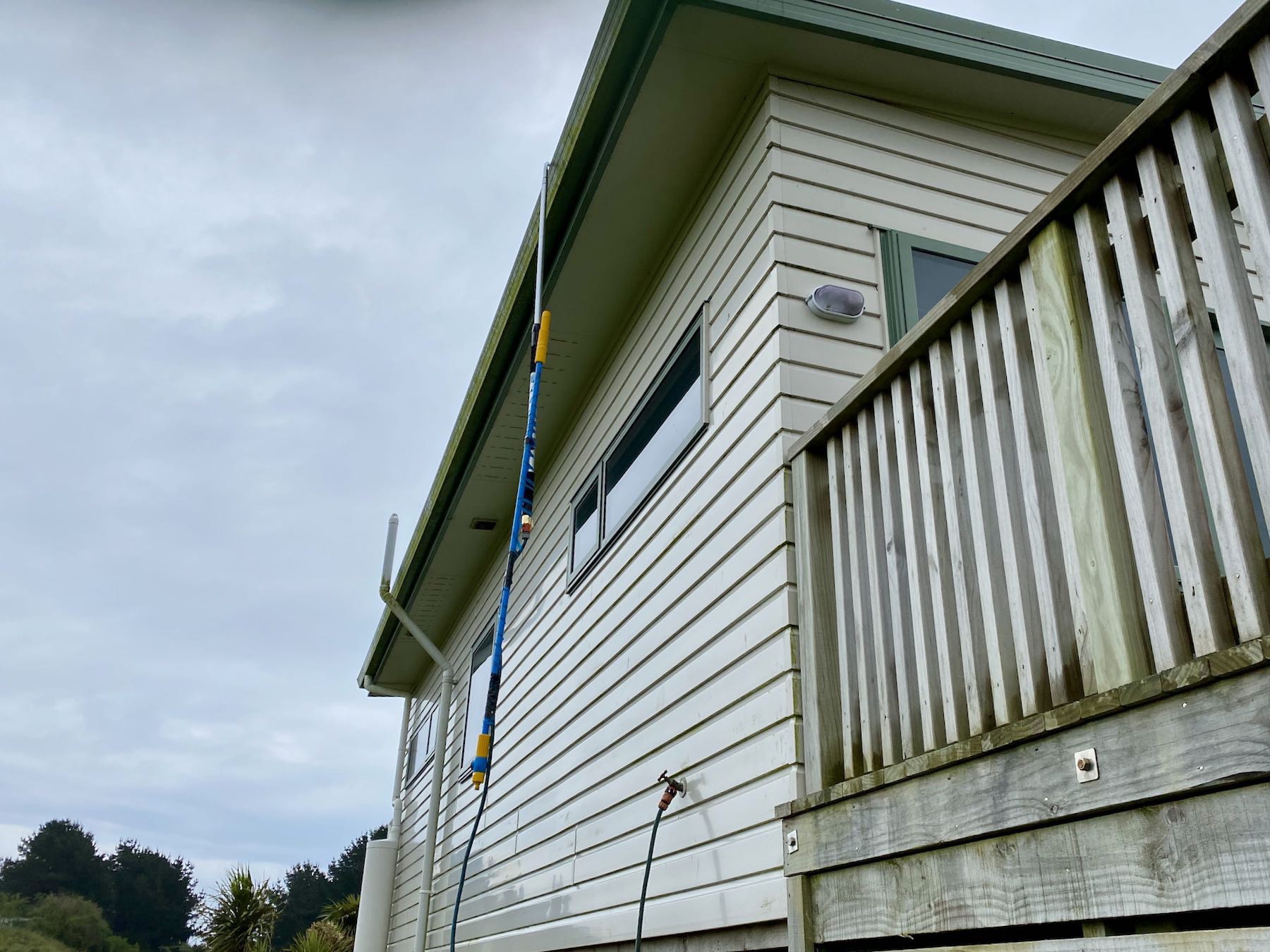
After disconnecting the first flush diverter from the tank, I then taped the gutter cleaning attachment and garden hose to a long pole and walked along below the gutter with arm stretched high, doing my best to wash out the gunk. I still need to go back up the ladder with camera to see how successful I was, but a lot of dirt washed out of the bottom of the diverter.
Next up was a test for E. Coli from the closest water testing lab in Palmerston North. They shipped me a sterile sample bottle, an ice pack and a polystyrene container. I followed the instructions for cleaning the tap, running water for a while and then taking the sample. Then I had to make a special trip to Palmerston North to get the sample back to the lab within 24 hours. Our rural delivery postie is excellent, but the sample wouldn't have arrived within the 24 hour period.
The lab culture the sample for 24 hours and then examine it with a microscope and count the bacteria.
Our results were not good. E. Coli should be below 1 per 100mL, our count was 11.
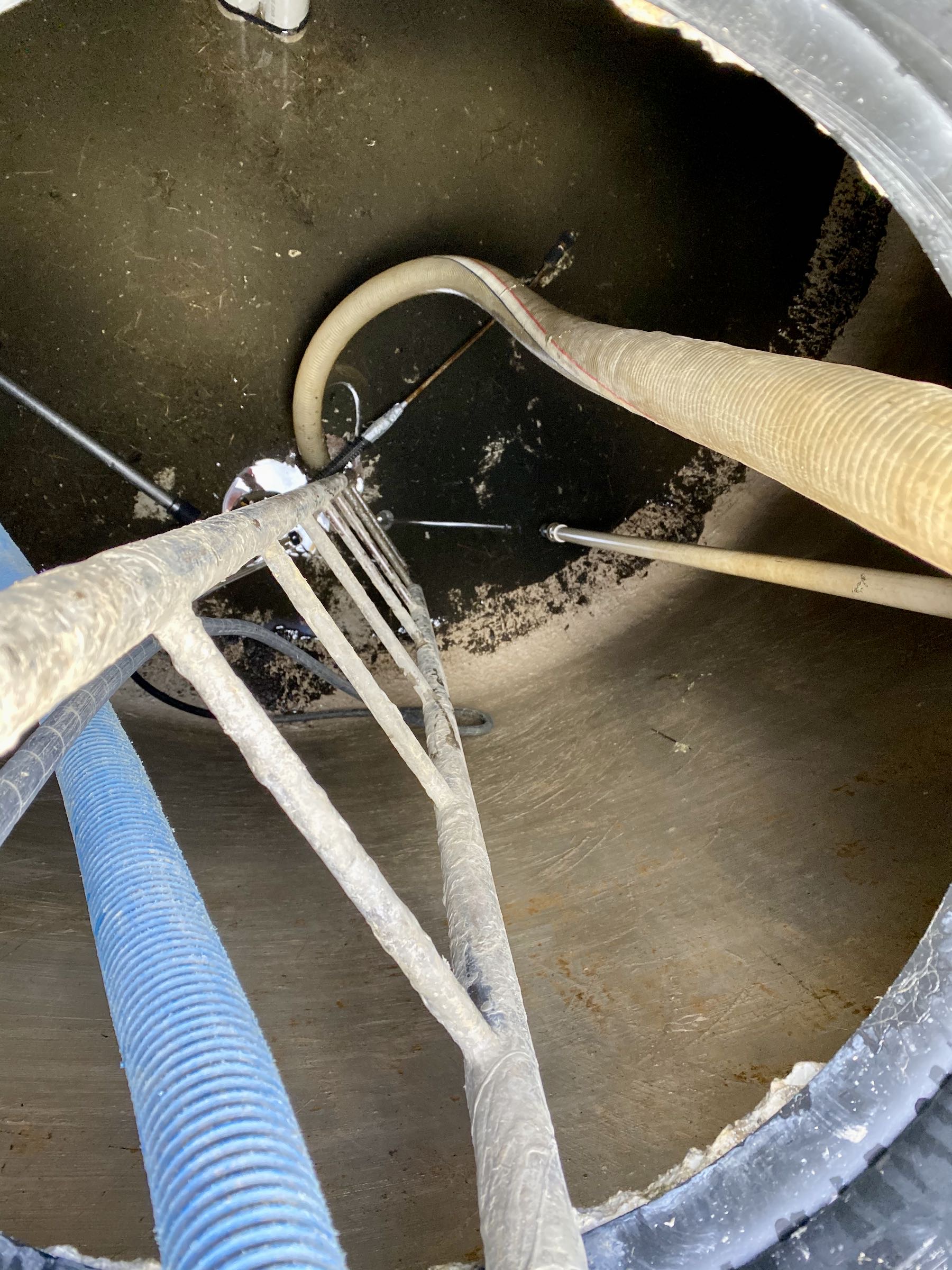
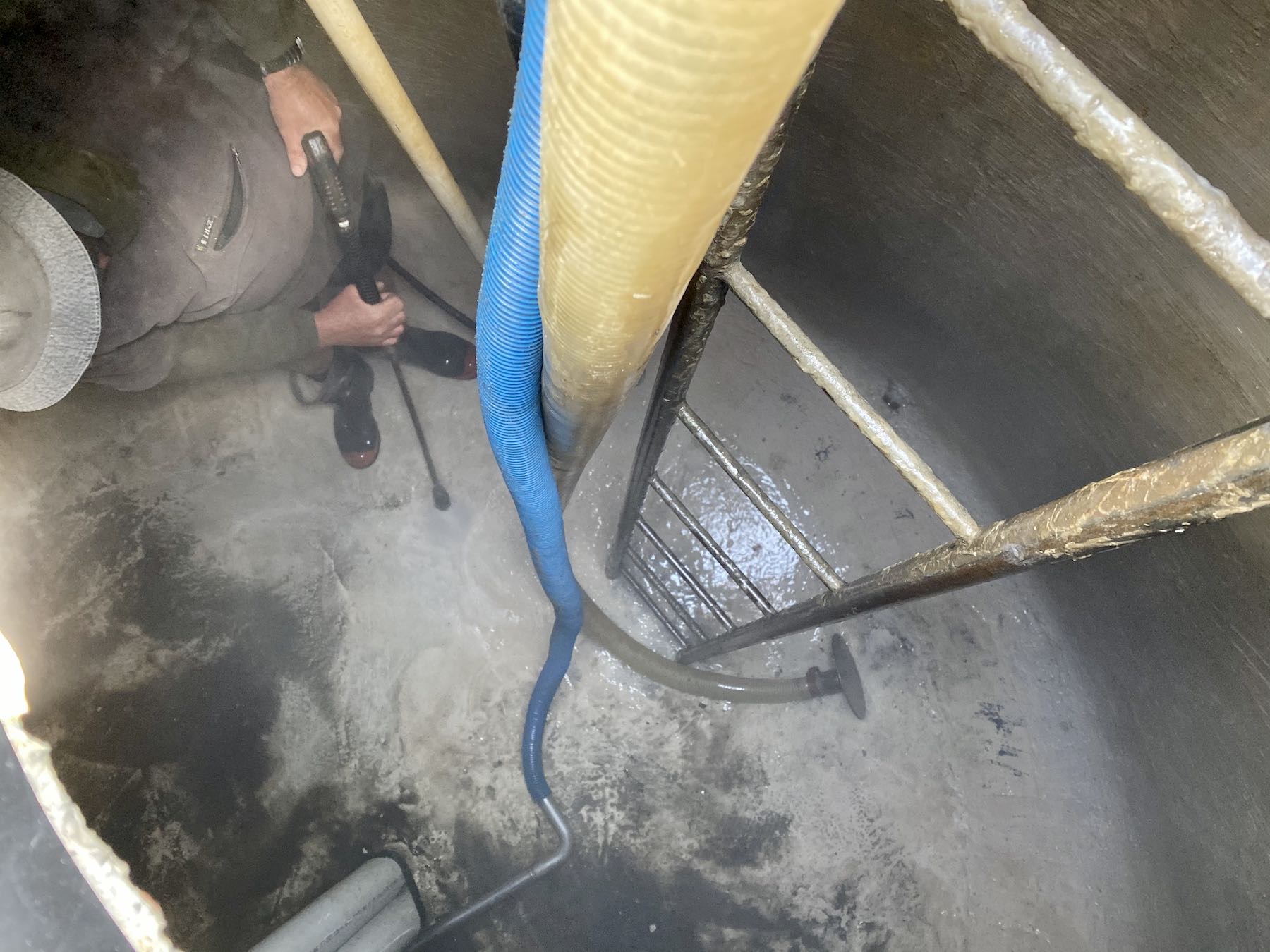
I contacted our local water supply guy, Reggie, who gave me a contact for a company who clean out water tanks. They came the next day. First they pumped out all the water from the tank — our was brim full, so that was 20,000 litres. Then Russell squeezed himself through the access hole, climbed down the ladder and vacuumed out the gunge from the bottom and walls. The gunk was extracted through a long hose back to the truck. Vacuuming was followed by water blasting and more vacuuming until the interior of the tank was spotless.

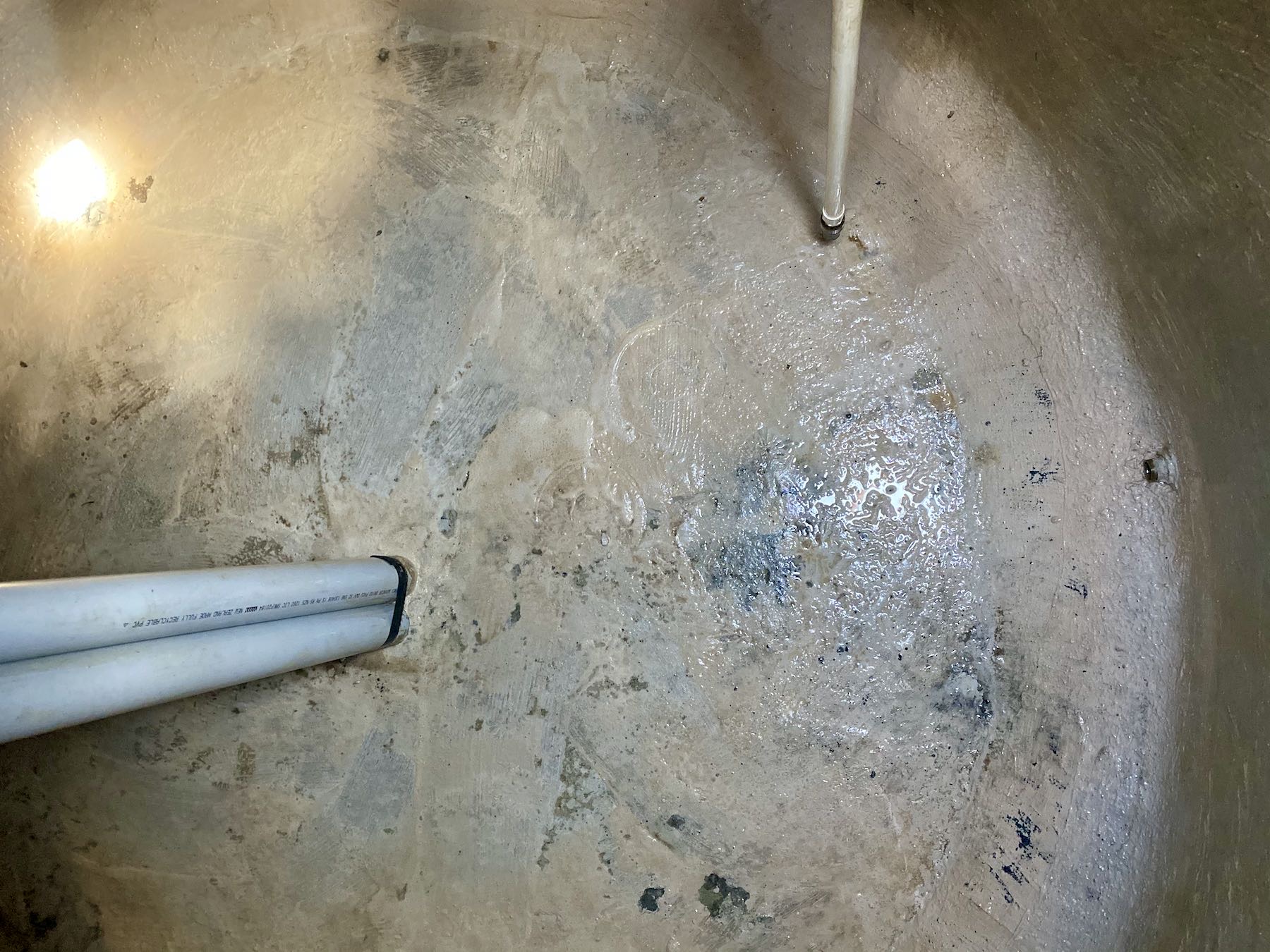
By that time Reggie had turned up with 14,000 litres of clean fresh treated water from the artesian source at Ōtaki (~46 litres per dollar). While the tank filled, Warren from the cleaning company added a strong concentration of hydrogen peroxide to dose the water and help clean out the pipes through the house.
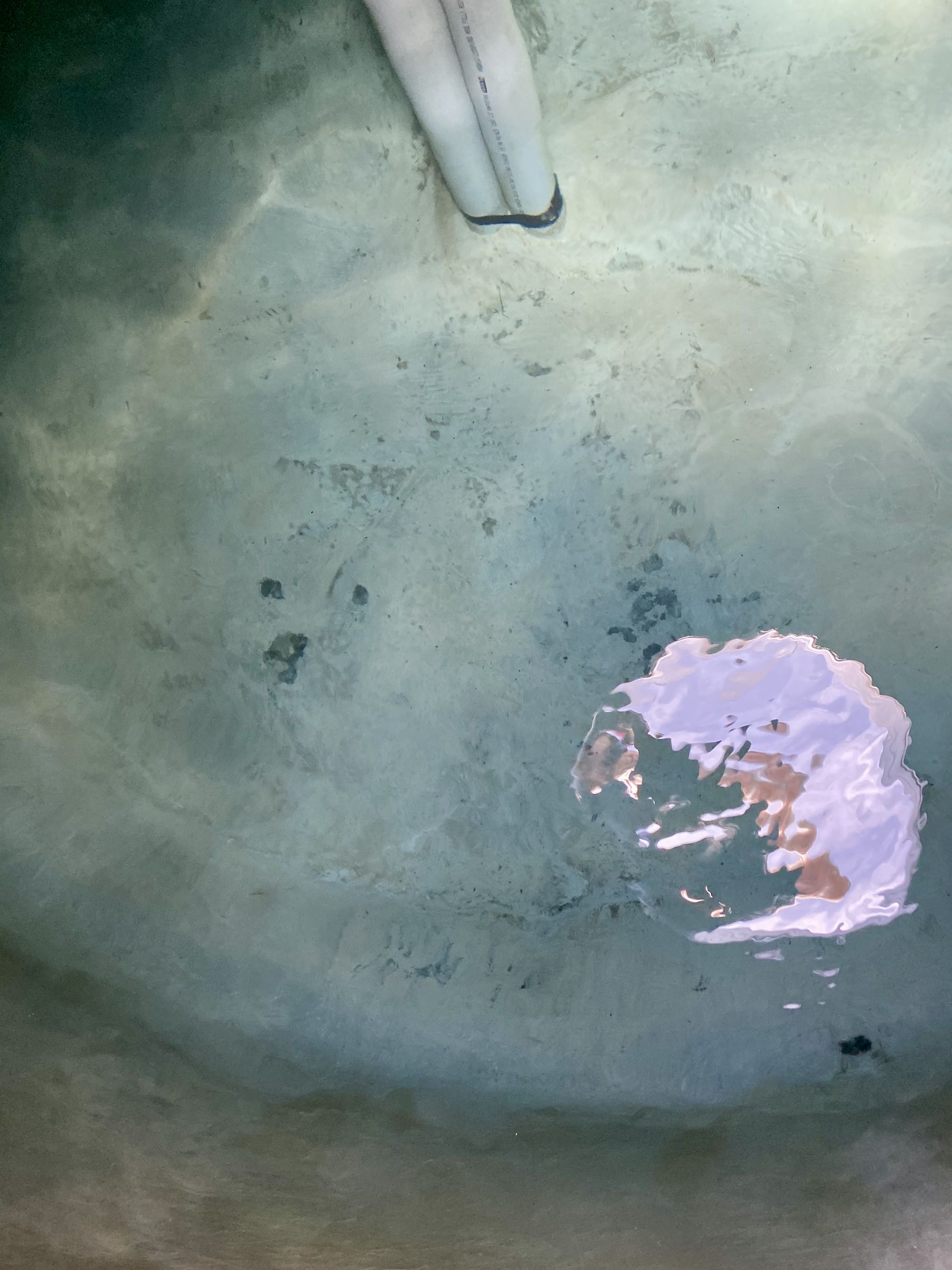
Look how clean and see-through that tank full of water is!
Once everything was finished I had to turn on each tap in the house in sequence and let the water run for 5 minutes.
Our house was built in 2014 and we've lived in it full time for just on 4 years. While we've had to have a couple of tank fills because the water was running out over summer, this is the first actual trouble we've had with it.
Apparently there wasn't anything terrible in the tank: no rotting possums or whatever. It was just accumulated straw that birds had dropped in the gutter, along with sand and pollen and other wind-blown debris, plus, probably, a good deal of bird poop.
Today I had a glorious shower in crystal clear odour-free water!
Today our currently full 20,000 litre rainwater tank will be emptied. 😢 Then it’ll be vacuumed, cleaned, vacuumed a second time, cleaned, checked, then filled (14,000 litres) with a tanker of water from the town supply. $$ Better than E.Coli though.
mbnov 20-Nov-19: second
The TV show Stumptown started strong. 6 episodes in it’s definitely one of my favourites. How can a show be so excellent from minute one?
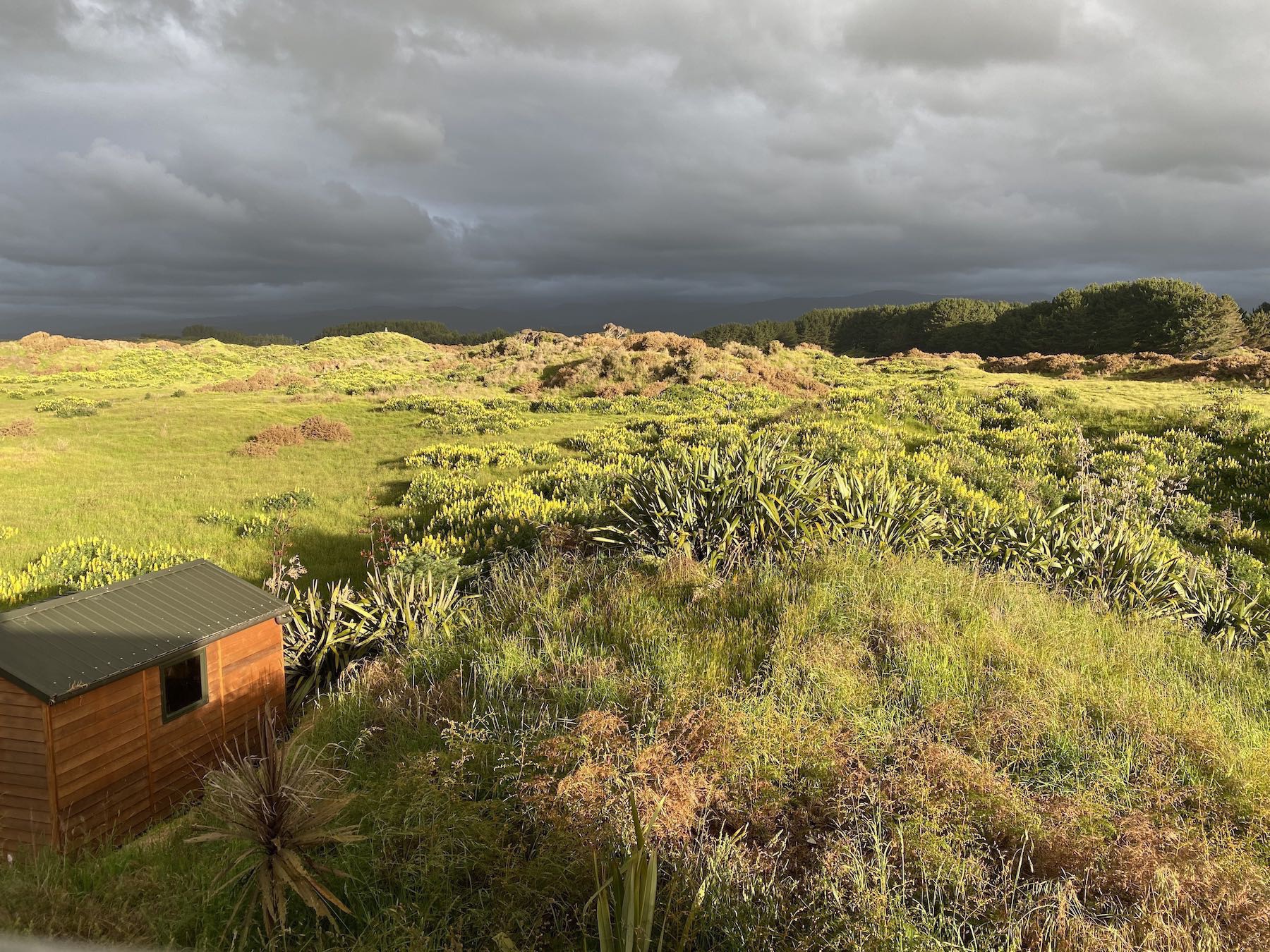
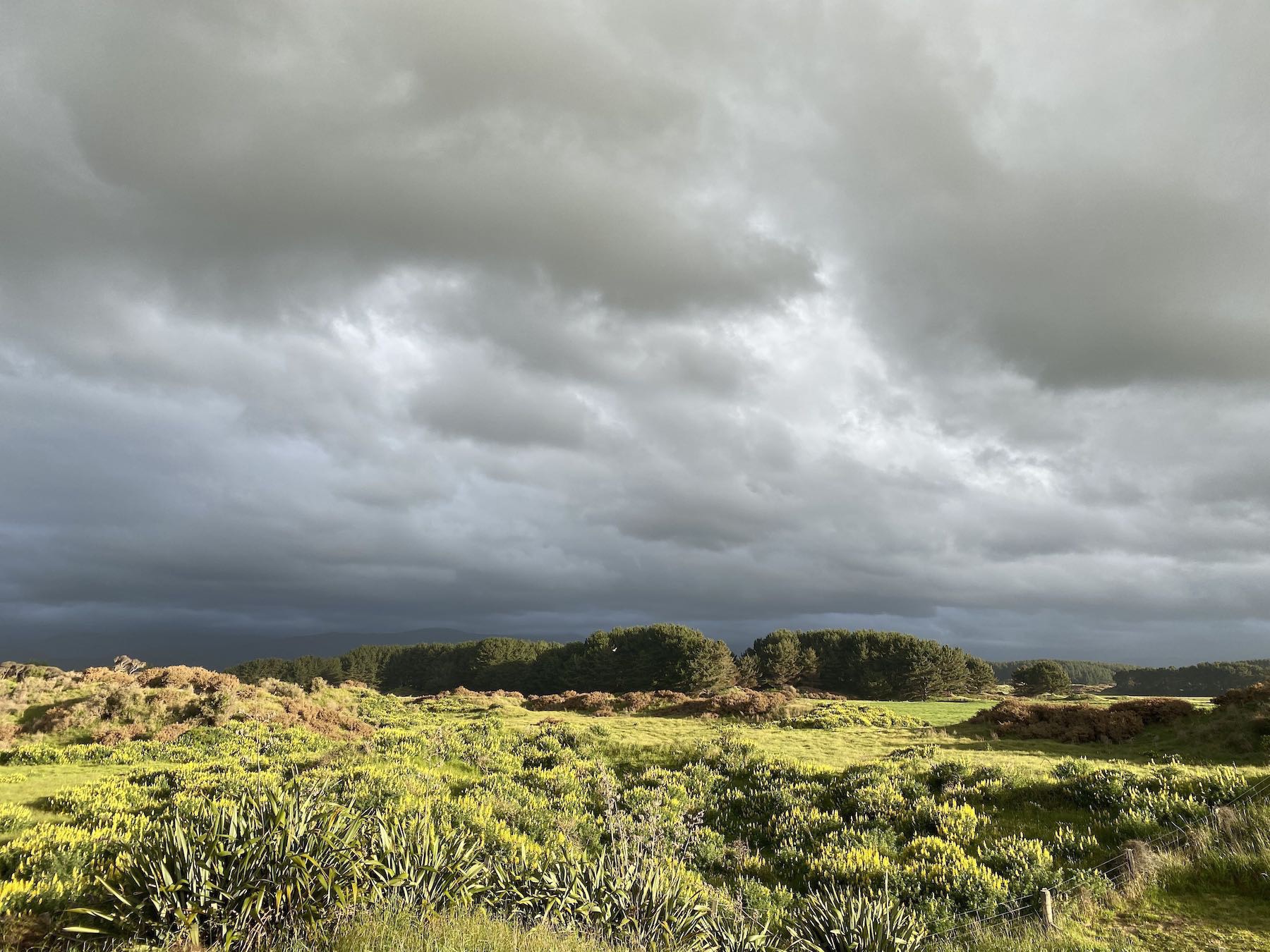
Dark sky, green paddocks, low sun. Straight from the iPhone.
The dogs were supposed to be groomed last week but it was postponed at the last minute. Today, finally, they’ve been bathed and trimmed. Before: shaggy dogs; after: trim and tidy (and sweet-smelling). 🐶


If you’re having a bad day, or even if you’re not, and don’t hate dogs then look at this 6 minute video: Heroic labrador helps save small dog in the sea. 🐶
We’ve been trying to ameliorate the bad smell from our drinking water for a couple of weeks. It did abate, but we also got the water properly tested and the results are bad. Now I’m arranging to have the tank cleaned, inspected and refilled.
mbnov 19-Nov-19: abate
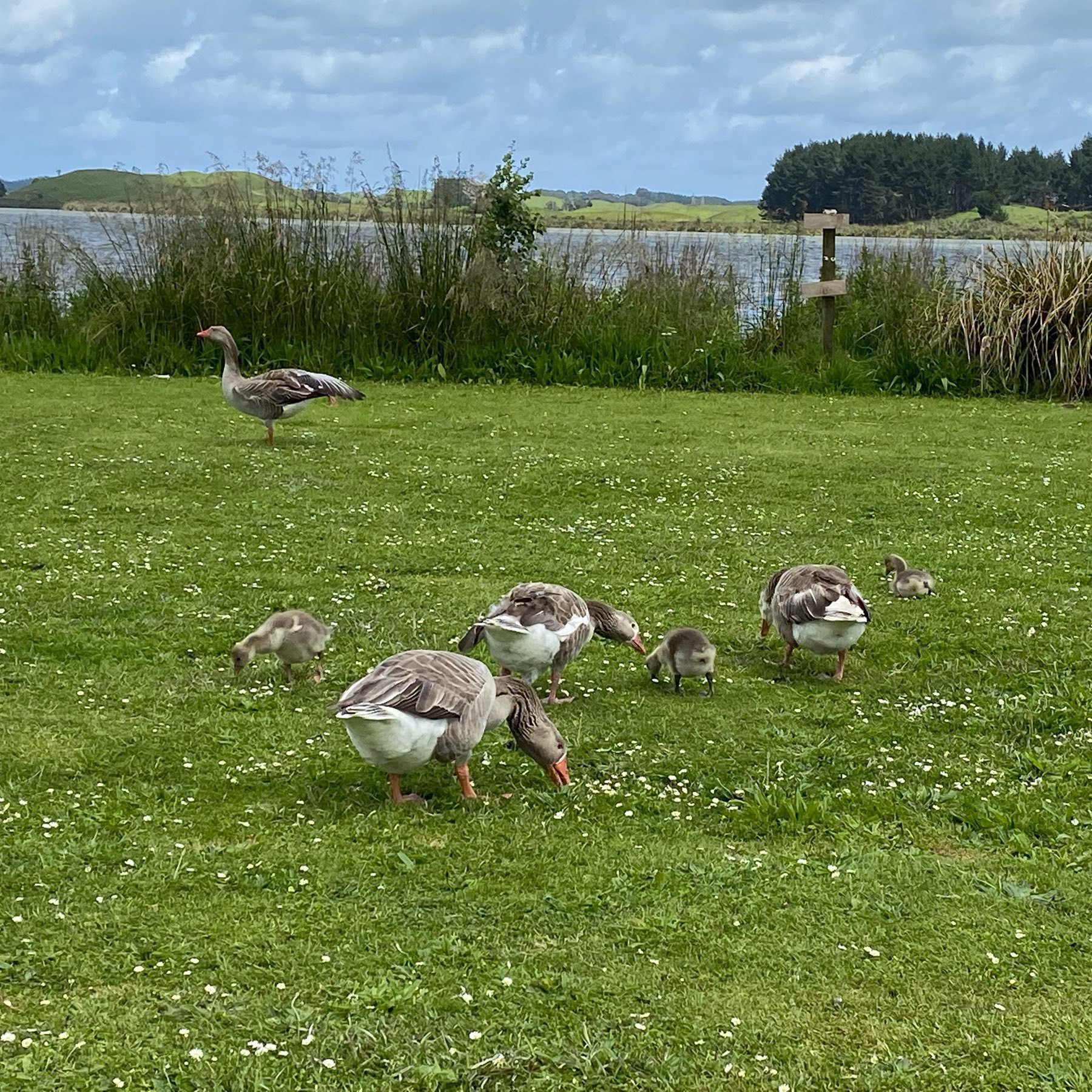
Geese by Lake Horowhenua in Levin.

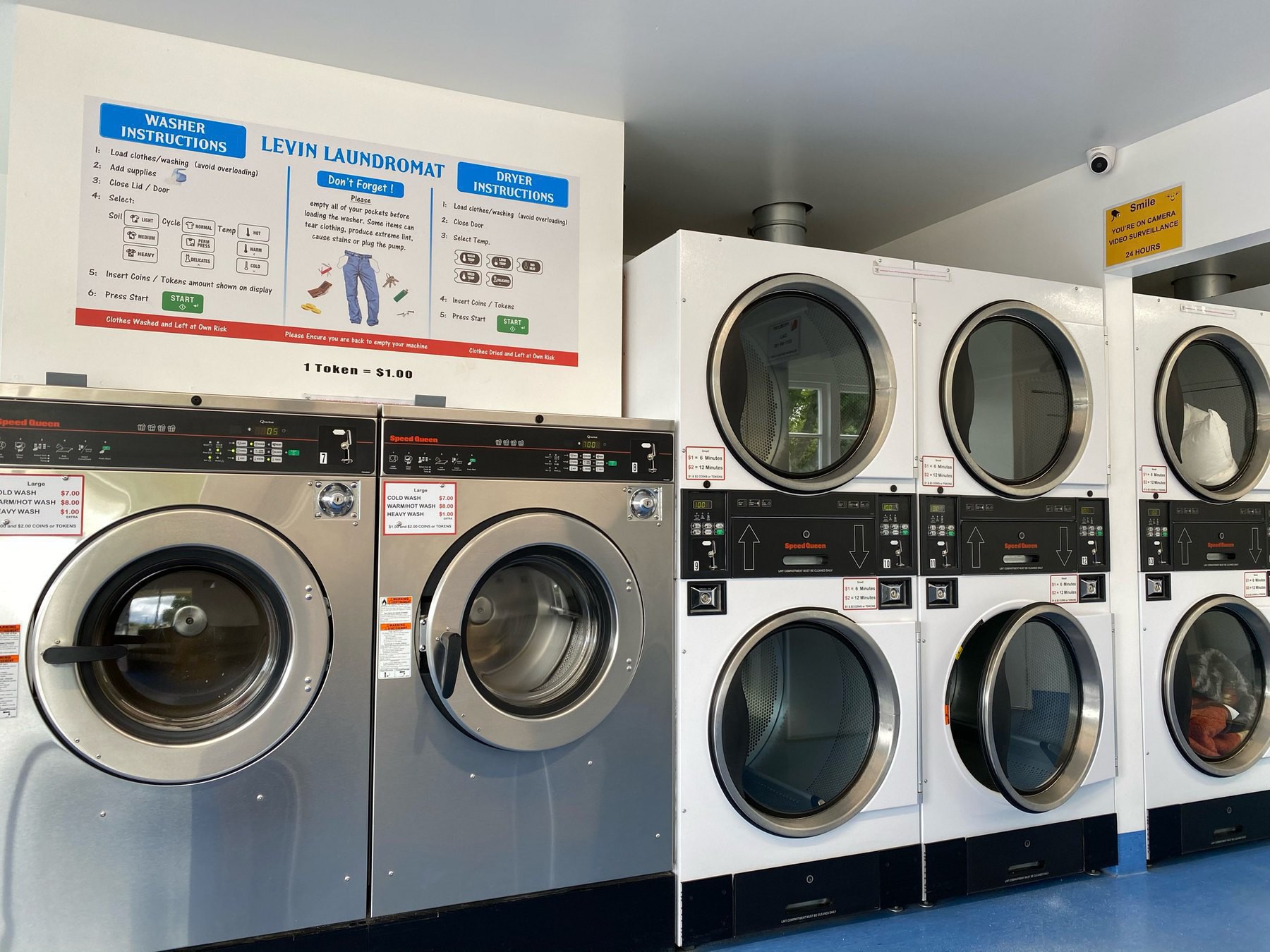
Actually, this is my first time using a laundromat. Luckily someone helped me avoid trying to wash in the dryer. 🤭I need better instructions.
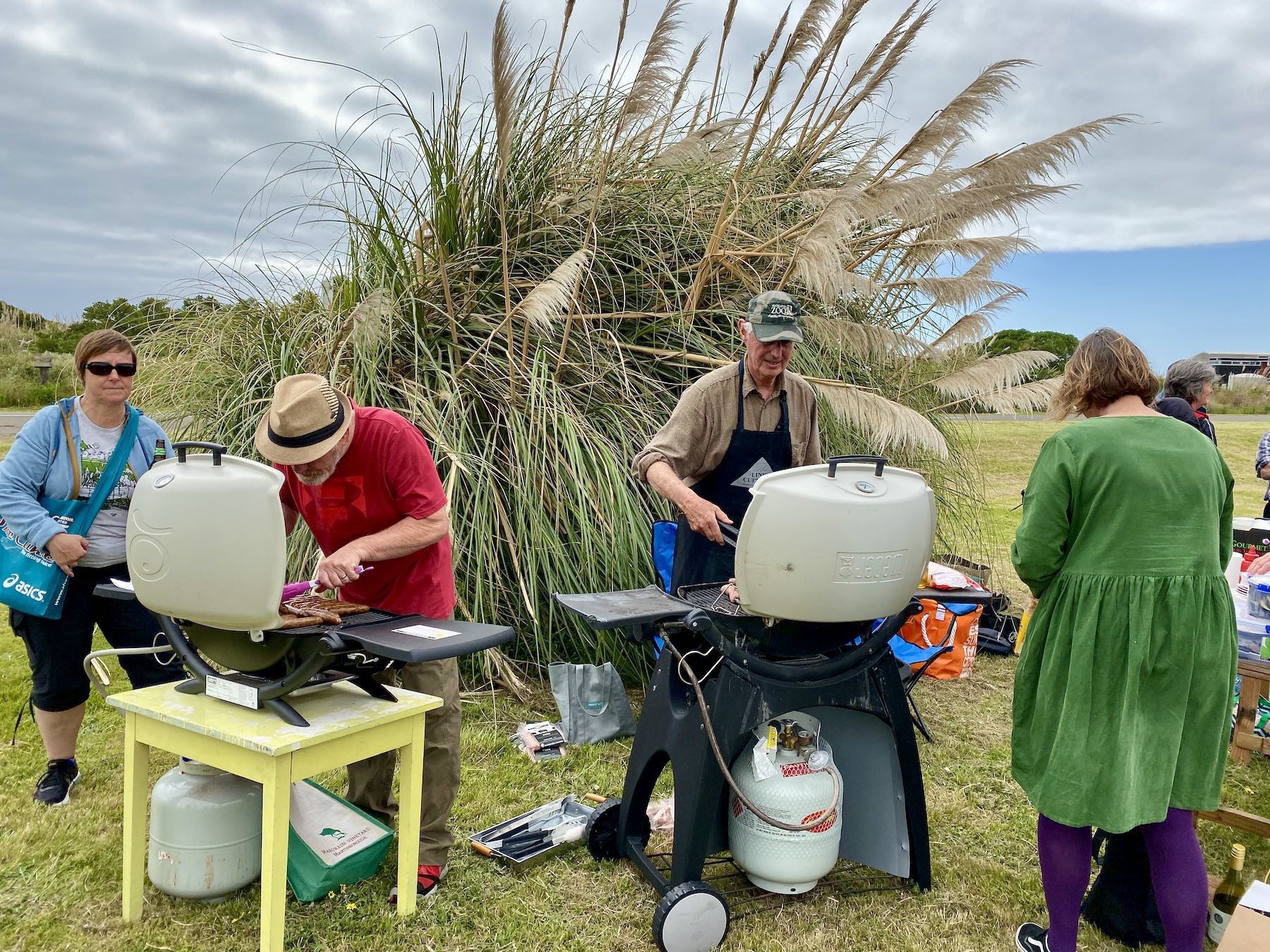
Community BBQ struck a chord
The Waikawa Beach village has been filling up for decades. It's well-established with its 250 houses. An urban area, sections are smaller and houses are close together. That's an ideal setup for casual conversations with neighbours — a solid foundation for a strong community.
The much newer Strathnaver area though is founded on two streets and a couple of private lanes. About 100 properties are scattered along a total length of some 3.5 Km. In such a rural residential area sections are bigger and houses more spread out so it's harder for neighbours to meet casually. That can be a little isolating.
What's more this is a rapidly developing area. A couple of dozen new houses have popped up recently or are being planned. Many people are new to the area.
Which is what led a group of neighbours to apply to Horowhenua District Council for a $250 grant from the Events Fund to run a BBQ for everyone in the Strathnaver area over Labour Weekend.
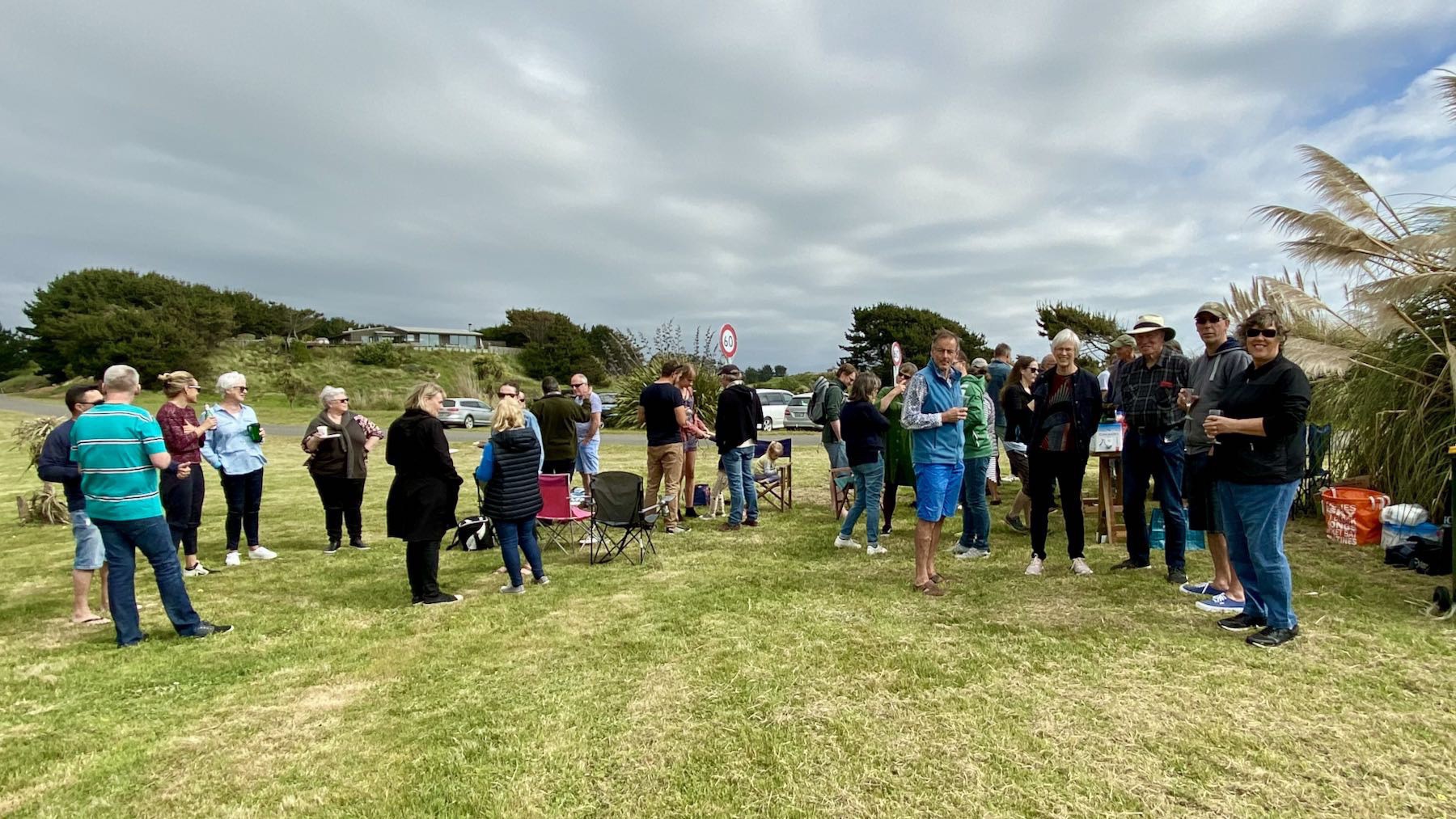
This really struck a chord. About 60 people attended and the response, before and after was very enthusiastic. Another 15 or so expressed regret that prior commitments kept them away. Several people have asked if this could be an annual event.
Local producer Woody's Farm supplied gluten-free sausages — pork, beef and goat. Vegan salads and falafel provided options for those who don't eat meat. A local couple allowed us to use the grassy area by their lake.
Others provided labour to word the flier, buy the groceries, make salads, bring BBQs, do the cooking, set-up and take-down and clean up.
This team effort of planning and execution was worth it! So many people were thrilled to get to meet their neighbours. Or in their words:
A big thank you for a well run arvo much appreciated a great turnout again thanks for the effort I know folk enjoyed.
Thank you and the team for a really enjoyable afternoon yesterday! So well organised, yummy food/salads etc and a great way to get to know/keep in touch with others.
It was great to meet up with a few new people. Thanks so much for organising it, such a lovely idea!
I didn't realise it would be a feast!
Having ‘vegan options' on the flier is what made me attend. If that hadn't been on there I probably would have ignored it.
Originally published in Ōtaki Today, November 2019, page 26.
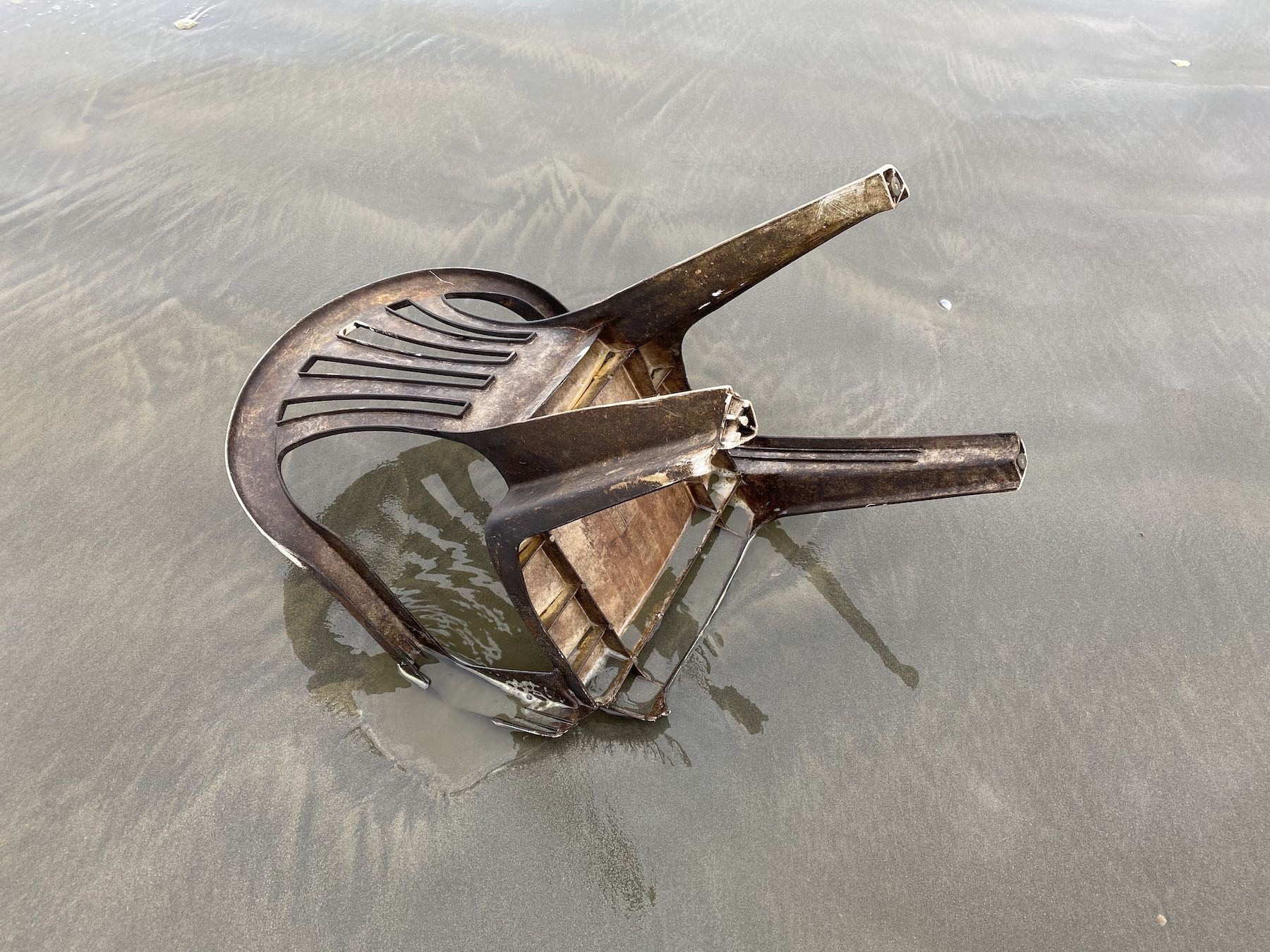
Not something I expected to find on the beach this morning.

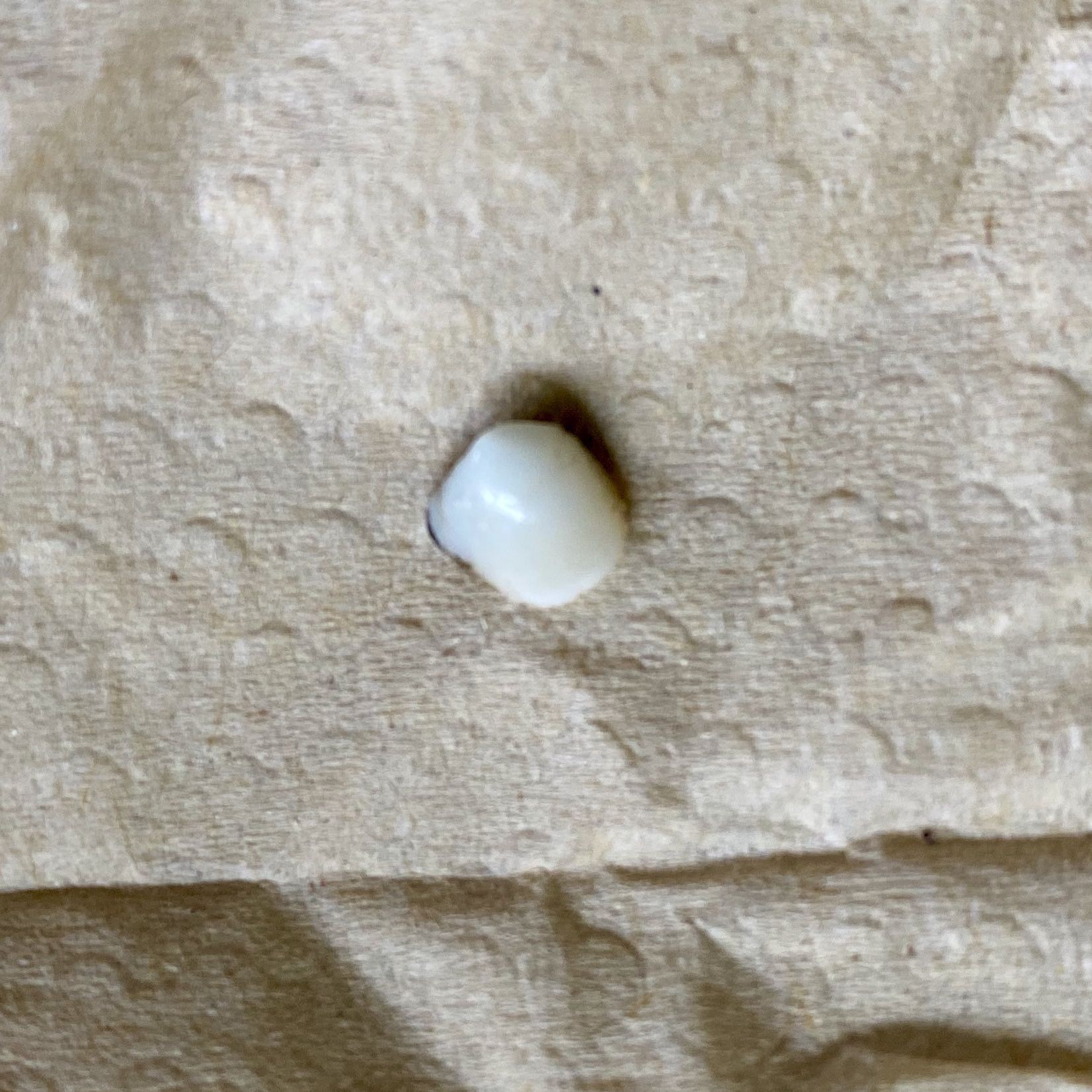
The chef did a superb job in this build: Mushroom Hash at Cafe Royal in the centre of Palmerston North where I had errands this morning. Very delicious too. Unfortunately, and no fault of the food, another of my teeth fell to bits while eating (pic).
mbnov 18-Nov-19: build

Today’s job was to climb a ladder to see what was in our gutter (that feeds our drinking water tank). Then to attach a gutter cleaner nozzle and hose to a long pole and try to wash out the gunk. Much gunk, much cold shower! Now I want torrential rain to finish the job for me.
One of the superb things about going through old Micro.Blog posts with Mars Edit to fix missing alt text is the reminders of posts past. Ahhh, baby quail… Another superb thing is how easy Mars Edit makes working with Micro.Blog posts. // @danielpunkass
mbnov 17-Nov-19: superb

As I get older I become more selective about pretty much everything. I don’t want to spend time, money, energy on things that aren’t really what I want. And for some purchases I’m more aware than ever that I may have them for the rest of my life.
mbnov 16-Nov-19: selective
In the wee hours we had gusts of wind over 60 Kph, pouring rain loud on the tin roof, thunder, lightning. The dogs were extremely anxious and kept me awake for a couple of hours. In the end I brought them up on the bed where they stayed. Today I’m really sleepy though. 🐶 🥱😴


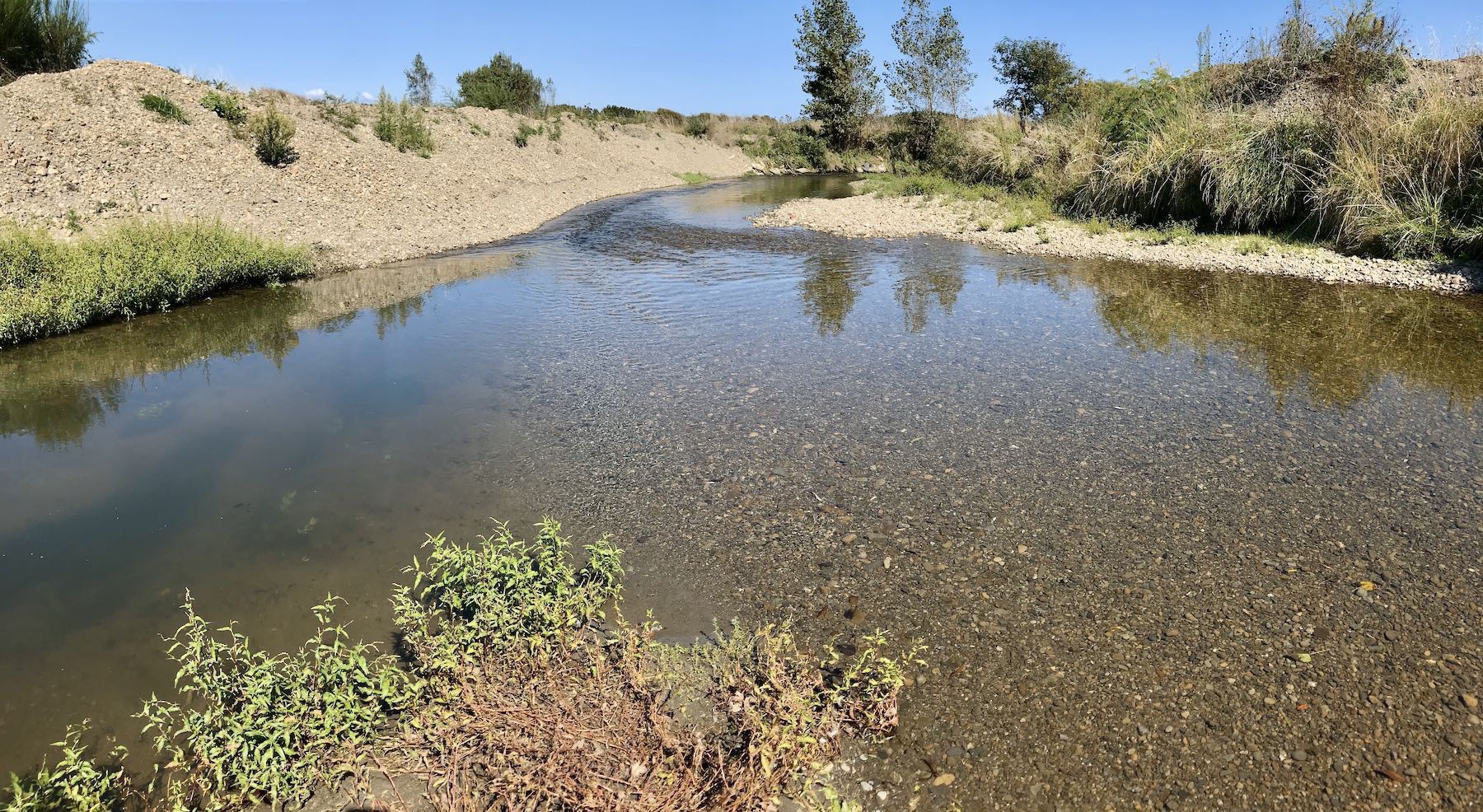
The Waikawa River flows out to sea at our beach. Not far east two streams converge. At the confluence, crystal clear Waikawa stream from the hills behind North Manakau is joined by murky Waiauti water from the hills behind South Manakau.
mbnov 15-Nov-19: murky
These are astonishing figures for our tiny country. Space sector contributes $1.7 billion to NZ economy 🚀:
Space …Total employment … 12,000 jobs.
total estimated revenue of the space economy was $1.75 billion in 2018-19, representing 0.27% of global space economy revenues.